






Many brands operate under the comforting illusion that a cookie policy is merely a legal checkbox to be hidden in the footer, believing that as long as they have a generic template in place, their compliance and customer trust are secured. But what if this dismissive approach to data transparency is actually acting as a silent ceiling on your revenue expansion? For high-growth eCommerce businesses, the hidden cost of inaction lies in the erosion of consumer confidence and the missed opportunities to leverage privacy as a competitive differentiator, which leaves massive amounts of money on the table by failing to reassure high-intent shoppers at the exact moment they are ready to convert.
The hard reality is that unoptimized or non-transparent data practices cannot support the sophisticated, trust-based relationships required to maximize Customer Lifetime Value (LTV) in an increasingly privacy-conscious market. Transitioning to a comprehensive and clear cookie policy is not merely a legal requirement; it is a strategic necessity that enables your brand to protect its reputation while maintaining the technical infrastructure needed for personalized experiences. This guide explores how writing an essential cookie policy provides the critical foundation to eliminate compliance debt and fuel long-term retention, ensuring your commitment to privacy becomes a direct driver for scalable growth.
What is a cookie policy for e-commerce?
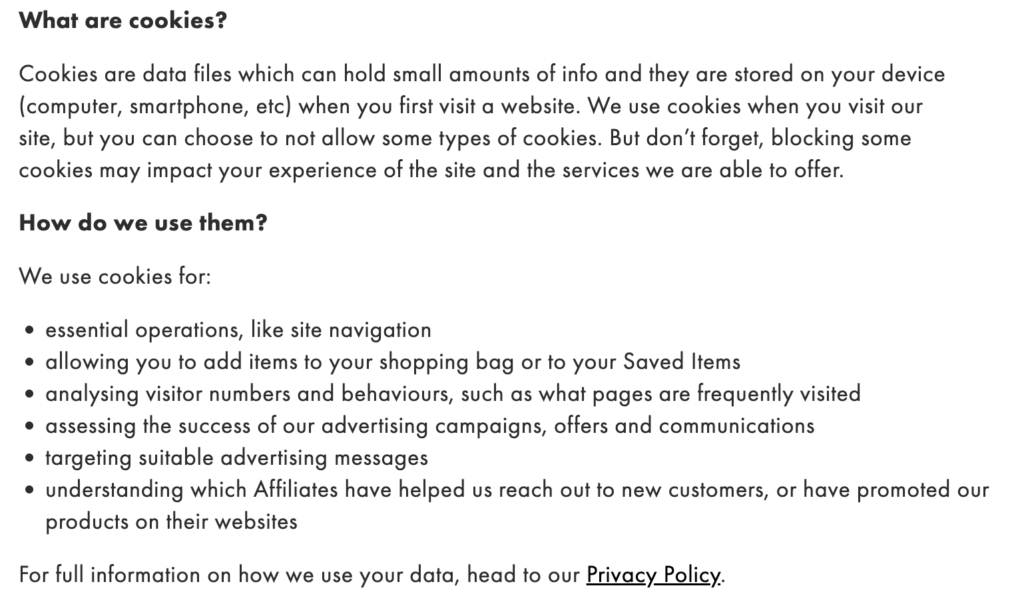
An e-commerce cookie policy is a specialized legal disclosure that details how your online store utilizes tracking technologies to facilitate transactions and enhance the user experience. For a WooCommerce merchant, this document serves as a programmatic bridge between technical operations—like maintaining a shopping cart across sessions—and legal transparency. It explicitly defines what data is being collected via small text files placed on a customer’s device, the specific purpose of that data processing, and how users can exercise their rights to opt-out or modify their consent preferences.
- Strictly Necessary Cookies: These are technical essentials required for core store functionality, such as maintaining a user’s login state, securing payment processing, and ensuring items remain in the cart as a customer navigates different product pages.
- Performance and Analytics Cookies: These trackers monitor high-level aggregate data, such as traffic sources and conversion bottlenecks, allowing you to optimize the checkout flow without identifying individual shoppers.
- Functional and Marketing Cookies: These enable personalized features like “recently viewed products” or targeted remarketing campaigns by tracking browsing habits across multiple sessions or external platforms.
Beyond mere compliance with global regulations like GDPR and CCPA, a robust cookie policy acts as a trust-building asset in a competitive digital landscape. By providing granular clarity on third-party data sharing and cookie expiration periods, you transform a diretrizry legal requirement into a demonstration of data sovereignty. In the high-stakes environment of e-commerce, where privacy is increasingly a differentiator, a clear policy ensures that the seamless, personalized features your customers expect are backed by a transparent and accountable infrastructure.
Why does my WooCommerce store need a cookie policy?
For high-growth WooCommerce stores, a cookie policy is no longer just a legal footnote; it is a critical component of your brand’s digital trust architecture. While WooCommerce requires technical cookies to maintain cart persistence and customer sessions, these scripts often interact with personal data that falls under the jurisdiction of global privacy regulations like GDPR and CCPA. Failing to provide a transparent disclosure of these tracking mechanisms creates a “silent ceiling” on your growth by exposing your business to significant regulatory fines and eroding the confidence of privacy-conscious shoppers.
- Regulatory Compliance: Legal frameworks in the EU and North America mandate that any store collecting user data—whether via analytics pixels, marketing trackers, or payment gateways—must explicitly state the purpose and duration of those cookies.
- Functional Transparency: High-performance e-commerce relies on a complex stack of third-party tools for heatmapping, retargeting, and fraud prevention. A clear policy ensures these scripts are documented, preventing technical debt and “dark pattern” accusations.
- Conversion Optimization: Modern consumers view privacy as a competitive differentiator. By clearly explaining how data is used to personalize their shopping experience, you reduce friction during the checkout process and improve long-term Customer Lifetime Value (LTV).
Ultimately, a robust cookie policy safeguards your store’s operational integrity. In an era where web browsers are increasingly aggressive in blocking third-party tracking, having a first-party consent strategy backed by a formal policy ensures your conversion tracking remains accurate. This technical diligence prevents the data loss that typically occurs when generic consent banners break essential checkout functionality, ensuring your marketing ROI remains measurable and scalable.
How to write a compliant cookie policy for your online shop?
Drafting a compliant cookie policy for your WooCommerce store requires moving beyond generic templates toward a document that accurately reflects your specific data processing activities. For high-growth brands, this policy serves as a technical disclosure that aligns your backend tracking—such as Facebook Pixels, Google Analytics, and cart persistence scripts—with global privacy frameworks like GDPR and CCPA. A truly compliant policy must be granular, identifying each cookie’s purpose, duration, and provenance to ensure that user consent is informed and legally defensible.
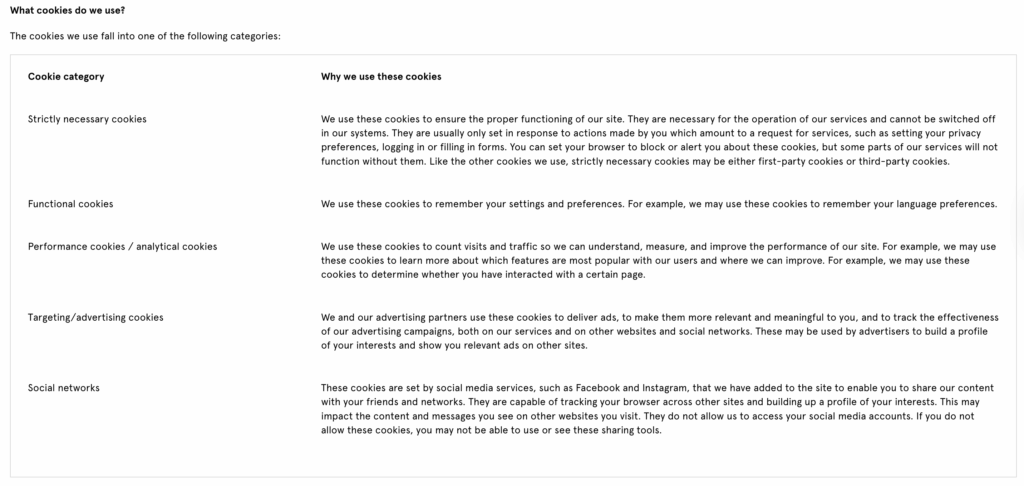
- Audit and Categorization: Perform a comprehensive technical scan of your store to identify all active cookies. Group them into distinct categories: strictly necessary (e.g., session IDs for checkout), functional (e.g., language preferences), analytical (e.g., traffic patterns), and marketing (e.g., retargeting pixels).
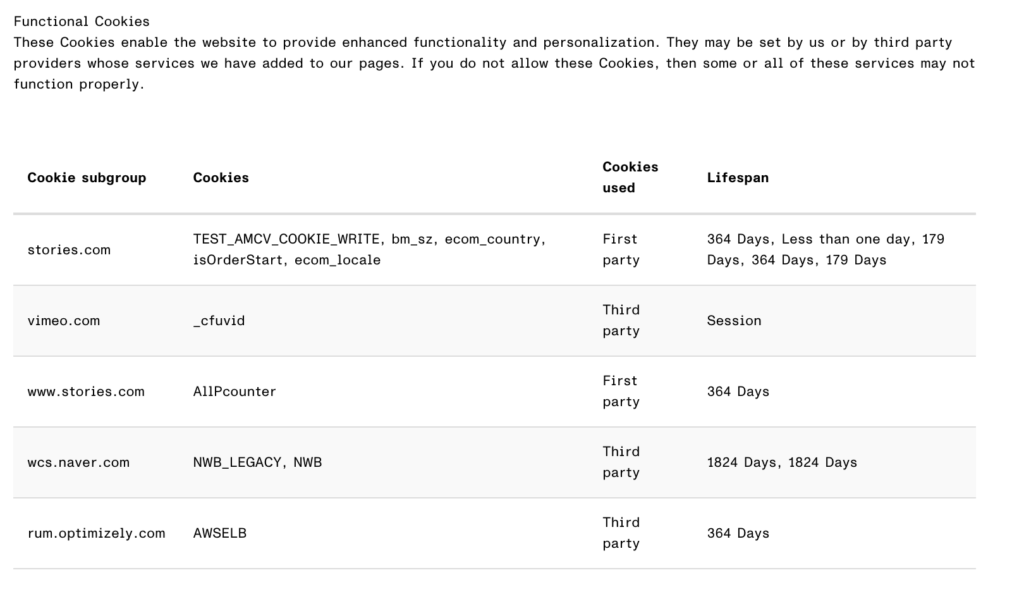
- Detailed Disclosure: Create a transparent table within your policy that lists the specific name of each cookie, the party responsible for setting it, its intended function, and its expiration date. This precision eliminates ambiguity and satisfies the transparency requirements of modern privacy regulators.
- User Control Integration: Provide clear, non-technical instructions on how users can modify their preferences or withdraw consent at any time. This section should link directly to your consent management platform (CMP) settings, ensuring that the legal document and the technical implementation work in tandem to protect user autonomy.
By structuring your cookie policy with this level of technical detail, you transform a legal obligation into a strategic trust signal. For eCommerce operators, the goal is to demonstrate that your data collection is intentional, limited to what is necessary for business growth, and fully under the control of the consumer. Regularly updating this document as you integrate new plugins or marketing tools is essential to maintaining your store’s regulatory readiness and long-term brand equity.
What are the best cookie policy examples for e-commerce sites?
The best cookie policy examples for high-growth e-commerce sites move beyond generic templates to provide a structured, user-centric disclosure of how data impacts the shopping experience. For a WooCommerce store, a gold-standard policy shouldn’t just list technical IDs; it must bridge the gap between compliance and customer trust by clearly categorizing trackers based on their utility. Leading brands achieve this by utilizing dynamic tables that update automatically when new plugins or marketing pixels are added to the stack.
- Categorized Inventory: Exemplary policies group cookies into distinct buckets such as strictly necessary, functional, analytics, and marketing, allowing users to understand exactly which trackers power their cart versus which ones serve targeted ads.
- Visual Accessibility: Top-tier stores use plain language and avoid dense legal jargon, ensuring the policy is easy to navigate via a dedicated, mobile-responsive page that is linked directly from the initial consent banner.
- Granular Control Integration: The most effective examples provide a direct link back to a preference center or “Do Not Sell My Personal Information” toggle, ensuring the policy acts as an actionable tool for user rights rather than just a static document.
Ultimately, a high-converting e-commerce policy prioritizes transparency as a competitive advantage. By documenting the duration, provider, and specific purpose of each cookie—such as those used for abandoned cart recovery or personalized product recommendations—you demonstrate to your customers that their privacy is a foundational component of your brand’s operational integrity.
How to manage cookie consent for WooCommerce revenue growth?
Managing cookie consent in a WooCommerce environment is no longer just a legal hurdle; it is a strategic lever for data quality and conversion optimization. For high-growth stores, the goal is to implement a framework that satisfies strict global regulations like GDPR and CCPA while maintaining the integrity of marketing attribution. By moving beyond basic “accept/reject” banners and adopting a granular, tiered consent approach, you can recover significant portions of lost data through advanced modeling while building the brand equity that comes with radical privacy transparency.
To align your compliance efforts with revenue growth objectives, focus on these three critical technical and strategic pillars:
- Google Consent Mode v2 Integration: Implement GCM v2 to bridge the gap between user privacy and data-driven marketing. This allows Google tags to adjust their behavior based on consent status, enabling conversion modeling to recover up to 70% of ad-click-to-conversion journeys that would otherwise be lost when users decline cookies.
- Granular Categorization: Instead of a binary choice, offer users a preference center that categorizes cookies into functional, analytics, and marketing. This psychological shift from “all-or-nothing” to “controlled choice” often leads to higher opt-in rates for essential analytics, ensuring your store’s performance data remains actionable.
- Strategic Banner Placement and UX: Optimize the visual hierarchy of your consent interface to reduce friction. Use non-intrusive bottom bars that allow for immediate interaction without blocking the primary shopping funnel, and ensure the “Reject All” and “Accept All” options have equal prominence to remain compliant and avoid “dark pattern” penalties from regulators.
Ultimately, a robust consent management platform (CMP) integrated directly with your WooCommerce backend ensures that your tracking pixels only fire when valid consent is logged. This technical precision protects your store from hefty non-compliance fines while providing the clean, first-party data necessary to scale personalized marketing campaigns and improve long-term customer lifetime value.
Ready to take your e-commerce to the next level?
While establishing a compliant cookie policy is a fundamental legal requirement, the business reality for high-growth WooCommerce brands is that privacy infrastructure without a data-driven strategy is a recipe for missed opportunities. If your tracking efforts feel like they are stalling ROAS, or if you suspect that unoptimized consent management is creating a silent ceiling on your conversion rates, you are likely treating data privacy as a technical chore rather than a competitive differentiator. For eCommerce leaders, the hidden cost of poorly configured tracking is not just a potential fine; it is the degradation of your attribution accuracy and the loss of high-intent audience data necessary for scaling performance marketing.
To move beyond basic compliance and build a high-performance growth engine, you need a partner that synchronizes your privacy-compliant data collection with your broader revenue objectives. We act as a strategic extension of your in-house team, helping DTC brands maximize Profit, Retention, and LTV through unified systems where advanced tracking, CRM, and automation work in perfect concert. Our methodology begins with rigorous, conversion-focused audits to eliminate guesswork and identify the exact bottlenecks in your customer journey. If you are ready to transition from a generic banner to a scalable, data-driven system that maximizes LTV, book a free marketing automation audit today.