






The most costly blind spot for high-growth eCommerce brands is the fixation on new customer acquisition while ignoring the proven, untapped revenue potential sitting directly in the cart. You may believe that a 10%, 30%, or even 50% increase in profit requires an expensive overhaul of your ad campaigns or a complete site redesign. This is a costly misconception. The hard truth, one proven by giants like Amazon, is that the difference between an average and an exponentially growing store is often a few minor, high-leverage adjustments that capitalize on the purchase intent a customer is already demonstrating.
This is where strategic cross-selling and upselling become non-negotiable levers for long-term Customer Lifetime Value (LTV) and sustainable revenue expansion. The cost of inaction is not just the immediate revenue you leave on the table, but the compounding loss of LTV from every customer who completes a low-Average-Order-Value transaction because they were never presented with a relevant, value-add offer. This guide will walk you through the technical blueprint for integrating these tactics—not as simple pop-ups, but as automated, data-driven revenue streams that transform a single purchase into a predictable engine for exponential growth.
Unlock 50% Higher AOV: The Strategic Upsell and Cross-Sell Framework
The pursuit of a 50% higher Average Order Value (AOV) hinges on moving beyond simple “Customers Also Bought” widgets. A strategic framework requires treating the upsell and cross-sell as distinct conversion tools, not interchangeable tactics. The fundamental error is in timing: an upsell is a pre-purchase value proposition, best placed on the product page or immediately before adding to cart, inviting the customer to commit to a premium or higher-margin item. A cross-sell, conversely, is a post-decision enhancement, most effective in the cart or at checkout, offering relevant, low-friction add-ons that complete the primary purchase and increase its utility.
- Contextual Relevance: The product recommended must logically enhance the main item. For a new phone (as per the context), this means a case or screen protector; not an unrelated product category like socks or coffee.
- Pricing Hierarchy: For a cross-sell to be frictionless, its price should typically not exceed 25% of the main product’s cost. High-value cross-sells introduce decision fatigue and can lead to cart abandonment.
- Frictionless Placement: The recommendation must be an optional addition that does not interrupt the primary path to purchase. Placement must be native to the page flow—for example, a small, subtle prompt above the Add to Cart button for an upsell, or a dedicated, clear section on the Cart summary for a cross-sell.
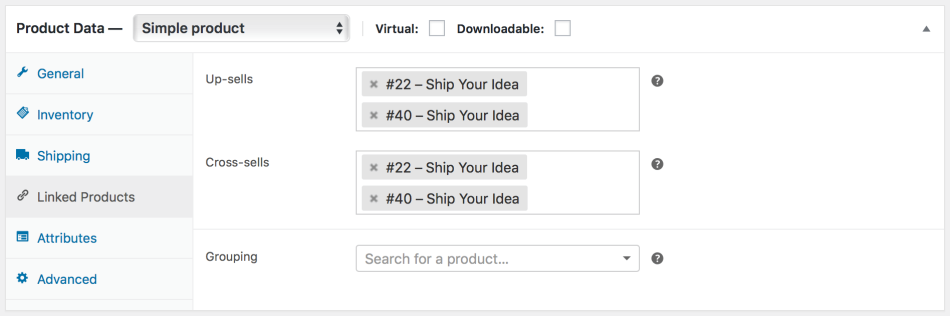
Implementing this framework within WooCommerce means tightly integrating your data structure with your recommendation engine. Success is measured not just by AOV, but by the acceptance rate of the recommendation. The most profitable execution is a personalized, two-stage offer: a high-value upsell on the product page to maximize the core item’s value, followed by a low-cost, highly relevant cross-sell immediately prior to payment submission to complete the order with high-margin accessories.
Automating Product Recommendations for Frictionless Revenue Growth
The strategic shift from static, manually-curated product suggestions to a fully automated recommendation system is the non-negotiable step toward achieving frictionless revenue growth on WooCommerce. Manual cross-sells and upsells are fundamentally unscalable and quickly devolve into irrelevant noise, which introduces friction and damages the Customer Experience. A modern, AI-powered recommendation engine, conversely, leverages machine learning to analyze historical purchase data, real-time browsing behavior, and product affinities, ensuring that every suggestion is hyper-personalized, timely, and genuinely helpful. This approach is proven to significantly increase Average Order Value (AOV) and conversion rates, as the customer perceives the recommendation as value-add guidance rather than a sales pitch.
For your WooCommerce store, the key lies in selecting the right mix of technical logic to power your automation. You need to move beyond simple “Related Products” to a multi-layered model that continuously adapts to user intent. The most effective systems utilize a hybrid approach, drawing from different data sources to maximize relevance:
- Collaborative Filtering: Predicts a buyer’s preferences based on the collective behavior of similar customers, utilizing “customers who bought this item also bought” logic.
- Content-Based Filtering: Recommends products that share attributes (e.g., brand, category, color) with items the customer has previously viewed or purchased.
- AI/ML-Powered Systems: Employs advanced machine learning to dynamically adapt suggestions in real-time, predicting future needs and surfacing substitutes for out-of-stock items, ensuring the funnel never breaks.
Integrating these automated systems across all pivotal touchpoints—product pages, the cart, and post-purchase email flows—is how you transform a transactional experience into a relationship. This continuous cycle of data collection and relevant suggestion delivery not only boosts immediate sales metrics but also enhances customer retention, as the convenience of always finding the right product significantly improves Customer Lifetime Value (LTV).
Integrating Post-Purchase Flows via Email and SMS for Instant LTV Boost
The post-purchase sequence is the most critical, yet frequently overlooked, phase for maximizing Customer Lifetime Value (LTV) through upselling and cross-selling. The moment immediately following a confirmed sale—the “honeymoon phase”—represents a period of peak trust and intent. Shifting your focus from the cart to the inbox and text messages allows you to deploy contextual, non-intrusive cross-sells. These flows are not designed to squeeze more margin immediately, but to establish a relationship and guide the customer toward the highly-profitable second purchase, which is proven to cost significantly less than new customer acquisition.
To execute this strategy effectively, the automation must be built on predictive customer behavior derived from the initial order data. The channel choice—Email versus SMS—should be dictated by the message’s complexity and urgency:
- Consumables Reorder Flow: Automated email series timed based on the estimated depletion rate of the purchased item (e.g., 80% through the lifespan of a supplement or cartridge). The objective is a direct re-purchase, often framed as a “low-stock alert” or subscription upgrade (upsell).
- Immediate Accessory Cross-Sell: A high-urgency SMS sent 2-4 days post-delivery, recommending a low-friction, immediately necessary cross-sell that complements the main product (e.g., a screen protector or specific cleaning kit). SMS’s immediacy drives a quick, high-conversion action.
- Review-Incentive Funnel: An email flow triggered 10 days after fulfillment requesting a product review. The subsequent “Thank You” email contains a one-time, category-specific coupon, strategically cross-selling a product that the customer did not originally browse, broadening their purchase history.
Success is dependent on connecting your WooCommerce order data directly to your marketing automation platform to ensure precise timing and hyper-personalization. This technical integration transforms post-purchase communication from generic acknowledgments into a robust, automated revenue engine that secures repeat business and provides an instant, measurable boost to your store’s LTV.
Dynamic Segmentation: Pitching the Right Product at the Right Time to Maximize LTV
Dynamic segmentation represents the critical shift from merely reactive product suggestion to predictive customer needs anticipation. For high-growth WooCommerce stores, mass-market cross-sells based solely on broad product categories are often margin-diluting. True Customer Lifetime Value (LTV) maximization stems from leveraging granular, real-time behavioral data—such as specific product variant views, past purchase sequences, and in-session cart value—to serve a truly relevant upsell or complementary cross-sell. This approach ensures the recommendation is contextually perceived as an added value, not an interruption, which is vital for increasing Average Order Value (AOV) without compromising the core customer experience (CX).
To execute this at scale, a WooCommerce store must move beyond basic “frequently bought together” algorithms and implement logic based on precise segmentation triggers:
- Variant-Level Cross-Sell: Trigger a high-margin cross-sell (e.g., a specific maintenance kit or premium accessory) based on the exact product variant added to the cart, rather than the parent product ID.
- Post-Purchase Consumption Cycle: Segment customers based on the known consumption rate of a previously purchased consumable. For example, trigger a subscription upsell or a reorder cross-sell 30-45 days after the purchase date, just as the customer is likely running low.
- AOV Bucket Upsell: Create a temporary segment for customers whose current cart value sits just below your target AOV threshold, triggering a single, relevant upsell with a high conversion history to push them over the line.
Implementing this advanced segmentation demands a robust data layer and seamless integration between your store’s backend, your recommendation engine, and your marketing automation systems (email/SMS). This technical setup transforms cross-selling from a manual merchandising task into a continuously self-optimizing, predictive LTV machine, enabling you to significantly outpace competitors who still rely on static, universal product pairings.
Transform Cart Value into Predictable, Recurring eCommerce Profit
The true strategic goal of maximizing Average Order Value (AOV) via cross-selling and upselling is not the immediate revenue lift, but the opportunity to transition that enhanced cart value into predictable, recurring profit. A high AOV is simply high-intent customer data; the ultimate transformation happens when you leverage this data to introduce a Subscription or Membership model. This fundamentally shifts your revenue profile from volatile transactional sales to reliable Monthly Recurring Revenue (MRR), which is the most critical metric for scalable growth planning and business valuation.
To execute this transition effectively, your cross-sell and upsell recommendation logic must pivot from suggesting simple one-time products to promoting subscription-eligible products or bundles. Integrating a robust WooCommerce subscription extension is the technical backbone that allows you to present compelling, recurring value propositions directly at the point of sale, maximizing the probability of conversion.
- Subscription Bundle Conversion: Incentivize the customer to convert the entire cross-sell/upsell bundle into a single, discounted subscription. This leverages their initial high intent to lock in continuous revenue at a higher margin.
- Recurring Service Upsell: For one-time purchases, strategically cross-sell a low-friction, recurring service add-on, such as premium support, extended warranty, or maintenance/replacement kits, effectively turning a single transaction into a subscription anchor.
- Automated Dunning and Retention Flows: Ensure your subscription platform is configured with behavior-triggered flows for failed payments and proactive renewal reminders, as predictable profit relies entirely on minimizing involuntary and voluntary churn.
Ready to take your e-commerce to the next level?
The tactical implementation of cross-selling and upselling tools is only the first step toward fixing a revenue problem. The sobering truth for high-growth WooCommerce brands is this: if your Average Order Value (AOV) is flatlining, or if you suspect you are spending capital to acquire customers only to lose margin on poor product recommendations, the core problem is a systemic leak. This isn’t just about AOV; it means your paid media, CRM, and customer journey are not communicating, preventing you from ever realizing the true, compounding profit of optimized lifetime value (LTV).
True, scalable growth requires moving beyond siloed tactics to a completely integrated, data-driven system. We act as a strategic extension of your in-house WooCommerce team, helping DTC brands radically increase Profit, Retention, and LTV. Our process begins with rigorous, no-guesswork, data-driven & conversion-focused audits to pinpoint the exact structural leaks in your funnel—ensuring every recommendation, automation flow, and ad dollar is optimized for maximum long-term ROAS. If you are ready to pivot from basic AOV boosts to a predictable, compounding revenue engine, book a free consultation today.