






We’ve all heard the mantra that a robust CRM is the ultimate source of truth for your eCommerce brand, serving as the primary engine for revenue expansion. But what if this reliance on a single tool is actually leading brands astray and leaving massive amounts of money on the table? The hidden cost of inaction in 2026 lies in the fragmented data silos that prevent your marketing stack from reacting to real-time customer behavior, ultimately acting as a silent ceiling on your Customer Lifetime Value (LTV).
The hard reality is that while a CRM functions as the hands that execute customer-facing tasks, it lacks the brainpower to unify the complex business ecosystem of data required for high-scale growth. To truly maximize your retention and conversion rates across Email and SMS marketing, you must understand the strategic shift toward Customer Data Platforms (CDPs) as the analytical foundation for your operational tools. This guide breaks down the essential differences between CRM and CDP to help you eliminate technical debt and build a data-driven infrastructure that fuels sustainable, automated growth.
What is the difference between CRM and CDP?
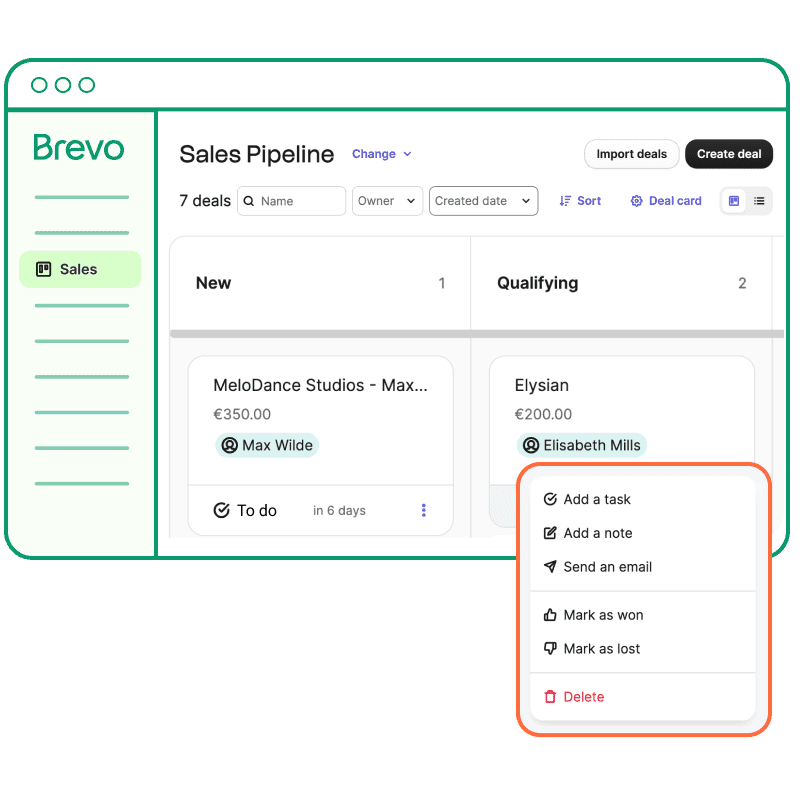
The distinction between a Customer Relationship Management (CRM) system and a Customer Data Platform (CDP) lies in their architectural intent and data utility. For a scaling WooCommerce store, a CRM serves as the operational interface for direct human interactions, tracking touchpoints like support tickets and sales calls. In contrast, a CDP acts as the analytical foundation, ingesting raw behavioral data from your website, mobile app, and offline channels to create a unified, persistent customer profile. While a CRM helps you manage the relationship, a CDP provides the comprehensive intelligence required to fuel large-scale personalization.
- Data Collection: CRMs rely heavily on manual entry and direct interaction logs, whereas CDPs automatically aggregate first-party behavioral and transactional data from across your entire tech stack.
- Primary Function: A CRM is process-centric, focusing on sales pipelines and service workflows; a CDP is data-centric, focusing on identity resolution and audience segmentation for marketing activation.
- The Brain vs. The Hands: Think of the CDP as the brain that resolves disparate data points into a single truth, and the CRM as the hands that execute specific, personalized actions based on that intelligence.
For high-growth eCommerce brands, the business reality is that these systems are complementary rather than competitive. A CDP eliminates the data silos that often plague standard CRM implementations, allowing your marketing team to trigger high-intent campaigns based on real-time browsing behavior rather than just historical purchase data. Integrating the two ensures that your customer-facing teams have a 360-degree view, moving beyond basic contact management to a sophisticated, data-driven growth strategy.
Why does a WooCommerce store need a CDP?
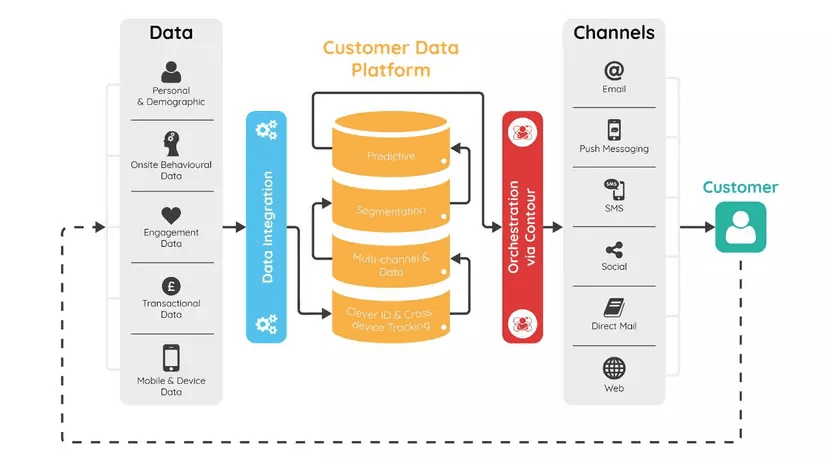
For high-growth WooCommerce stores, data is often trapped in functional silos: transaction history lives in the WordPress database, engagement metrics in your email tool, and support tickets in a separate helpdesk. While a CRM excels at managing direct interactions, it lack the technical infrastructure to ingest and unify raw behavioral data from across these touchpoints. A CDP acts as the central intelligence layer, resolving disparate identifiers—like an email from a checkout event and a cookie ID from a product view—into a single, persistent customer profile that updates in real time.
- Identity Resolution: Unifies fragmented data from web, mobile, and offline sources to create a 360-degree view of the customer, ensuring you don’t treat a loyal repeat buyer as a first-time visitor.
- Predictive Analytics: Leverages historical data to forecast future behaviors, such as churn propensity or potential Customer Lifetime Value (LTV), allowing you to prioritize high-value segments before they lapse.
- Real-Time Activation: Triggers high-intent marketing actions, like hyper-personalized cart abandonment recovery across multiple channels, based on the customer’s immediate context rather than delayed batch exports.
Implementing a CDP is a strategic move to eliminate the “silent ceiling” on your revenue expansion. By moving beyond basic relationship management and into unified data operations, WooCommerce brands can execute sophisticated, automated customer journeys that scale without increasing technical overhead. This infrastructure ensures that every marketing dollar is optimized through precise targeting and a deep, data-driven understanding of the entire customer lifecycle.
How to integrate a CDP with your CRM for automation?
Integrating a Customer Data Platform (CDP) with your CRM transforms your technical stack from a passive database into a proactive automation engine. For high-growth WooCommerce brands, this integration involves setting up a bidirectional data flow where the CDP ingests raw behavioral signals from your storefront and third-party apps, resolves them into unified profiles, and then pushes “actionable segments” back into the CRM. This process ensures that your sales and support teams aren’t working with fragmented data, but rather with a comprehensive 360-degree view of the customer’s lifecycle and intent.
- Identity Resolution: Configure the CDP to use a deterministic matching logic—such as email addresses or unique WooCommerce customer IDs—to merge anonymous web sessions with known CRM records. This prevents duplicate profiles and ensures that offline interactions and online behaviors are mapped to a single source of truth.
- Data Synchronization: Implement real-time webhooks or API connectors to sync calculated attributes, such as predicted churn risk or lifetime value (LTV), from the CDP to custom fields in your CRM. This allows your marketing automation workflows to trigger high-priority outreach based on deep behavioral insights rather than just basic contact info.
- Event Mapping: Standardize the event schema between both platforms to ensure that “structured” data from the CRM, like purchase history, and “unstructured” data from the CDP, like product page views, are formatted consistently. This technical alignment is critical for maintaining data integrity during automated cross-channel campaign execution.
By shifting the burden of data unification to the CDP, you allow your CRM to focus on what it does best: executing one-to-one communications and managing the sales pipeline. This strategic layering eliminates the technical bottlenecks associated with manual data cleansing and empowers your team to deploy hyper-personalized automation that responds to real-time customer needs, ultimately driving higher retention and revenue expansion.
When should I upgrade from a CRM to a CDP for revenue growth?
For high-growth WooCommerce stores, the transition from a CRM to a CDP is rarely about replacing one with the other; it is about recognizing when your manual relationship management has become a technical bottleneck for automated scaling. You should consider upgrading when your customer data is trapped in isolated silos—such as your support desk, email platform, and WooCommerce database—preventing a unified view of the buyer journey. While a CRM excels at tracking known contacts and manual sales pipelines, it cannot ingest the high-volume, real-time behavioral signals required for modern hyper-personalization.
- Fragmented Identity Resolution: If you cannot link a customer’s anonymous website browsing sessions to their post-purchase support tickets or email clicks, you are losing the context needed for high-conversion triggers.
- Latency in Data Activation: When your marketing team has to wait for manual CSV exports to sync segments between tools, you miss the critical window for real-time behavioral interventions like “abandoned browse” or “lapsing VIP” alerts.
- Inability to Scale First-Party Data: If you are relying on third-party cookies or static lists for ad retargeting, a CDP allows you to shift to a more resilient, first-party data strategy that feeds your advertising platforms with accurate, real-time purchase intent.
Ultimately, the upgrade is a move from a passive system of record to an active intelligence layer. By implementing a CDP, you shift the burden of data cleansing and unification away from your team, allowing your CRM to function as the “hands” that execute actions based on the “brain” of the CDP. This infrastructure is essential for brands moving toward AI-driven decisioning, where autonomous agents require a complete and persistent data foundation to maximize Customer Lifetime Value (LTV) without constant human oversight.
How to use customer data to scale eCommerce marketing?
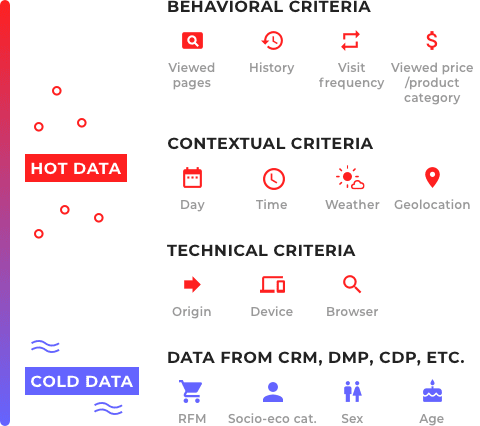
To scale marketing efforts in a competitive WooCommerce environment, you must transition from broad, manual campaigns to automated, data-driven workflows. By leveraging a Customer Data Platform (CDP) as your primary intelligence layer, you can unify fragmented data from your web store, mobile apps, and point-of-sale systems to create a 360-degree view of your customer. This foundation allows you to move beyond basic demographics and target users based on real-time behavioral signals, ensuring that every touchpoint—from email to paid media—is contextually relevant and high-converting.
- Predictive Personalization: Use unified behavioral data to feed recommendation engines that suggest products based on individual intent and affinity rather than simple best-seller lists.
- Dynamic Journey Orchestration: Automate the movement of customers through lifecycle stages—such as prospect, first-time buyer, or at-risk—and trigger specific communication flows across SMS, email, and social ads based on their real-time actions.
- Optimized Cart Recovery: Scale revenue by applying AI-powered decisioning to determine the optimal channel, timing, and incentive level for recovery messages based on a user’s historical value and price sensitivity.
Ultimately, scaling is achieved when your technical infrastructure can handle higher demand without a proportional increase in manual labor or operational costs. Integrating your data sources into a central hub ensures that your marketing efforts remain efficient and sustainable, allowing you to maximize Customer Lifetime Value (LTV) through precise, automated interventions that respond to buyer behavior at scale.
Ready to take your e-commerce to the next level?
If your retention efforts feel like they are stalling revenue expansion, or if you suspect that fragmented data silos are masking the true lifetime value of your customers, simply distinguishing between a CRM and a CDP is only half the battle. For high-growth WooCommerce brands, the business reality is that having the “brains” and the “hands” of your data infrastructure is useless if they aren’t synchronized to drive profitability. Relying on isolated customer records or surface-level CRM metrics often acts as a silent ceiling on your ROAS, causing you to over-invest in acquisition while leaving significant money on the table during critical lifecycle stages.
To move beyond technical definitions and build a high-performance growth engine, you need a partner that acts as an extension of your in-house team to unify tracking, consent, and automation. We specialize in helping DTC brands maximize Profit and LTV through data-driven eCommerce systems where every touchpoint is measurable and every dollar is optimized. Our process eliminates guesswork by starting with rigorous, conversion-focused audits that identify the exact technical bottlenecks in your customer journey. If you are ready to stabilize your data foundation and build a scalable system that turns raw information into measurable revenue, book a free marketing automation audit today.