






The common industry misconception that plagues scaling WooCommerce brands is that shipping is merely a logistical cost center to be minimized rather than a strategic lever for revenue expansion. This narrow view is the silent killer of Customer Lifetime Value (LTV), as merchants often optimize for the lowest immediate carrier rate while ignoring the compounded cost of abandoned carts and destróid brand trust. By treating shipping as an afterthought rather than a core component of your conversion funnel, you are effectively leaving money on the table and funneling high-intent traffic directly into the hands of competitors who offer a more seamless fulfillment experience.
To transition from survival to scalable growth, your shipping strategy must be reframed as a data-driven engine for customer retention. The hard reality is that modern consumers demand the impossible: lightning-fast delivery at near-zero cost, and failing to meet this expectation is a critical technical failure that no amount of Email or SMS marketing can overcome. This guide provides the technical blueprint for WooCommerce store owners to master shipping zones, automate fulfillment workflows, and leverage extensions to protect margins. By implementing a robust, backed-up shipping infrastructure today, you transform a complex operational hurdle into a competitive advantage that maximizes reach and secures long-term profitability.
Optimizing Shipping Workflows for Scalable Revenue Growth
As a WooCommerce store scales, manual fulfillment transitions from a minor operational hurdle to a significant revenue cap. Optimizing your shipping workflow is not merely about moving boxes faster; it is about reclaiming margin lost to human error and administrative bloat. By integrating your shipping logic directly with your order management system, you ensure that as order volume spikes, your cost per fulfillment remains stable or decreases, allowing for true scalability without proportional increases in overhead.
- Automated Label Generation: Eliminating manual data entry between WooCommerce and carrier portals reduces shipping errors that lead to costly returns and negative customer experiences.
- Bulk Batch Processing: Utilizing extensions to process, print, and manifest orders in large batches allows your fulfillment team to handle hundreds of orders in the same timeframe previously required for dozens.
- Real-Time Carrier APIs: Implementing dynamic rate calculation at checkout ensures you are never undercharging for heavy or long-distance shipments, directly protecting your net profit margins from unexpected logistics costs.
The strategic objective of a refined shipping workflow is to transform logistics from a cost center into a competitive advantage. When your backend systems are hardened against volume spikes through automation and accurate data syncing, you create the operational headroom necessary to reinvest in customer acquisition and market expansion without fearing fulfillment collapse.
Automating Shipping Notifications to Fuel Email/SMS Retention
Post-purchase shipping notifications represent the highest engagement window in the entire customer journey, often seeing open rates exceeding 70%. For a high-growth WooCommerce store, automating these touchpoints transforms a standard logistical update into a strategic retention engine. By integrating your shipping data with your marketing automation stack, you move beyond generic carrier notifications to deliver branded experiences during the “anticipation phase” when customer attention is at its peak.
- Proactive Transit Alerts: Use shipping webhooks to trigger automated SMS updates for ‘Out for Delivery’ and ‘Delivered’ statuses, significantly reducing Customer Support volume and ‘Where is my order’ (WISMO) tickets.
- Branded Tracking Hubs: Instead of sending customers to third-party carrier portals, use automated links to direct them to a custom tracking page on your own domain, allowing for cross-selling and reinforcing brand authority.
- Post-Delivery Re-engagement: Set automated triggers to send a personalized follow-up 24-48 hours after delivery to confirm product satisfaction and provide a targeted incentive for a second purchase while the brand is top-of-mind.
Implementing these automated flows ensures that your shipping strategy serves a dual purpose: fulfilling the physical order and securing the next one. This technical synergy between logistics and marketing is a fundamental requirement for scaling Customer Lifetime Value (LTV) without increasing manual operational overhead.

Leveraging Dynamic Shipping Rates to Protect Profit Margins
For high-growth WooCommerce stores, relying on static flat-rate shipping is a primary driver of margin erosion. Dynamic shipping rates solve this by calculating costs in real-time based on the customer’s specific location and the order’s actual weight and dimensions. This ensures you never undercharge for complex or long-distance shipments, protecting your bottom line from volatile carrier fees while providing transparent, fair pricing to the customer.
- Real-Time Carrier APIs: Connect your store directly to providers like UPS, FedEx, or DHL to fetch live rates, ensuring that the price the customer pays reflects your actual fulfillment cost at that exact moment.
- Dimensional Weight Calculation: Implement shipping logic that accounts for box dimensions rather than just weight, which is critical for preventing losses on lightweight but bulky items that carriers charge for by volume.
- Automated Handling Surcharges: Program specific markups into your dynamic rate calculations to automatically cover the costs of specialized packaging or labor without needing to manually adjust product prices.
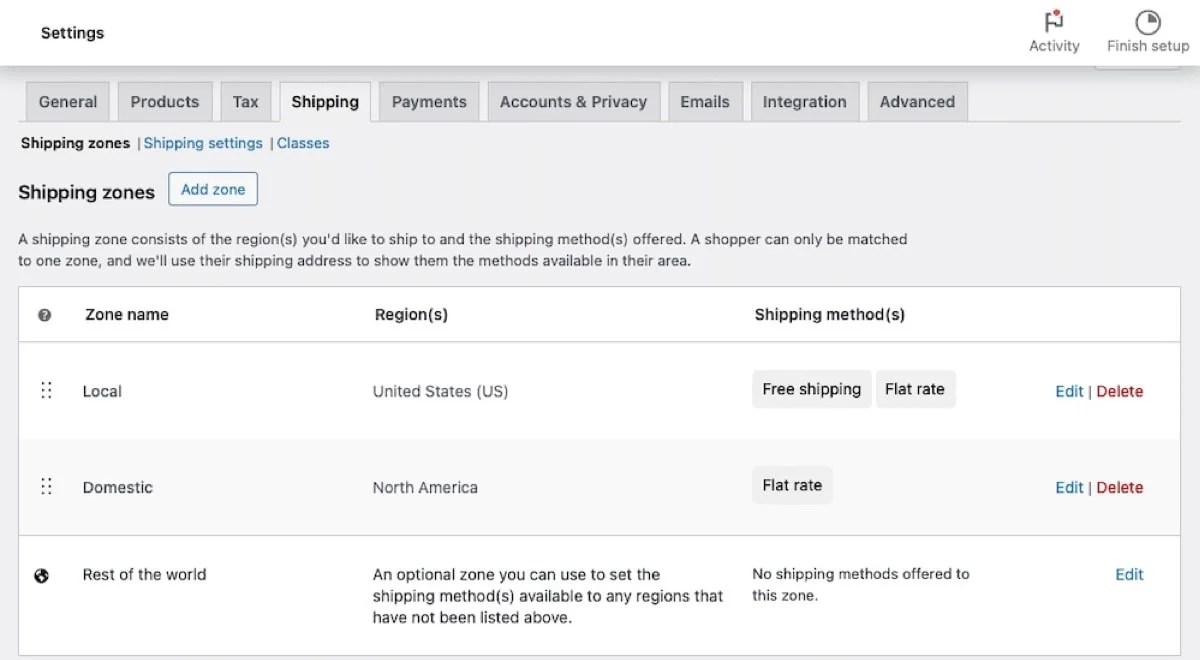
Implementing these dynamic systems transforms shipping from a variable cost risk into a stabilized operational component. By leveraging this technical precision, you can establish data-driven free shipping thresholds that are mathematically guaranteed to be profitable. This level of logistical automation is essential for scaling fulfillment globally while maintaining the healthy margins required to reinvest in further customer acquisition.
Scaling Global Reach through Automated Logistics and Fulfillment
Expanding into international markets requires moving beyond manual shipping calculations and spreadsheet-based fulfillment. For a scaling WooCommerce store, the operational bottleneck is often the human intervention required for cross-border logistics. Automation acts as the critical infrastructure that allows a lean team to manage high order volumes while maintaining absolute precision in landed cost calculations and delivery expectations.
- Real-Time Carrier Integration: Connecting your checkout directly to global carrier APIs ensures that shipping quotes are dynamic and accurate, preventing margin erosion caused by outdated or static shipping rates.
- Automated Customs Documentation: Implementing systems that automatically generate commercial invoices and harmonized system (HS) codes reduces administrative errors that lead to costly delays and abandoned packages at international borders.
- Distributed Fulfillment Logic: Utilizing automated routing to send orders to the nearest regional warehouse or 3PL provider minimizes transit times and shipping costs, directly impacting customer satisfaction and repeat purchase rates.
By shifting to an automated logistics model, you decouple your revenue growth from your operational headcount. This technical maturity ensures that your shipping strategy remains a scalable competitive advantage rather than a logistical liability, allowing you to capture global market share without sacrificing the profitability or reliability of your fulfillment engine.

Protecting Customer Lifetime Value with Reliable Post-Purchase CX
A customer’s journey does not end at the checkout button; in fact, the post-purchase experience is often where Customer Lifetime Value (LTV) is either secured or lost. For WooCommerce stores scaling their physical product lines, shipping reliability and transparency act as the primary drivers of trust. When a shipping strategy is poorly executed—characterized by opaque tracking or delayed fulfillment—it creates a “trust deficit” that no amount of remarketing can overcome. To protect your margins and retain high-value customers, your shipping infrastructure must transition from a cost center to a core component of your customer experience (CX) strategy.
To maximize retention through your shipping operations, focus on these three technical optimizations:
- Branded Order Tracking: Replace generic carrier tracking links with a branded tracking page within your WooCommerce ecosystem to maintain engagement and provide up-to-the-minute status updates.
- Proactive Exception Management: Utilize automated webhooks to notify customers immediately if a shipment is delayed or stalled, preempting support tickets and demonstrating operational transparency.
- Sustainable Packaging Standards: Optimize your dimensional weight (DIM) through precise packaging to reduce costs while ensuring product integrity, as damaged goods are the leading cause of one-time-only purchases.
By integrating these logistics-focused CX improvements, you shift the customer’s perception from a mere transaction to a reliable service. This reliability is the baseline for recurring revenue, allowing you to leverage shipping as a competitive advantage rather than a logistical hurdle.
Ready to take your e-commerce to the next level?
Optimizing your shipping strategy is a technical necessity, but if your logistics workflows are not integrated into a broader growth framework, they remain a cost center rather than a revenue driver. If your fulfillment costs are eroding profit margins, or if you suspect your post-purchase experience is failing to secure repeat customers, the core problem is likely a fragmented data ecosystem. High-growth WooCommerce stores must look beyond the immediate delivery of goods and treat shipping as a critical touchpoint for maximizing Customer Lifetime Value (LTV) and long-term profitability.
To transition from basic logistics to a fully optimized, data-driven eCommerce system, you need a strategy where tracking, CRM, and automation work in perfect harmony. We act as an extension of your in-house team, helping DTC brands eliminate guesswork and scale with precision. Our process begins with rigorous, data-driven & conversion-focused audits to identify the structural leaks in your current funnel—from paid media efficiency to lifecycle marketing. If you are ready to build a more powerful system for sustainable growth, book a free consultation today.