






We’ve all heard the mantra that aggressive top-of-funnel acquisition is the only lever for scaling an eCommerce brand, but what if this hyper-focus on new leads is actually causing you to leave massive amounts of money on the table? For many high-growth businesses, the hidden cost of inaction lies in a fragmented sales cycle where customer data is siloed and follow-ups are inconsistent. Without a centralized system to manage relationships, brands suffer from a silent ceiling on their revenue expansion, failing to capitalize on the critical touchpoints that turn a single purchase into long-term loyalty.
The hard reality is that manual spreadsheets and disconnected marketing tools cannot support the sophisticated, data-driven logic required to maximize Customer Lifetime Value (LTV) in an increasingly competitive market. Transitioning to professional CRM sales management is not just an administrative upgrade; it is a strategic necessity that enables your team to provide a seamless experience at every stage of the customer lifecycle. This guide explores how the right CRM infrastructure eliminates technical debt and fuels automated efficiency, ensuring that every interaction is tracked, personalized, and optimized for sustainable growth.
What is CRM sales management?
CRM sales management is the systematic process of managing customer interactions and sales data throughout the entire customer lifecycle to improve business relationships and drive revenue growth. For high-growth WooCommerce brands, this involves more than just storing contact details; it is about leveraging a centralized platform to synchronize sales, marketing, and support efforts. By providing a single source of truth, CRM sales management ensures that every touchpoint—from the initial lead capture to post-purchase follow-ups—is informed by real-time data and historical customer behavior.
- Data Centralization: Consolidating communication history, purchase records, and customer preferences into a unified profile to eliminate data silos.
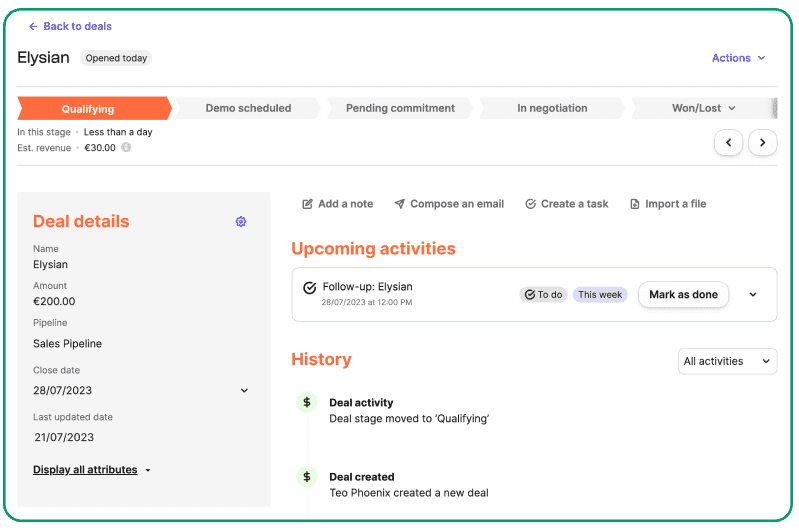
- Pipeline Visualization: Mapping the sales journey into defined stages to identify bottlenecks, forecast revenue accurately, and prioritize high-value opportunities.
- Process Automation: Implementing automated workflows for lead scoring, follow-up reminders, and administrative data entry to increase team velocity.
Transitioning from manual spreadsheets to a robust CRM sales management system is a technical necessity for scaling operations without losing the personalization that drives Customer Lifetime Value (LTV). When your sales management is integrated directly with your store’s backend, you shift from reactive selling to a proactive, predictive model. This infrastructure allows your team to focus on high-leverage strategic activities while the system ensures no prospect falls through the cracks due to manual oversight or fragmented communication.
Why is CRM software important for WooCommerce growth?
For high-growth WooCommerce stores, a CRM acts as the central intelligence hub that transforms siloed transaction data into actionable customer insights. While WooCommerce excels at managing orders, it often lacks the deep relational data needed to drive sustained revenue expansion. Integrating a CRM allows you to move beyond basic transaction history and begin mapping the entire customer lifecycle, identifying high-value segments and friction points that lead to churn.
- Unified Data Architecture: By synchronizing your WooCommerce store with a CRM, you centralize purchase history, support tickets, and engagement metrics, providing your sales and marketing teams with a 360-degree view of the customer.
- Behavioral Automation: A CRM enables advanced segmentation based on actual buying patterns, allowing you to trigger hyper-personalized workflows for upsells, cross-sells, and win-back campaigns at the exact moment of peak intent.
- Scalable Customer Success: As order volume increases, manual follow-ups become impossible. A CRM automates lead scoring and task management, ensuring your team focuses on the most profitable relationships without compromising the quality of the customer experience.
Transitioning from a product-centric model to a customer-centric strategy is essential for any store aiming to maximize Customer Lifetime Value (LTV). By leveraging professional CRM sales management tools, you build a resilient infrastructure capable of handling market volatility and increasing competition, ensuring your WooCommerce growth remains both predictable and profitable.
How does a CRM help sales and marketing teams?
For high-growth WooCommerce stores, a CRM functions as the central nervous system that bridges the gap between marketing acquisition and sales conversion. By consolidating fragmented data from store transactions, email engagement, and customer support tickets into a single source of truth, teams can eliminate the silos that typically stall revenue growth. This alignment ensures that marketing efforts are driven by real-time sales data, while sales teams are equipped with the behavioral context needed to prioritize high-intent leads.
- Unified Customer Profiles: Centralizing purchase history and engagement metrics allows marketing to build high-precision segments and sales to enter conversations with a full understanding of the customer’s needs.
- Automated Lead Nurturing: By utilizing behavioral triggers, teams can automate the transition of Marketing Qualified Leads (MQLs) to Sales Qualified Leads (SQLs), ensuring no high-value opportunity is lost to manual processing delays.
- Predictive Revenue Analytics: Integrated reporting allows both teams to identify which marketing channels are driving the highest Customer Lifetime Value (LTV), enabling more strategic budget allocation and sales forecasting.
Implementing a CRM shifts your operational model from reactive task management to proactive relationship building. For a WooCommerce brand, this means moving beyond simple transactional emails toward a data-driven strategy where every touchpoint is optimized for retention and conversion. By automating repetitive administrative tasks and data entry, your teams can focus on high-leverage activities that directly impact your bottom line and scale your market presence.
What are the main benefits of CRM for eCommerce?
For high-growth WooCommerce stores, the primary benefit of a CRM lies in its ability to centralize fragmented customer data into a single, actionable source of truth. By offloading complex customer profiles and historical interaction data from the WordPress database to a dedicated environment, you eliminate the performance bottlenecks that typically occur when wp-admin is forced to handle large-scale relationship management. This architectural shift allows your sales and marketing teams to operate with millisecond latency, ensuring that customer insights are available at the exact moment they are needed to close a sale or resolve a support ticket.
- Data Consolidation and Performance: Moving customer data to a CRM keeps your WooCommerce site lean and fast while providing a robust environment for managing millions of customer attributes without impacting front-end site speed.
- Precise Behavioral Segmentation: Unlike basic tagging, a CRM enables dynamic segmentation based on real-time data such as Customer Lifetime Value (LTV), purchase frequency, and last interaction date, allowing for hyper-targeted retention campaigns.
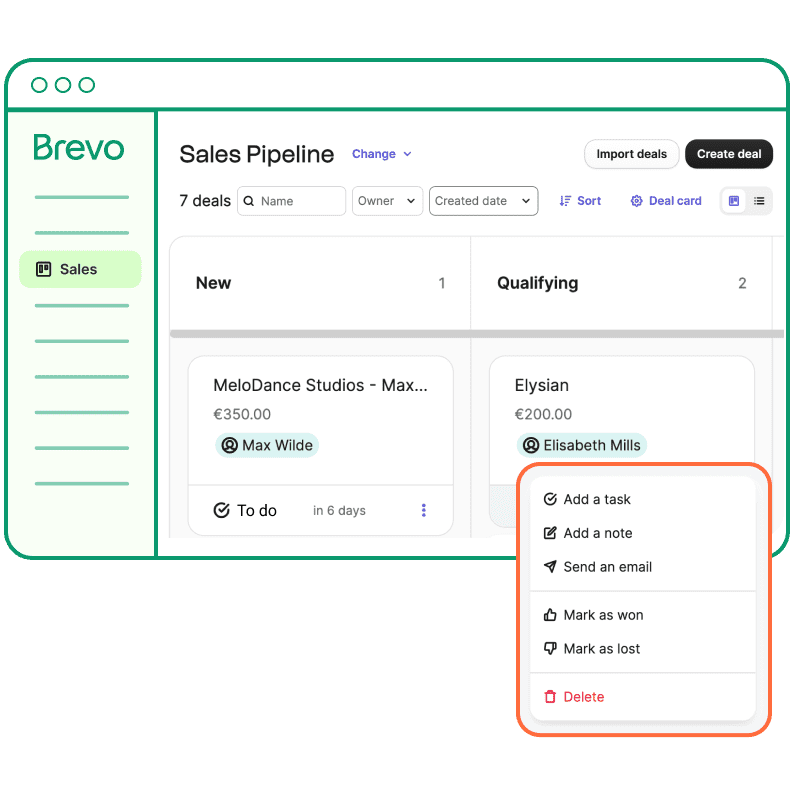
- Automated Lifecycle Management: By integrating sales workflows with customer behavior, you can automate high-leverage touchpoints—such as personalized re-engagement for VIP customers or churn-risk alerts—that drive predictable revenue growth without increasing manual overhead.
Ultimately, a CRM transforms your store from a transactional platform into a relationship engine. It provides the technical foundation necessary to transition from reactive support to proactive growth, utilizing advanced analytics and unified customer views to maximize every touchpoint across the sales cycle. For brands looking to scale beyond the limitations of default WordPress tools, implementing a dedicated CRM is a critical step in removing the technical ceiling on your revenue expansion.
How to choose the best CRM sales management tools for revenue?
Selecting a CRM for a high-growth WooCommerce store requires moving beyond basic contact storage toward a system that actively facilitates revenue expansion. The primary technical requirement is seamless bi-directional synchronization; your CRM must not only pull order history but also push behavioral data back into your marketing workflows to trigger high-intent sales actions. For lean operations, a self-hosted or lightweight plugin like FluentCRM often provides the best ROI, while brands with complex sales pipelines or multi-channel requirements should prioritize enterprise-grade platforms like HubSpot or Salesforce.
To ensure your CRM investment translates into measurable growth, evaluate potential tools based on these four strategic pillars:
- Native Integration Depth: Ensure the tool supports real-time synchronization of WooCommerce events, such as checkout started or payment failed, to minimize data latency in your sales funnel.
- Automation Sophistication: Prioritize platforms that offer visual workflow builders and behavioral triggers, allowing your team to automate lead nurturing and abandoned cart recovery without manual intervention.
- Actionable Analytics: The software must provide granular insights into Customer Lifetime Value (LTV) and attribution, enabling you to identify which segments and campaigns are driving the highest margins.
- Technical Scalability: Choose a system that can accommodate a growing database and complex multi-step automations without degrading performance or requiring a complete migration during peak traffic cycles.
Ultimately, the best CRM is one that bridges the gap between your marketing data and sales execution. By focusing on tools that offer robust data mapping and automated feedback loops, you create a technical foundation where customer interactions are systematically converted into repeat revenue and long-term brand loyalty.
Ready to take your e-commerce to the next level?
While mastering the fundamentals of CRM sales management is an essential first step, the business reality for high-growth WooCommerce brands is that software alone cannot solve a fragmented customer journey. If your sales cycles feel like they are stalling despite having the right tools, or if you suspect that a lack of synchronization between your marketing and sales teams is causing you to leave massive amounts of money on the table, you are facing a structural data problem rather than a software one. Relying on basic CRM setups without a unified strategy for tracking and automation is a direct compromise of your ability to maximize audience-wide Customer Lifetime Value (LTV).
To move beyond beginner guides and build a high-performance revenue engine, you need a technical infrastructure that synchronizes your technical backend with your broader growth objectives. We act as a strategic extension of your team, helping DTC brands maximize Profit and Retention through data-driven eCommerce systems where CRM, paid media, and advanced tracking operate in perfect concert. Our process begins with rigorous, conversion-focused audits to eliminate guesswork and identify the exact bottlenecks in your conversion funnel. If you are ready to transform your CRM from a static database into a scalable growth engine that maximizes ROAS, book a free marketing automation audit today.