






Many eCommerce brands operate under the comforting illusion that high open rates are the ultimate indicator of a healthy strategy, believing that as long as customers are clicking, the revenue will follow. But what if this narrow focus on vanity metrics is actually leading your store astray and causing you to leave massive amounts of money on the table? For high-growth businesses, the hidden cost of inaction lies in ignoring the granular KPIs that dictate true revenue expansion and long-term Customer Lifetime Value (LTV), leaving you blind to the technical bottlenecks that quietly destrói your profit margins.
The hard reality is that surface-level data fails to support the sophisticated, data-driven logic required to thrive in a competitive landscape where every delivery failure is a missed opportunity for conversion. Transitioning from basic monitoring to a comprehensive analysis of all seventeen essential email metrics is not just a tactical choice; it is a strategic necessity to eliminate technical debt and fuel automated workflow efficiency. This guide explores the critical performance indicators you must master to ensure every touchpoint becomes a measurable driver for scalable growth and sustainable ROI.
What are the most important email marketing metrics for WooCommerce?
For WooCommerce merchants, the most important email marketing metrics are those that bridge the gap between simple engagement and bottom-line revenue. While open and click rates provide a baseline for interest, a high-growth store must prioritize behavioral and transactional data to understand how communications influence the customer lifecycle. Tracking these signals allows you to move beyond vanity metrics and focus on the technical health and profitability of your automated flows.
- Conversion Rate: The percentage of recipients who completed a purchase after clicking through an email, directly measuring the impact of your offer and site experience.
- Revenue per Email (RPE): A high-leverage metric that calculates total sales divided by the number of emails sent, revealing the actual monetary value of each campaign.
- Cart Abandonment Recovery Rate: Specifically for WooCommerce, this tracks how effectively your automated recovery sequences convert lost interest into completed transactions.
- Email Delivery Rate: The foundation of performance, measuring the percentage of emails successfully accepted by recipient servers to ensure your infrastructure isn’t stalling your reach.
- Customer Lifetime Value (CLV) via Email: Tracking how much revenue an email subscriber generates over their entire relationship with your brand compared to non-subscribers.
By centralizing these KPIs, you can identify whether your strategy is stalling due to poor deliverability or if your conversion funnels are leaking revenue. Successful WooCommerce growth relies on using this data to optimize high-intent triggers, such as post-purchase follow-ups and abandoned cart reminders, ensuring every message sent serves as a clear signal for business health rather than just noise in a customer’s inbox.

Why is tracking email marketing KPIs critical for eCommerce revenue growth?
For high-growth WooCommerce stores, email marketing is not a set-it-and-forget-it channel; it is a precision-engineered engine that requires constant tuning. Tracking KPIs is critical because it transforms raw data into a roadmap for revenue expansion, allowing you to identify exactly where friction is causing profit leaks in your customer journey. Without these quantifiable insights, you are operating in a technical vacuum, unable to distinguish between a successful campaign and one that is silently damaging your sender reputation and long-term Customer Lifetime Value (LTV).
- Identifying Friction Points: High bounce rates or low click-through rates are immediate signals of infrastructure or content gaps that prevent high-intent customers from reaching your checkout page.
- Optimizing Acquisition Cost: By monitoring the conversion rate per email, you can accurately calculate your Return on Ad Spend (ROAS) for lead generation and reallocate budget toward the most profitable automation flows.
- Protecting Deliverability: Monitoring delivery rates ensures that your mission-critical transactional messages—like order confirmations and tracking updates—actually reach the inbox instead of being throttled by ISP spam filters.
Ultimately, a data-driven approach to email metrics allows you to move beyond vanity metrics and focus on structural growth. For an eCommerce brand, the ability to use behavioral data to optimize retention strategies is the difference between stagnant ROI and a scalable communication system. By treating your email KPIs as leading indicators of business health, you can proactively resolve technical bottlenecks before they impact your bottom line.
How to measure the success of your email automation campaigns?
Measuring the success of email automation within a WooCommerce environment requires looking beyond surface-level engagement to focus on behavioral data and revenue attribution. Unlike one-off broadcasts, automated flows like abandoned cart recovery or post-purchase sequences operate on a 24/7 cycle, meaning their performance must be evaluated based on their ability to move customers through specific lifecycle stages. To truly gauge effectiveness, you must analyze how these triggers impact your bottom line and customer retention over time.
- Attributed Revenue per Email: This is the gold standard for eCommerce automation. By tracking the specific dollar value generated by each automated message, you can identify which triggers are high-leverage and which require subject line or offer optimization to drive more conversions.
- Click-to-Conversion Rate: While open rates can be inflated by privacy protections, the ratio of users who clicked a link and completed a purchase provides a clear picture of how well your email content and WooCommerce landing pages are aligned.
- Automation Bounce & Unsubscribe Rates: High negative signals on automated flows are a red flag for poor timing or over-saturation. Monitoring these metrics ensures that your “set it and forget it” workflows aren’t accidentally damaging your sender reputation or eroding your active subscriber base.
By shifting your focus to these high-intent KPIs, you move from merely tracking activity to managing a scalable revenue engine. The goal of automation is to maximize Customer Lifetime Value (LTV); therefore, the most successful campaigns are those that consistently reduce friction in the buying process while maintaining a healthy, engaged list.
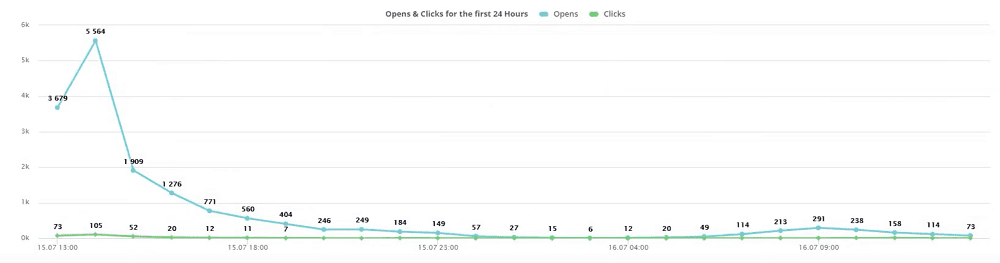
What are the best ways to improve email delivery rates for my online store?
Improving email delivery rates for a WooCommerce store requires a shift from simply sending mail to managing a technical infrastructure that earns trust from Inbox Service Providers (ISPs). While your delivery rate measures if a server accepted your message, true deliverability ensures that message actually lands in the primary inbox rather than the spam folder. For high-growth brands, the most effective improvements start with technical authentication and rigorous list hygiene to protect your sender reputation.
- Implement Full Authentication: Ensure your domain has correctly configured SPF, DKIM, and DMARC records. These protocols act as your digital passport, proving to providers like Gmail and Yahoo! that your transactional and marketing emails are legitimate and haven’t been tampered with in transit.
- Maintain List Hygiene: Regularly purge unengaged subscribers and invalid addresses from your database. High bounce rates and low engagement signals suggest to ISPs that you are sending unsolicited content, which can trigger a “silent ceiling” on your reach by routing future campaigns directly to spam.
- Monitor Reputation Metrics: Utilize tools like Google Postmaster to track your domain and IP reputation. Aim to keep spam complaint rates below 0.1% and hard bounce rates under 2% to ensure your store’s communication engine remains healthy and scalable.
By treating email deliverability as a core performance metric rather than a background task, you remove a major technical bottleneck to revenue growth. Consistent monitoring and adherence to these protocols ensure that your mission-critical messages, such as order confirmations and abandoned cart recovery flows, reach your customers with millisecond latency and maximum visibility.
How to use email marketing data to optimize your customer retention strategy?
Optimizing customer retention within a WooCommerce ecosystem requires moving beyond surface-level open rates and shifting toward behavioral data that predicts future value. By synthesizing email engagement metrics with transactional history, you can transition from reactive broadcasting to proactive lifecycle management. High-growth brands leverage these data points to identify declining engagement signals early, allowing for automated interventions that re-establish brand relevance before a customer reaches the point of permanent churn.
- RFM Segmentation Modeling: Use Recency, Frequency, and Monetary data to group customers into cohorts like “at-risk,” “loyalist,” or “hibernating.” This allows you to tailor email frequency and discount depth based on the specific retention risk associated with each segment.
- Predictive Churn Scoring: Monitor declining click-through rates (CTR) and session frequency as leading indicators of disengagement. By triggering personalized win-back sequences when a customer’s engagement score drops below a specific threshold, you can improve retention rates by addressing friction points in real time.
- LTV-to-CAC Ratio Analysis: Track the long-term profitability of different acquisition channels through email-attributed lifetime value. This data ensures you are investing your retention budget into high-value customer segments that drive sustainable net revenue retention (NRR) rather than chasing low-margin vanity metrics.
Ultimately, data-driven retention is an iterative process of testing and refinement. By continuously monitoring how specific cohorts respond to triggered incentives and personalized content, you can optimize the timing and messaging of your post-purchase journey. This structural approach ensures that every communication serves to compound the cumulative value of your existing audience, reducing the pressure on your top-of-funnel acquisition engine.
Ready to take your e-commerce to the next level?
While understanding the technical definitions of email marketing metrics is an essential foundation, the business reality for high-growth WooCommerce brands is that data without actionable strategy often leads to stagnant ROI. If your retention efforts feel like they are stalling revenue expansion, or if you suspect your campaigns are optimizing for vanity metrics like open rates while neglecting the bottom line, you are likely missing the structural synchronization required for true scale. Relying on basic benchmarks is a tactical starting point, but maximizing profitability requires moving beyond simple delivery to a deep, integrated understanding of how every touchpoint impacts your customer lifetime value.
To transform your email marketing from a manual checklist into a high-performance growth engine, you need a partner that functions as a strategic extension of your team. Our consultancy is dedicated to building data-driven eCommerce systems where advanced tracking, CRM, and automation operate in perfect concert to maximize ROAS and long-term retention. We eliminate the guesswork by starting with rigorous, conversion-focused audits that identify the exact bottlenecks in your customer journey and unlock hidden revenue opportunities. If you are ready to stop guessing and start scaling with a precision-engineered automation strategy, book a free marketing automation audit today.