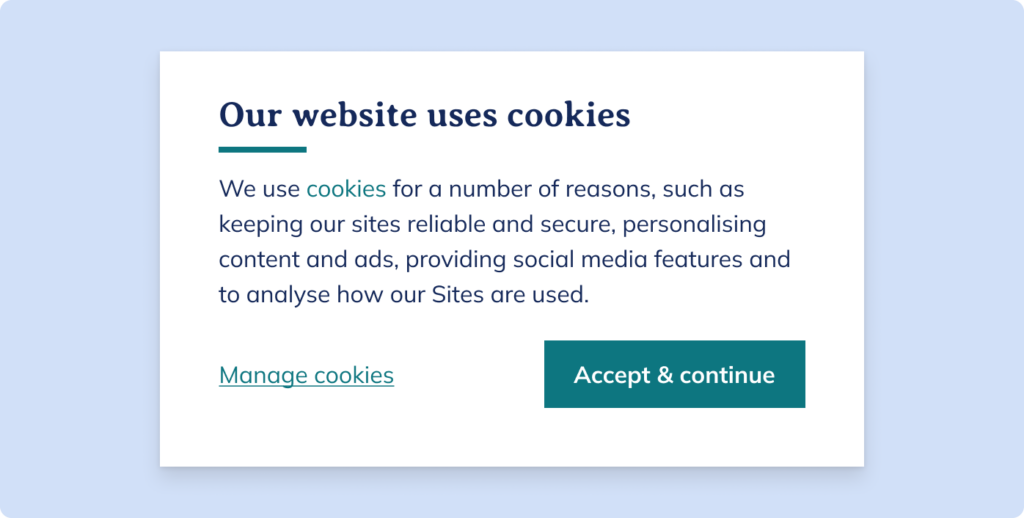






We’ve all heard the compliance-first mantra: the GDPR cookie banner is a necessary evil, a diretrizry wall of legal friction that must be minimized before a customer can convert. This common industry misconception often leads to delayed, confusing, or technically non-compliant implementations, and the true cost isn’t the regulatory fine—it’s the massive, hidden revenue loss in your key channels. By treating consent as a simple checkbox instead of a foundation of trust, your Email and SMS list growth stalls, and the data quality feeding your marketing automations degrades, quietly sabotaging your entire Customer Lifetime Value strategy.
But what if the GDPR was actually a blueprint for sustainable growth, a way to legally and ethically expand your eCommerce revenue? For high-growth consultants focused on long-term LTV, the shift is simple: move from minimizing friction to maximizing trust. This comprehensive guide cuts through the confusing legalese and country-specific guidelines, providing you with the exact examples and actionable steps—including the simplest way to implement consent with a trusted CMP like CookieYes—to not only achieve full compliance but to transform your cookie consent experience into a conversion-friendly trust touchpoint that accelerates, rather than stifles, your business growth.
Automating GDPR Compliance to Boost WooCommerce Conversions
The typical WooCommerce approach to GDPR is to minimize a perceived friction point, often resulting in non-compliant ‘dark patterns’ or confusing interfaces that damage user trust and spike abandonment rates. However, for a high-growth eCommerce store, the cookie banner is a critical touchpoint, not a liability. Automating GDPR compliance via a robust Consent Management Platform (CMP) shifts the interaction from a frustrating legal necessity to a positive demonstration of brand transparency. This transparency is the foundational precursor to conversion, ensuring that the consent collected is both legally sound and willingly given, leading to a higher quality of prospective customer.
To achieve this trust-based conversion lift on WooCommerce, automation must address the inherent complexities of the platform’s third-party tracking. A compliant CMP should integrate seamlessly to manage these data flows without manual developer overhead. Focus on automation features that directly reduce friction and compliance risk:
- Automated Cookie Scanning and Blocking: Continuously scans your WooCommerce site and third-party plugin cookies (e.g., analytics, marketing pixels), ensuring that non-essential scripts are automatically blocked until the user provides explicit, GDPR-valid consent.
- Geo-Targeting for Regulatory Logic: Automatically detects the user’s IP location (e.g., EU vs. rest of world) and serves the appropriate, legally mandated banner logic, such as a ‘Reject All’ button for GDPR, reducing unnecessary friction for non-EU traffic.
- Consent Record Management: Automatically logs and securely stores the user’s consent status as irrefutable proof of compliance, which protects the business from fines and ensures all subsequent marketing efforts are built on a legal data foundation.
By leveraging automation to handle the technical and legal burden of compliance, the WooCommerce store minimizes cognitive load for the user. A frictionless, transparent consent experience drastically lowers initial site abandonment rates and validates the brand’s commitment to privacy, ultimately boosting the conversion funnel by establishing trust right at the gateway of the customer journey.

The ‘Consent-First’ Strategy for Maximizing Email and SMS List Growth
The ‘Consent-First’ model fundamentally re-architects how a WooCommerce store approaches lead generation. Instead of seeing GDPR compliance as a necessary barrier to list growth, it must be viewed as the initial, high-integrity screening process. Explicit, informed consent—the standard demanded by GDPR—ensures that every email or SMS opt-in is a high-quality lead, directly improving the integrity of your marketing data. This trust-based approach instantly differentiates your brand and creates a foundation for a stronger Customer Lifetime Value (LTV), making subscribers far more receptive to subsequent value exchanges.
The practical implementation requires a deep, programmatic integration between your Consent Management Platform (CMP) and your email/SMS provider. To maximize list growth while maintaining full, auditable compliance, focus on these critical technical steps:
- Conditional Pop-ups: Deploy lead capture forms (e.g., Klaviyo) only to users who have already granted consent for the relevant data processing categories (such as Analytics or Marketing) via the cookie banner. This ensures every captured lead is legally actionable.
- Consent Granularity Sync: Ensure your CMP passes the user’s explicit, time-stamped consent status directly into the subscriber properties of your marketing platform. This is vital for auditable compliance and allows for hyper-segmentation based on the specific consent given.
- Automated Suppression: Implement a system to automatically suppress or flag users in your marketing lists who later revoke their consent via your preference center or CMP. This guarantees that your email and SMS workflows only target legally opted-in contacts, drastically reducing compliance risk and maintaining list hygiene.
Scaling Global Revenue: How Country-Specific Consent Optimizes LTV
A single, monolithic GDPR cookie banner is a structural weakness for any WooCommerce store with a global audience. While core GDPR principles remain constant, enforcement and interpretation are nuanced across major European markets—such as CNIL in France, the ICO in the UK, or the DSK in Germany—which dictates the actual design, button parity (e.g., “Accept All” vs. “Reject All”), and pre-checking status. Failing to localize the consent experience for these country-specific guidelines creates immediate legal friction, which users perceive as low-trust design, directly spiking abandonment rates and eroding the Customer Lifetime Value (LTV) of high-value international segments.
The key to optimizing global LTV is utilizing a Consent Management Platform (CMP) that enables geo-targeting to serve a dynamic, locally compliant banner. This pivot transforms compliance from a defensive measure into an offensive, trust-building asset. By minimizing cognitive friction and presenting a clear, legal framework tailored to their region, you significantly increase the likelihood of the user accepting compliant cookies or engaging with a preference center, thus securing quality data for future marketing:
- Geo-Specific Consent Flows: Automatically detect the user’s geographic location and display a consent banner that adheres strictly to that country’s latest regulatory nuances (e.g., implementing an explicit ‘Reject All’ button only where mandated) to immediately reduce non-compliance risk and improve the user experience.
- Localization of Legal Text: Ensure not just the banner language, but also the linked cookie policy and terms, are localized and reference the correct local supervisory authority, building deeper, localized trust with the international customer base.
- Audit-Ready Data Quality: Isolate and log consent records based on the specific country and regulatory rule-set under which it was given. This provides a legally robust foundation for segmentation and personalization, guaranteeing that subsequent marketing automation only targets users with verifiable, high-quality consent, which drives predictable LTV.
Implementing this country-specific consent optimization is the difference between a globally compliant WooCommerce store and a globally optimized one. The clean, legally verifiable data collected through a tailored consent flow is your most valuable asset, enabling compliant personalization and retargeting that drives a significantly higher return on ad spend and ensures scalable, sustainable revenue growth across all target markets.

Turning the Cookie Banner into a Frictionless
The primary commercial objective when implementing a GDPR cookie banner on a WooCommerce store is to neutralize legal compliance as a friction point. A truly frictionless banner adheres to all legal mandates—providing clear information, a genuine right to reject, and granular control—but does so with a minimalist, brand-aligned user experience. This design philosophy is fundamentally about preventing cognitive overload and technical disruption, which are the main culprits behind abandonment rates at this critical, initial touchpoint. By reducing the effort required for a user to make a compliant choice, you effectively preserve the conversion flow.
Achieving this state of low-friction consent requires a strategic focus on technical performance and design integrity. A compliant Consent Management Platform (CMP) is necessary to ensure the banner loads asynchronously and does not cause a detrimental Cumulative Layout Shift (CLS). Furthermore, the design must prioritize clarity over coercion. The following are critical, actionable steps to transition your consent mechanism into a frictionless touchpoint:
- Non-Blocking Implementation: Ensure the CMP script is optimized to load asynchronously without delaying the display of critical content, thereby preserving perceived site speed and preventing a technical friction point that causes immediate user drop-off.
- One-Click Parity: Present clear, equally sized, and identically positioned ‘Accept All’ and ‘Reject All’ buttons on the first layer of the banner. This design eliminates visual confusion, avoids ‘dark pattern’ accusations, and signals immediate respect for the user’s ultimate choice.
- Geo-Targeted Rendering: Dynamically configure your banner to only display the full, explicit-consent GDPR experience to users in the EU/EEA. For other regions where legal frameworks are less stringent, serve a less intrusive ‘notice-only’ banner or a soft-opt-in approach to minimize compliance-related friction for the majority of your global traffic.
High-Converting WooCommerce Touchpoint
The final step in transforming GDPR compliance from a perceived liability to a strategic asset is redefining the cookie banner as the first high-converting touchpoint in your WooCommerce funnel. A compliant, friction-free banner is fundamentally a trust signal. When a user perceives transparency and respect for their rights—by presenting clear choices without deceptive tactics—you significantly reduce the cognitive friction that often causes immediate site abandonment. This initial establishment of trust and momentum allows the customer to proceed into the product browsing and checkout stages with greater confidence, directly boosting session quality and conversion likelihood.
To architect a GDPR consent flow that acts as a conversion enabler for your WooCommerce store, focus on removing psychological blockers through meticulous design and functional transparency:
- Symmetric Choice: Ensure that “Accept All” and “Reject All” are given equal visual weight and prominence on the initial banner layer. This eliminates the ‘dark pattern’ of forced consent and validates the legitimacy of the user’s choice, which is key for legally sound and high-quality data.
- Non-Intrusive Placement: Implement the banner as a discreet footer or push-down notification rather than a full-page modal. Minimizing content obstruction preserves the user’s immediate goal (to browse or shop) and prevents the frustration that leads to an unnecessary bounce.
- Clear Language and Granularity: Use plain, accessible language that avoids dense legalese. More importantly, provide an immediate, one-click path to a preference center where users can exercise granular control over non-essential cookie categories without leaving the site.
By treating the cookie banner as a critical user experience element, you move beyond mere legal defense and actively leverage compliance as a competitive differentiator. A high-converting consent touchpoint ensures that the data you collect is both legally clean and of high intent, providing a solid foundation for all subsequent marketing and personalization efforts within your WooCommerce ecosystem.
Ready to take your e-commerce to the next level?
If your customer acquisition costs are rising, or if your marketing automation workflows feel unpredictable, the root cause often lies upstream—in your data collection architecture. The common industry assumption is that GDPR compliance is a defensive measure to avoid fines; the commercial reality is that a non-compliant or low-trust consent flow acts as a structural choke point, contaminating the quality of every lead and segment. This flaw introduces massive, unquantifiable data debt that compromises your Customer Lifetime Value (LTV) and creates volatility in your paid media returns.
A privacy-compliant solution is just the foundation; true, scalable growth comes from integrating your consent strategy into a conversion-first methodology. We specialize in engineering these unified WooCommerce systems where tracking, consent, CRM, and automation work in perfect synchronicity to maximize ROAS and long-term LTV. Stop guessing whether your data is legal or valuable. The first step to converting privacy from a liability into a competitive advantage is clarity. Schedule one of our data-driven & conversion-focused audits today to receive a precise, actionable blueprint for optimizing your data collection for maximum profit.