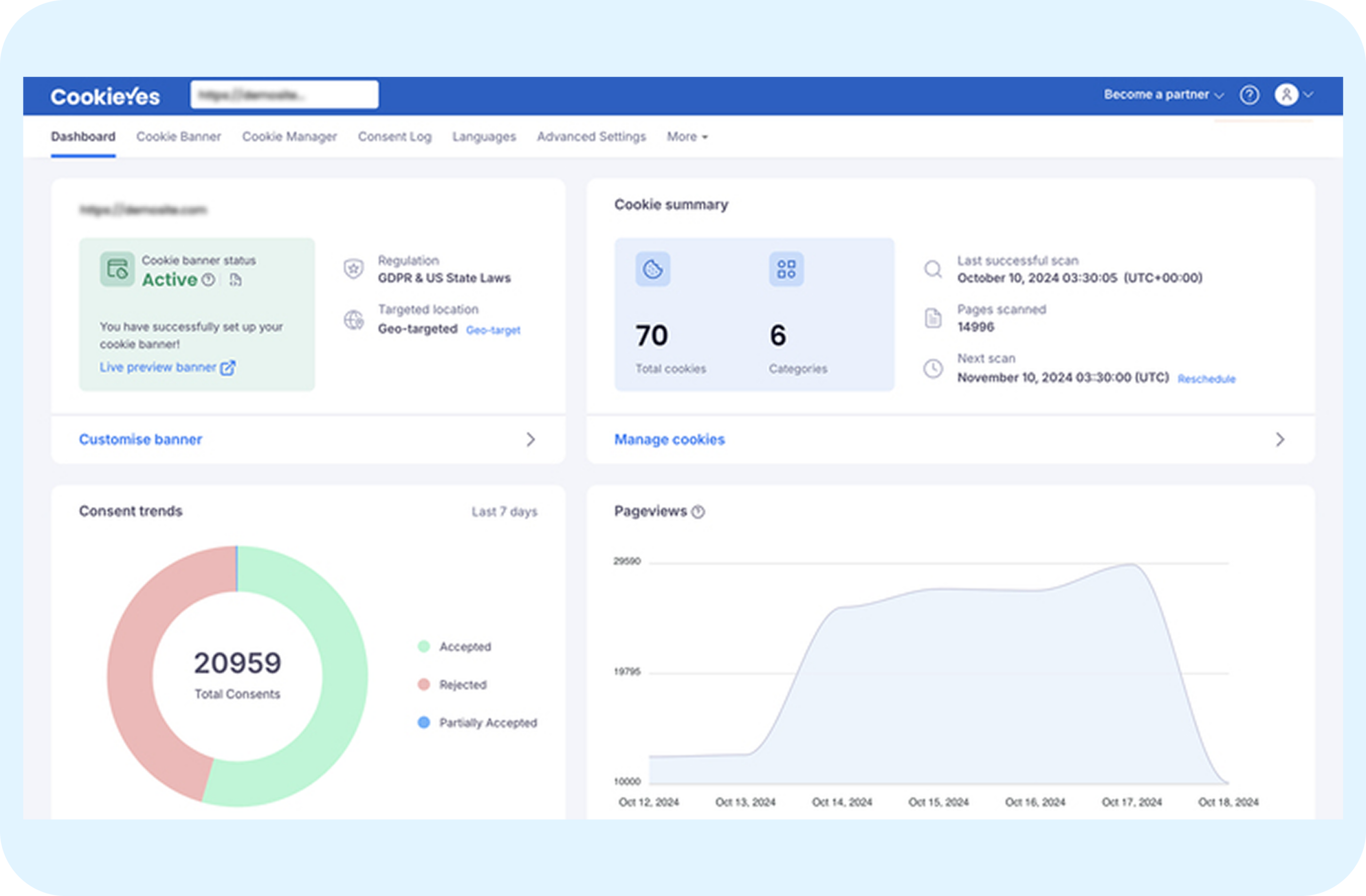






Many e-commerce leaders treat their cookie policy as a boilerplate legal document, a mere compliance formality that’s quickly delegated and forgotten. The unspoken consensus is that as long as the legal department has signed off, the job is done—a focus that prioritizes minimum risk avoidance over maximum revenue opportunity. This ‘check-the-box’ mentality creates a hidden, significant financial risk: a vague or poorly designed cookie policy is a powerful trust destroyer, silently eroding the foundation of your Customer Lifetime Value (LTV) and leaving quantifiable money on the table in your most sensitive channels, like Email and SMS marketing.
Regulators and, more importantly, modern consumers, no longer see a cookie policy as a footnote; they see it as a direct measure of your brand’s integrity. When a policy is missing crucial disclosures or uses confusing language, it triggers an immediate drop in user trust, leading to lower-quality consent and unreliable data streams for personalization and remarketing—the very engine of revenue expansion. This 2026 Cookie Policy Checklist shifts the focus from simple legal defense to strategic growth, providing you with the essential components to transform your policy from a necessary evil into a proactive, transparent, and legally sound trust signal for a high-converting user experience.
Automating Trust: How a Compliant Cookie Policy Boosts WooCommerce Conversions
A compliant cookie policy is no longer just a passive legal link, but a fundamental trust component that significantly influences the conversion funnel for a WooCommerce store. When a customer navigates to your policy, they are actively looking to validate the integrity of your operation before committing to a purchase. A policy that is clear, accessible, and dynamically updated signals an adherence to global data standards, immediately lowering the shopper’s cognitive load and perceived transaction risk. This proactive transparency directly addresses privacy-related cart abandonment before it happens, effectively converting legal rigor into a measurable commercial advantage.
- Dynamic Accuracy: A truly compliant policy should automatically reflect all cookies currently active on the WooCommerce site, including those dropped by third-party marketing and analytics integrations, ensuring zero discrepancy between the policy and actual data collection.
- Clear Purpose Segmentation: Cookies must be categorized by their function (e.g., Strictly Necessary, Analytics, Marketing) and described in non-legalese language so the user understands the exact value exchange of their consent.
- Multi-Jurisdictional Readability: For global WooCommerce stores, the policy must be auto-translated and geo-targeted, delivering the specific regulatory information and user rights (such as CCPA/CPRA opt-out links) based on the visitor’s location.
The ‘automation’ aspect is critical for scalability. Relying on a manual policy update process introduces significant compliance risk and latency, which negates the intended trust signal. By leveraging a robust Consent Management Platform (CMP), WooCommerce merchants automate the technical complexity of continuous cookie scanning and policy generation. This ensures the policy document is a living, compliant asset that minimizes friction for the user and preserves the integrity of the collected data, ultimately stabilizing and boosting high-quality, long-term conversions.
From Compliance to List Growth: Integrating Your Cookie Policy with Email/SMS Opt-In
The cookie policy is often viewed as a static legal document, but for WooCommerce growth, it must function as an active, integrated component of your lead capture funnel. A robust policy provides the legal grounding that validates all subsequent email and SMS marketing. When a user explicitly consents for marketing cookies—or, more directly, agrees to terms during checkout or a dedicated opt-in form—your cookie policy is the primary document defining how that personal data will be leveraged. Therefore, every marketing opt-in must be directly linked to and draw its authority from the policy’s clear disclosure of data processing activities.
- Policy Visibility: Embed a direct, unambiguous link to the full Cookie Policy (and Privacy Policy) directly beneath every email/SMS capture field, whether it’s a pop-up, footer form, or checkout checkbox.
- Dynamic Cookie Banner Logic: Utilize your Consent Management Platform (CMP) to ensure email or SMS capture forms that rely on tracking pixels (e.g., to sync data with an ad platform) are only displayed after a user has consented to the corresponding ‘Marketing’ or ‘Analytics’ cookie category.
- Explicit Consent Documentation: Store the timestamp and mechanism of consent (the specific form, checkbox text, and policy version they agreed to) within your CRM/ESP (e.g., Klaviyo/Attentive). This documentation is essential for audit and compliance proof.
This technical integration is the crucial pivot from mere compliance to sustainable list growth. It ensures that every email address or phone number acquired is a high-quality, fully-vetted lead with explicit, auditable consent. This consent-first approach dramatically reduces the risk of non-compliant marketing, lowers unsubscribe/spam rates, and ultimately builds an audience segment with a far higher average Customer Lifetime Value (LTV) because the initial brand interaction was built on transparency and trust.

The Hidden LTV Penalty: Why Vague Cookie Policies Cripple Customer Lifetime Value
The true cost of a vague or boilerplate cookie policy extends far beyond regulatory risk; it acts as a silent structural failure that directly compromises your Customer Lifetime Value (LTV) within the WooCommerce environment. When the details of data processing are obscured, users lack the essential clarity needed for informed consent, leading them to default to suspicion. This initial erosion of trust impacts not only immediate conversion rates but, more critically, reduces the likelihood of repeat purchases and increases churn. High-LTV customers, in particular, are increasingly privacy-aware and will abandon brands that feel manipulative or non-transparent, treating the policy as a litmus test for brand integrity.
For a WooCommerce store to mitigate this hidden LTV penalty, the cookie policy must be treated as a definitive technical blueprint, not just a legal text. The process of creating a transparent, detailed policy forces an essential internal audit of your data architecture. If your policy is vague, it means the technical implementation of your consent management is likely flawed, failing to accurately categorize and control all tracking technologies. Actionable steps to transform your cookie policy into an LTV asset include:
- Mandatory Processor Mapping: A good policy demands you map every single script and third-party data processor running on your WooCommerce site, ensuring no ‘shadow IT’ or unvetted tracking pixels are operating without consent.
- Precise Cookie Categorization: Vague policies often lump marketing and analytics cookies together. A robust policy requires explicit categorization (e.g., ‘Performance,’ ‘Advertising,’ ‘Strictly Necessary’), which ensures your collected data is legally defensible and ethically sound.
- Policy-as-Trust-Signal: Leverage the policy’s clarity and accessibility to reinforce your brand’s commitment to consumer rights, differentiating your WooCommerce store from competitors who rely on deceptive practices and converting compliance into a competitive advantage.

Scaling Compliance: Using Cookie Policy Automation to Drive Revenue Growth
Scaling a WooCommerce store internationally means confronting a fractal of regional privacy laws (GDPR, CCPA, LGPD, etc.). Manually maintaining a compliant cookie policy across multiple languages and evolving legal texts is a compliance bottleneck that directly drains developer and legal resources, stalling product velocity. Cookie policy automation fundamentally shifts this by treating the policy not as a static document, but as a dynamically managed, globally consistent data asset. This practice dramatically reduces your technical debt in compliance, freeing your teams to focus on core revenue-generating product features instead of continuous legal remediation.
The integration of an automated Consent Management Platform (CMP) is not just a compliance expense; it is a direct investment in business scalability. The efficiency gains translate directly into unlocked revenue opportunities by ensuring rapid, legally sound expansion and minimizing exposure to costly interruptions. These automated efficiencies drive growth by:
- Global Deployment Speed: Instantly publish legally validated and translated policies across all geo-targeted domains, eliminating manual deployment delays and ensuring immediate market readiness for new international regions.
- Risk Mitigation & Fines Reduction: By automatically generating and updating accurate, detailed cookie lists, you significantly reduce the risk of regulatory fines and brand damage from non-compliance, preserving critical working capital for marketing and growth investment.
- High-Trust Conversion Signaling: An automated, transparent, and perpetually up-to-date policy acts as a high-converting trust signal. This consistency boosts the customer confidence required for completing a purchase or submitting an email opt-in form.
The ultimate benefit of automation is its capacity for silent, continuous compliance, which is the prerequisite for scaling. By decoupling the policy management process from the sales funnel, you eliminate friction and ensure every international visitor is met with the correct, legally sound document without requiring manual intervention. This stable foundation of trust and low legal exposure is precisely what allows a WooCommerce operation to enter new markets and scale marketing spend with confidence, knowing the underlying legal framework will not collapse under regulatory scrutiny.

Beyond the Checkbox: Turning Your Policy into a High-Converting Trust Signal
The technical compliance of your cookie policy should be viewed as the floor, not the ceiling, of your data governance strategy. For a modern WooCommerce operation, this document functions as a foundational trust artifact that directly impacts conversion funnel performance. Customers are increasingly savvy, quickly recognizing generic, dense legal boilerplate as a sign of minimal compliance effort. A policy that goes “Beyond the Checkbox” actively mitigates perceived risk, transforming a moment of required friction into a conversion micro-win by signaling genuine respect for the user’s data autonomy. This transparency is key to establishing the high-quality, long-term Customer Lifetime Value (LTV) essential for scalable eCommerce growth.
To convert your policy from a static liability into a dynamic trust signal, focus on user-centric clarity and functionality. We advise integrating the following structural elements:
- Plain Language Summary: A concise, non-legalistic executive summary at the top of the policy that quickly explains what cookies are used for (e.g., analytics, cart function, personalization) and why they matter to the user experience.
- Dynamic Cookie Inventory: Integrate a live, automatically updated inventory of all first- and third-party cookies currently active on the site, including their exact purpose and expiration date. Static, outdated policy lists are an immediate red flag for non-compliance.
- Persistent Consent Control: Clearly and repeatedly state how a user can easily modify or revoke their consent at any time, typically via a persistent, clickable “Manage Consent” link in the footer or a dedicated widget, reinforcing user control and building confidence.
By deploying a policy with these structural and functional elements, you effectively shift the technical compliance burden away from the customer and onto your automated Consent Management Platform. This user-centric transparency not only future-proofs your legal standing but, more importantly, cultivates higher quality, more durable consent. Users who grant consent based on clear information are more engaged and significantly less likely to abandon the cart or prematurely churn, directly translating privacy diligence into tangible, higher-LTV revenue growth for your WooCommerce store.

Ready to take your e-commerce to the next level?
If your marketing efforts feel like they’re stalled, or if you suspect you’re spending heavily on customer acquisition only to see unpredictable LTV, the root cause is rarely the ad creative—it is often the integrity of your data. A cookie policy that merely meets a legal requirement is a missed opportunity. The actual commercial risk of non-compliance extends far beyond fines; it contaminates your entire data pipeline, leading to poor segmentation, wasted media spend, and a quiet, structural erosion of customer trust that tanks long-term profitability.
The shift from compliance-as-defense to consent-as-strategy requires technical precision. We act as an extension of your in-house team, specializing in building data-driven systems where advanced tracking, consent, CRM, and marketing automation work in perfect sync to maximize your ROAS. If you want to move past the compliance checklist and unlock a high-quality data advantage, the next step is clarity. Book one of our data-driven & conversion-focused audits today and receive the exact blueprint your WooCommerce operation needs to turn privacy compliance into scalable LTV and profit.