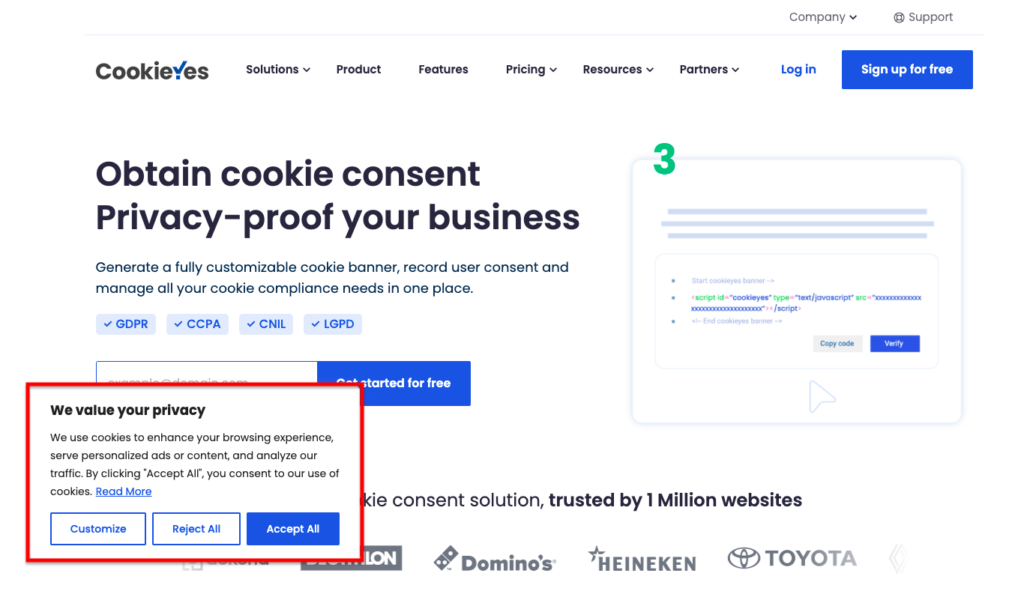






Many eCommerce brands operate under the comforting illusion that checking the box on basic CCPA disclosures is enough to safeguard their operations, believing that privacy regulations are merely a legal hurdle rather than a growth lever. But what if this narrow focus on basic compliance is actually acting as a silent ceiling on your revenue expansion? For high-growth businesses, the hidden cost of inaction lies in the deliverability and trust gaps created by failing to adapt to the more rigorous CPRA standards, which can lead to decimated subscriber lists and lost opportunities to capture high-intent data for your critical Email and SMS marketing flows.
The hard reality is that the shift from CCPA to CPRA is not just a minor amendment; it is a fundamental restructuring of how consumer data fuels your Customer Lifetime Value (LTV). Relying on legacy privacy frameworks in a post-CPRA landscape means risking your primary domain reputation and your ability to leverage behavioral data for personalized outreach, effectively leaving massive amounts of money on the table during peak sales cycles. This guide explores the key differences between CCPA and CPRA, providing the strategic clarity needed to transform regulatory compliance from a technical bottleneck into a high-performance engine for scalable eCommerce growth.
What are the key differences between CCPA and CPRA?
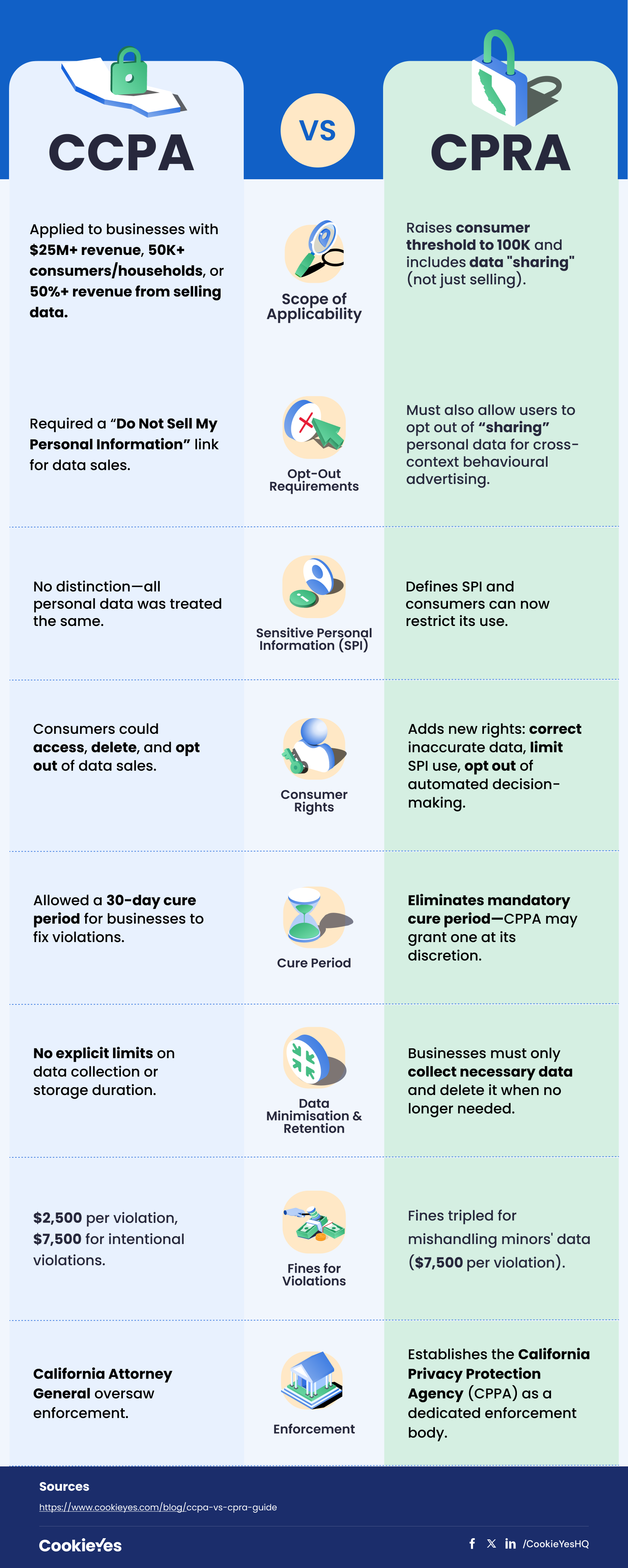
Understanding the transition from the California Consumer Privacy Act (CCPA) to the California Privacy Rights Act (CPRA) is essential for any WooCommerce merchant processing California-based data. While the CCPA established the foundational framework for data privacy in the U.S., the CPRA functions as an expansive amendment that tightens regulatory requirements, introduces more stringent categories of data, and creates a dedicated enforcement body to oversee compliance.
- Sensitive Personal Information (SPI): The CPRA introduces a specific sub-category of personal data, including precise geolocation, race, ethnicity, and financial credentials, which requires stricter handling and provides consumers the right to limit its use.
- New Consumer Rights: Beyond the original rights to know and delete, the CPRA adds the right to correct inaccurate personal information and the right to opt out of automated decision-making technology.
- The Enforcement Body: Unlike the CCPA, which was primarily overseen by the Attorney General, the CPRA established the California Privacy Protection Agency (CPPA), the first dedicated data protection agency in the country, to implement and enforce the law.
- Sharing vs. Selling: The CPRA explicitly regulates the “sharing” of personal information for cross-context behavioral advertising, closing a loophole where data transferred without a monetary exchange might have bypassed original CCPA restrictions.
For scaling eCommerce brands, these differences necessitate a shift from reactive privacy policies to a “privacy by design” architecture. This means moving beyond a simple opt-out link to implementing robust data minimization practices and ensuring your technical infrastructure can support real-time requests for data correction and restriction of sensitive information.
Why is CPRA compliance essential for WooCommerce stores?
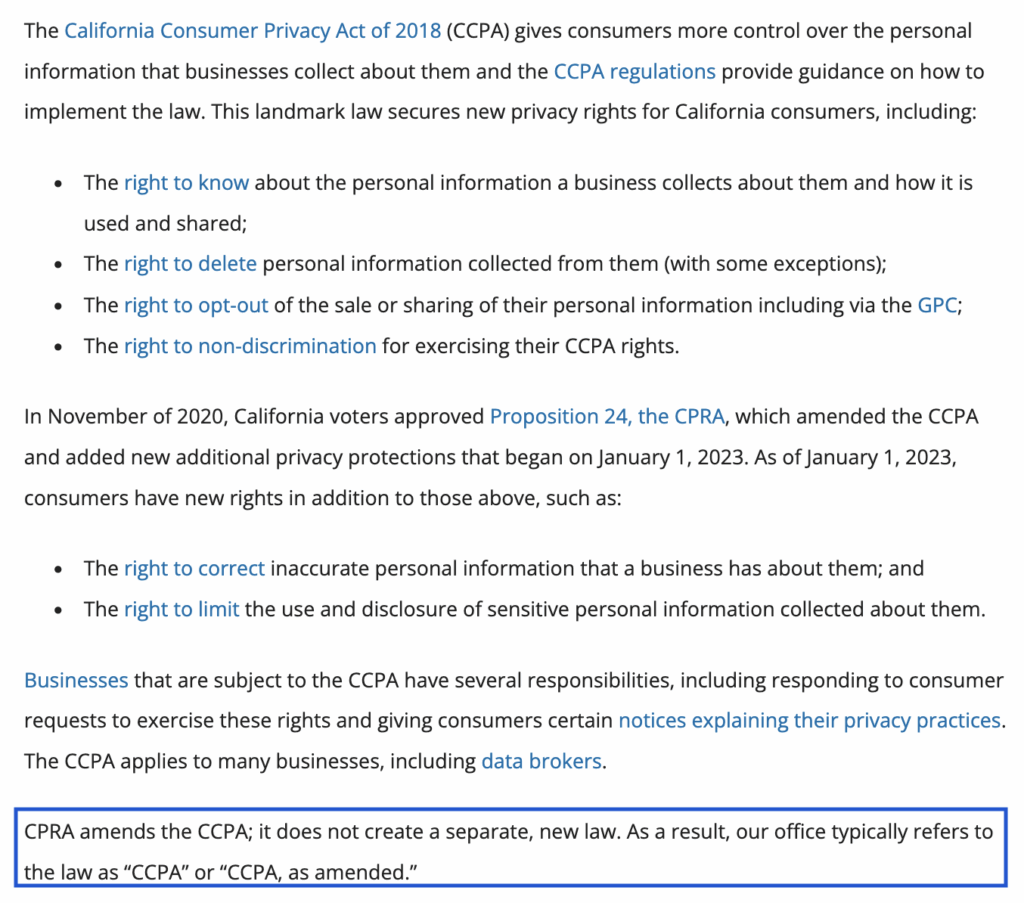
For high-growth WooCommerce stores, CPRA compliance is no longer a peripheral legal concern but a core component of technical infrastructure and brand trust. While the CCPA established the baseline for privacy, the CPRA introduces stricter “Sensitive Personal Information” (SPI) classifications that directly impact how eCommerce platforms handle everything from precise geolocation to login credentials. Failing to adapt to these amendments risks significant administrative fines from the California Privacy Protection Agency and, more importantly, creates technical debt in your customer data management workflows.
- Sensitive Data Classification: Unlike standard personal info, the CPRA mandates heightened protections for SPI, such as financial account details and precise location data, requiring WooCommerce owners to implement specific “Limit Use” mechanisms.
- Enhanced Enforcement: The establishment of the CPPA means active audits and enforcement are the new reality; stores must ensure their plugin ecosystem—from payment gateways to marketing trackers—strictly adheres to data minimization principles.
- Consumer Rights Expansion: The CPRA grants users the right to correct inaccurate data and opt out of automated decision-making technology, necessitating robust account management interfaces and transparent data processing logs within your store.
Adopting a proactive CPRA strategy safeguards your Customer Lifetime Value by aligning your data practices with modern consumer expectations. By treating privacy as a feature rather than a hurdle, you ensure that your WooCommerce scaling efforts are built on a compliant foundation that mitigates risk during high-volume periods like Black Friday. This technical diligence prevents the fragmentation of consent signals across devices and ensures your brand remains resilient in an increasingly regulated digital marketplace.
How does the CPRA impact eCommerce data collection?
The transition from CCPA to CPRA significantly tightens the protocols for how WooCommerce merchants handle customer information, introducing a new category of “Sensitive Personal Information” (SPI). For eCommerce stores, this means data collection is no longer just about volume but about precise classification and purpose-driven retention. You must now distinguish between standard identifiers, like email addresses, and SPI, such as precise geolocation, race, or account login credentials, which require stricter access controls and enhanced opt-out transparency.
- Data Minimization and Purpose Limitation: You are legally required to collect only the minimum amount of consumer data necessary for specific, disclosed business purposes. Excessively broad data harvesting without a clear functional need for the transaction can now lead to direct enforcement actions.
- Handling Sensitive Personal Information (SPI): Merchants must provide a prominent “Limit the Use of My Sensitive Personal Information” link if SPI is used for anything beyond essential service delivery. This forces a shift in how tracking pixels and third-party analytics are integrated into your storefront.
- Contractual Governance with Service Providers: The CPRA mandates that your agreements with third-party vendors, such as shipping partners or marketing tools, must explicitly prohibit the selling or sharing of personal data. Your backend infrastructure must ensure that data shared via APIs remains within these compliant boundaries.
Ultimately, the CPRA shifts the burden of proof to the merchant, requiring automated systems that can facilitate consumer requests for data correction and deletion. For high-growth WooCommerce brands, this necessitates moving away from fragmented data silos and toward a centralized privacy management framework that ensures every byte of collected data is accounted for, categorized, and protected according to these higher California standards.
What are the new consumer privacy rights under CPRA?
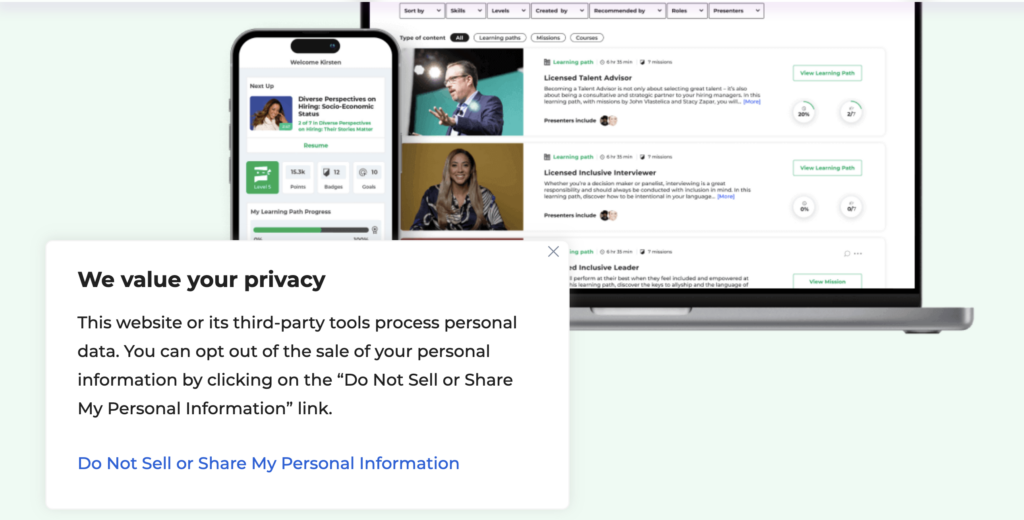
The California Privacy Rights Act (CPRA) significantly matures the regulatory landscape for WooCommerce merchants by introducing specific rights that target the precision and sensitivity of data processing. While the original CCPA focused on the existence and sale of data, the CPRA empowers consumers to control the accuracy and depth of the information stored within your eCommerce database. For high-growth brands, this means moving beyond simple “Do Not Sell” buttons to implementing robust systems for data rectification and specialized handling of sensitive personal information (SPI).
- Right to Correction: Consumers can now mandate that a business correct inaccurate personal information, requiring merchants to establish verified workflows for updating customer records across CRM and marketing automation platforms.
- Right to Limit Sensitive Personal Information: This allows users to restrict the use of high-risk data—such as precise geolocation, racial origin, or private communications—to only what is strictly necessary for providing the requested service or product.
- Expanded Right to Opt-Out of Sharing: The CPRA explicitly covers the “sharing” of data for cross-context behavioral advertising, closing the loophole for third-party tracking even when no monetary transaction occurs.
- Right to Access Automated Decision-Making Technology: Consumers may request information regarding the logic and likely outcomes of automated processes, such as personalized pricing algorithms or AI-driven credit scoring used during the checkout phase.
Implementing these rights requires an operational shift in how your WooCommerce store interacts with its tech stack. From a consultant’s perspective, compliance is no longer just a legal hurdle but a data integrity advantage; by allowing customers to correct their profiles and limit intrusive tracking, you effectively sanitize your marketing lists. This transition reduces the risk of enforcement actions while building a foundation of transparency that can improve long-term customer retention and brand equity in the privacy-conscious California market.
How to automate WooCommerce marketing while staying CCPA compliant?
Automating WooCommerce marketing while maintaining CCPA and CPRA compliance requires transitioning from broad data collection to a privacy-first orchestration model. For high-growth brands, the challenge lies in ensuring that automated triggers—such as abandoned cart sequences or personalized product recommendations—are powered only by data for which explicit or inferred consent has been verified and documented. By integrating a robust Consent Management Platform (CMP) directly with your WooCommerce backend, you can programmatically gate marketing workflows based on the user’s current privacy preferences.
To scale your automation securely, focus on these critical technical implementation steps:
- Signal Synchronization: Ensure your marketing automation tool listens for Global Privacy Control (GPC) signals and CMP updates in real-time to automatically suppress or enable tracking pixels like the Meta Pixel or Google Tag Manager.
- Dynamic Data Retention: Implement automated cleanup scripts or use compliant plugins to purge sensitive customer data that exceeds your stated retention period, fulfilling the CPRA’s “purpose limitation” requirement.
- Automated Opt-Out Requests: Configure your system to handle “Do Not Sell or Share My Personal Information” requests by automatically updating customer metadata in WooCommerce, which then triggers a global suppression across all linked marketing platforms via webhooks.
By shifting the burden of compliance from manual checks to automated, signal-based logic, you protect your brand from the strengthened enforcement introduced by the CPRA. This technical resilience ensures that your growth remains sustainable, as every automated touchpoint is backed by a verifiable audit trail of consumer consent.
Ready to take your e-commerce to the next level?
While understanding the technical nuances of CCPA versus CPRA is a critical regulatory requirement, the business reality for high-growth WooCommerce brands is that compliance is no longer just a legal checkbox—it is a foundational component of your data infrastructure. If your scaling efforts feel like they are stalling due to fragmented tracking, or if you suspect that unoptimized consent management is eroding your ability to capture high-intent audience data, you are facing a structural barrier to profitability. Relying on baseline privacy settings or outdated collection methods is not just a compliance risk; it is a direct compromise of your attribution accuracy and your long-term capacity to drive predictable revenue expansion.
To move beyond basic compliance and build a high-performance, privacy-first growth engine, you need a partner that integrates legal requirements with your broader performance marketing and CRM objectives. We act as a strategic extension of your team, helping DTC brands maximize Profit, Retention, and LTV through data-driven systems where tracking, consent, and automation operate in perfect, compliant concert. Our process begins with rigorous, conversion-focused audits designed to eliminate guesswork and identify the exact technical bottlenecks in your customer journey. If you are ready to transform your data collection into a scalable, privacy-compliant system that maximizes ROAS, book a free marketing automation audit today.