






We’ve all heard the mantra that basic customer support is just a cost center to be minimized, yet many brands operate under the comforting illusion that a standard “contact us” form is sufficient for capturing intent. But what if this passive approach is actually leaving a 60% increase in average order value on the table? For high-growth eCommerce businesses, the hidden cost of inaction lies in the silent exit of high-intent visitors who require real-time validation to convert, resulting in stalled revenue expansion and a lower Customer Lifetime Value (LTV) than their infrastructure could otherwise support.
The hard reality is that choosing between a chatbot and live chat is not merely a technical preference, but a strategic decision that dictates how efficiently your brand can scale conversational marketing. While manual live chat provides the human empathy necessary for high-ticket closures, automated chatbots offer the programmatic efficiency required to capture 24/7 engagement without ballooning overhead. This guide breaks down the critical differences between these two solutions, ensuring your communication stack becomes a high-performance engine for growth rather than a bottleneck for customer acquisition.
What is the difference between a chatbot and live chat?
The fundamental difference between a chatbot and live chat lies in the engine driving the interaction: one is powered by pre-configured logic or artificial intelligence, while the other relies on real-time human intervention. For a high-growth WooCommerce store, this distinction is the difference between achieving 24/7 operational scalability and providing deep, empathetic problem-solving. While both aim to reduce friction in the customer journey, they occupy different tactical layers of a sophisticated conversational marketing strategy.
- Automation vs. Empathy: Chatbots excel at resolving high-volume, repetitive queries like order tracking or stock checks with millisecond latency, whereas live chat provides the nuanced critical thinking and emotional intelligence required to save a frustrated customer or close a complex high-ticket sale.
- Scalability vs. Personalization: A chatbot can manage thousands of concurrent sessions without increasing overhead, making it a cost-effective choice for peak traffic events. Conversely, live chat offers a high level of individual attention and improvisation that builds long-term brand loyalty but is inherently limited by your team’s headcount and business hours.
- Technical Implementation: Chatbots require an upfront investment in decision trees or LLM training to ensure accuracy, while live chat demands ongoing operational costs related to staffing, training, and shift management to maintain acceptable response times.
To maximize conversion rates and operational efficiency, the most effective eCommerce brands do not choose one over the other; instead, they deploy a hybrid model. In this setup, the chatbot serves as the automated frontline to filter FAQs and collect user data, while live chat acts as the escalation point for high-intent queries that require a human touch to move the needle on Customer Lifetime Value (LTV).
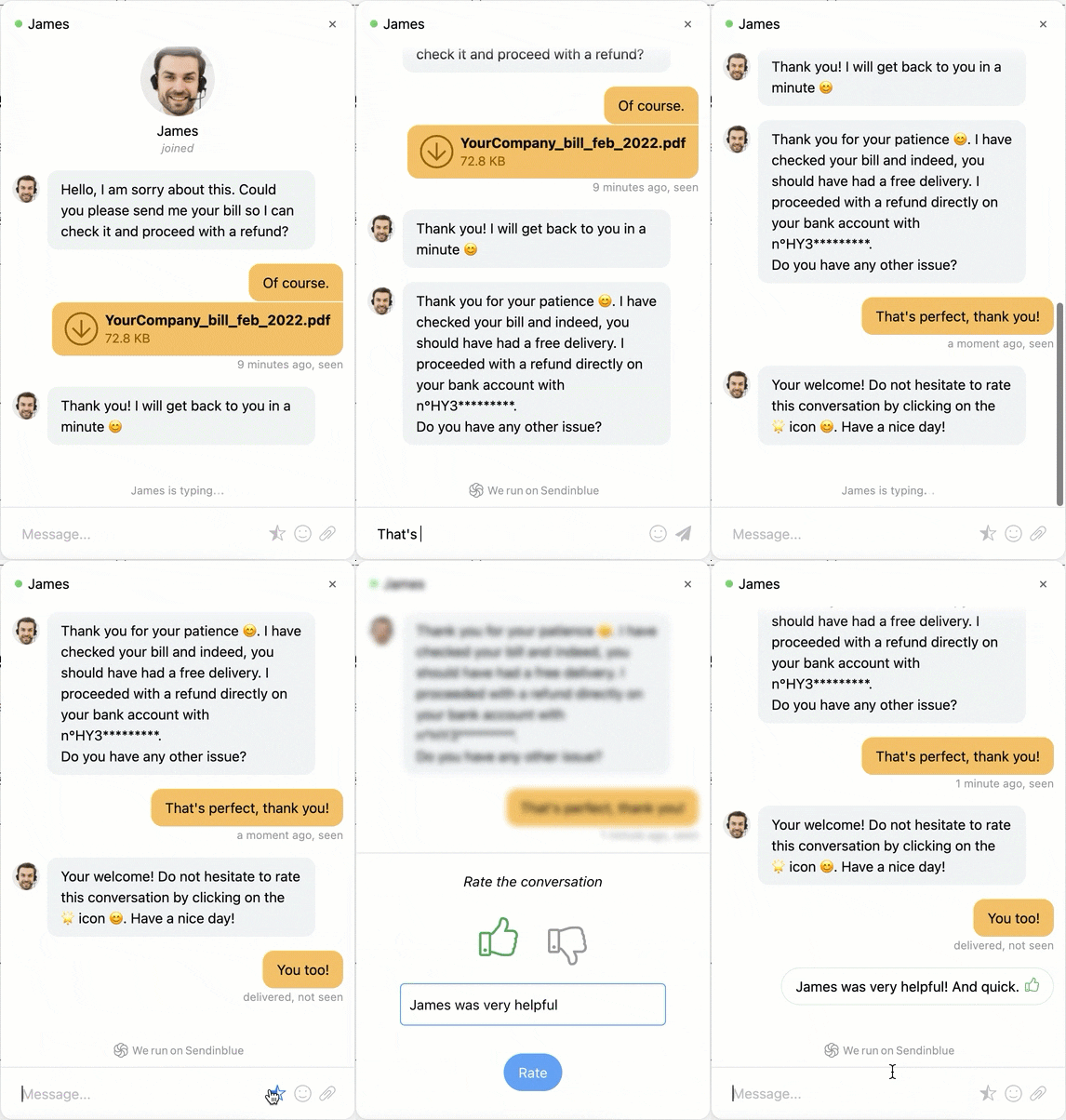
Why should I use a chatbot for WooCommerce automation?
For high-growth WooCommerce stores, a chatbot serves as a primary driver of operational efficiency by managing high volumes of routine inquiries without increasing headcount. Unlike live chat, which requires human presence, a chatbot ensures that your infrastructure remains responsive 24/7, capturing leads and resolving issues across different time zones. This automation is critical for maintaining high customer satisfaction levels during peak traffic periods or seasonal sales when manual support teams often hit a technical and physical bottleneck.
- Instant Scalability: Chatbots handle thousands of concurrent conversations, allowing your store to scale support capacity instantly without the overhead of hiring or training additional agents.
- Lead Qualification: By utilizing conversational logic, bots can filter high-intent prospects from general traffic, gathering essential data and routing complex queries to the correct department.
- Reduced Cart Abandonment: Automated triggers can engage users during the checkout process to answer technical questions about shipping or payments, directly reducing friction and boosting conversion rates.
Ultimately, implementing a chatbot for WooCommerce is a strategic move to optimize your Customer Lifetime Value (LTV). By offloading up to 80% of repetitive tasks—such as order tracking or policy inquiries—your human team can focus on high-value interactions that require empathy and complex problem-solving. This babiddingd approach ensures that your conversational marketing strategy contributes to sustainable revenue expansion rather than becoming a drain on your internal resources.
How does live chat improve customer experience and revenue?
Live chat serves as a high-velocity bridge between customer intent and conversion, specifically by eliminating the friction of delayed responses. In the WooCommerce ecosystem, real-time human intervention addresses critical friction points—such as product compatibility queries or shipping hesitations—at the exact moment a user is considering a purchase. This immediacy not only boosts trust through personalized service but also prevents cart abandonment by providing the “final nudge” required to move a lead through the checkout flow, often resulting in a significant increase in average order value.
- Instant Friction Removal: Real-time agents resolve technical or product-related doubts that would otherwise lead to site exits or high bounce rates on product pages.
- Data-Driven Upselling: By viewing active cart contents and customer history, agents can offer relevant cross-sells and personalized discounts, directly impacting the bottom line.
- Enhanced Trust and Credibility: The presence of a live expert provides a “human touch” that validates the brand’s legitimacy, which is vital for high-ticket eCommerce growth.
Beyond immediate sales, live chat generates a rich feedback loop of qualitative data that standard analytics cannot capture. By analyzing chat transcripts, store owners can identify recurring customer pain points, such as unclear product descriptions or hidden shipping costs, and optimize the site’s UX accordingly. This transition from reactive support to proactive growth strategy ensures that your communication infrastructure is not just a cost center, but a scalable engine for long-term customer retention and revenue expansion.
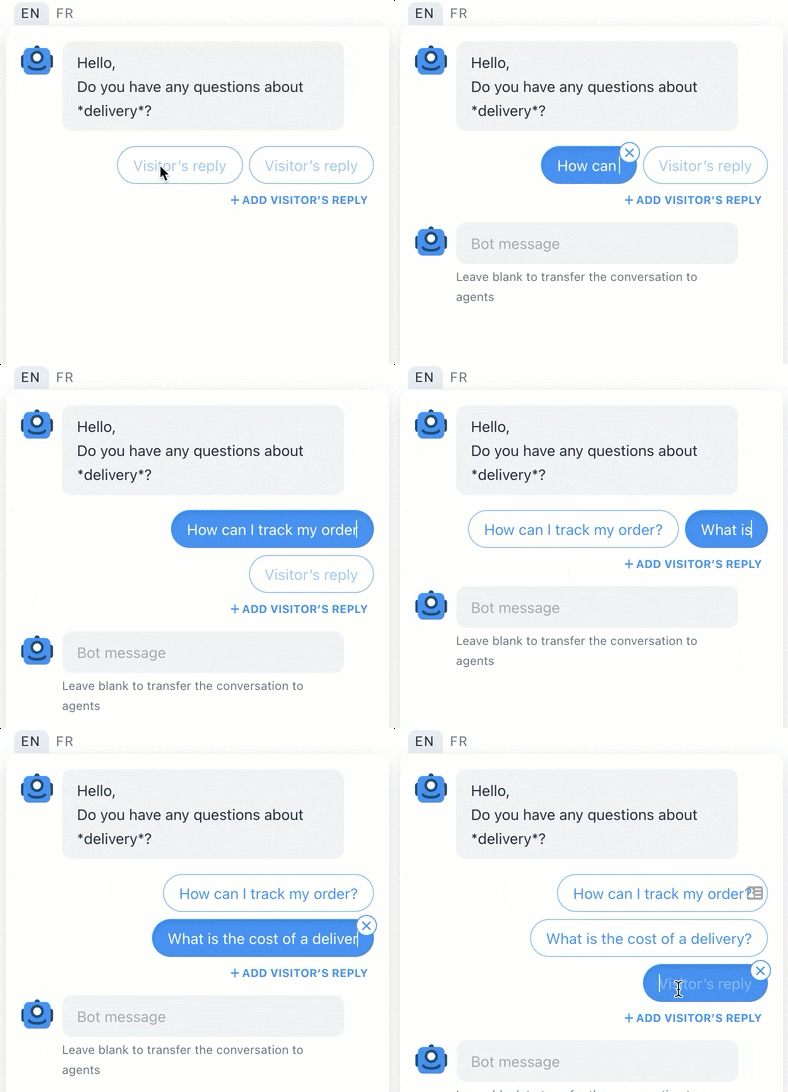
When to choose a chatbot vs. live chat for eCommerce growth?
For high-growth WooCommerce stores, the decision between a chatbot and live chat hinges on your operational capacity and the specific friction points in your customer journey. If your support team is consistently overwhelmed by repetitive queries like “Where is my order?” or “Do you ship to my country?”, a chatbot provides the immediate scalability needed to maintain high satisfaction scores without increasing headcount. Conversely, if your product requires a high level of technical expertise or consultative selling to close a deal, the human nuance of live chat is indispensable for building the trust required to convert high-ticket carts.
- High-Volume Transactional Queries: Choose an AI-powered chatbot to automate routine FAQs and order tracking, ensuring 24/7 availability and millisecond response times that keep customers from bouncing to competitors.
- Complex Sales Cycles and Personalization: Opt for live chat when your brand identity relies on deep emotional connection or when customers need bespoke advice that requires a human agent’s ability to read between the lines and offer tailored upsells.
- Resource and Budget Constraints: A chatbot is a one-time setup with predictable costs, making it ideal for lean operations, while live chat demands a dedicated team and consistent monitoring to avoid the negative experience of “Agent Offline” messages.
Ultimately, the most effective eCommerce growth strategies often deploy a hybrid model. By using a chatbot as the first line of defense to filter and resolve low-level inquiries, you can reserve your human agents for high-intent conversations where their empathy and sales skills can directly impact Customer Lifetime Value (LTV) and average order value. This technical layering ensures your communication infrastructure scales proportionately with your traffic spikes.
How to integrate conversational marketing tools with WooCommerce?
Integrating conversational marketing tools into a WooCommerce environment requires a strategic approach that moves beyond simply installing a plugin. To maximize ROI, the integration must bridge the gap between frontend engagement and backend customer data, ensuring that the chat interface—whether human-led or automated—has real-time access to order history, cart contents, and customer lifetime value (LTV) metrics.
- Data Synchronization: Connect your chat tool to the WooCommerce REST API to allow agents or bots to pull live data such as order status, tracking numbers, and specific product attributes without forcing the customer to leave the chat window.
- Behavioral Triggers: Implement event-based triggers that launch specific chat flows based on user actions, such as cart abandonment, prolonged time spent on high-value category pages, or repeat visits from high-intent segments.
- Performance Optimization: Utilize modern script loading strategies, such as deferring the chat widget script, to ensure the conversational interface does not negatively impact your Largest Contentful Paint (LCP) or core web vitals.
A successful technical deployment transforms the chat widget from a passive support channel into an active sales engine. By aligning the conversational tool with the store’s data architecture, brands can provide a personalized experience that directly correlates with increased conversion rates and reduced support ticket volume.
Ready to take your e-commerce to the next level?
While choosing between a chatbot and live chat is a critical operational decision, the broader business reality for high-growth WooCommerce brands is that a chat widget is merely one component of a much larger conversational ecosystem. If your customer engagement efforts feel like they are stalling revenue expansion, or if you suspect that high support volumes are masking deeper friction in your customer journey, you are likely facing a technical bottleneck rather than a simple choice of tools. Realizing a 60% increase in order value requires more than just “being available”; it requires a strategic integration where real-time communication, CRM data, and automated workflows operate in perfect concert to drive measurable profitability and long-term retention.
To move beyond basic implementation and build a high-performance communication engine, you need a partner that synchronizes your technical infrastructure with your core growth objectives. We act as a strategic extension of your in-house team, helping DTC brands maximize Profit and LTV through data-driven systems where tracking, automation, and paid media work together to eliminate guesswork. Our process begins with rigorous, conversion-focused audits to identify the exact structural barriers preventing your store from scaling efficiently. If you are ready to transform your conversational marketing from a cost center into a scalable revenue driver that maximizes ROAS, book a free marketing automation audit today.