





The prevailing wisdom in eCommerce is that data privacy compliance is a purely defensive measure—a necessary cost center to shield against potential GDPR fines and legal risk. This mindset often leads to the use of rushed, generic consent flows and subtle dark patterns that prioritize short-term consent volume over customer trust. However, the hidden cost of this compliance-first approach is not the penalty from a regulator, but the silent, continuous erosion of your Customer Lifetime Value (LTV) and the systemic decay of the high-quality data required to power your most profitable Email and SMS segmentation.
The critical insight for 2026 is that data privacy is no longer an optional expense, but a measurable driver for revenue expansion and a prerequisite for sustainable growth. In this report, we cut through the noise by compiling 60 essential data privacy statistics—from the latest GDPR fine totals to the shocking cost of data breaches—that move your business beyond defensive compliance. By internalizing these key trends, you can gain the strategic blueprint necessary to re-architect your consent flows, secure your data for future growth, and transform regulatory friction into a high-converting trust signal that scales global revenue.
The Hidden Cost of Non-Compliance: GDPR Fines and Their Impact on eCommerce LTV
The cost of GDPR non-compliance for a WooCommerce store extends far beyond the highly publicized regulatory fines. While the legal penalty is a clear and quantifiable risk—sourced from violations concerning consent, data processing, or data breach notifications—the more profound and destructive impact is the structural damage inflicted upon Customer Lifetime Value (LTV). Non-compliance acts as a slow, corrosive force on the foundational trust that drives repeat purchases and customer advocacy. When a brand is perceived to be using deceptive practices, or even just confusing ones, the psychological cost of the transaction rises, leading to higher abandonment rates, lower email opt-in quality, and a direct suppression of long-term revenue.
The erosion of LTV is fundamentally a consequence of compromised data quality and damaged brand equity. Non-compliant consent practices, such as obscuring the ‘Reject All’ button or pre-checking marketing boxes—commonly known as ‘dark patterns’—may offer an immediate, short-term spike in collected data volume. However, this data is often low-quality and legally brittle. Crucially, it contaminates the segmentation and personalization efforts that are vital for nurturing LTV. The non-financial, technical penalties that directly depress your WooCommerce LTV include:
- Segment Contamination: Data acquired without genuine, informed consent leads to segments populated by users who are more likely to mark emails as spam or unsubscribe, dramatically lowering the deliverability and overall ROI of your email and SMS marketing channels.
- Retargeting Choke Point: Violations can force an immediate and severe restriction on third-party cookie usage and tracking pixels. This cripples your ability to run high-efficiency, personalized retargeting campaigns—a critical driver of revenue for most eCommerce operations.
- Erosion of Data Viability: In the event of an audit or fine, any data collected illegally must be purged. This action voids historical customer profiles and purchase data, making accurate lookalike modeling and high-value customer identification impossible.
To mitigate this systemic risk, compliance must transition from a defensive legal checklist to a proactive, strategic growth measure. For a WooCommerce consultant, this means advocating for a Consent Management Platform (CMP) that automates compliance with granular controls while prioritizing user experience. By ensuring that every marketing opt-in is explicitly earned, you are building your LTV on a foundation of high-quality, legally viable, and pre-qualified data—the only sustainable path to scaling an eCommerce business in a privacy-first era.
Automating WooCommerce Compliance: Turning Data Regulations into a Trust Signal
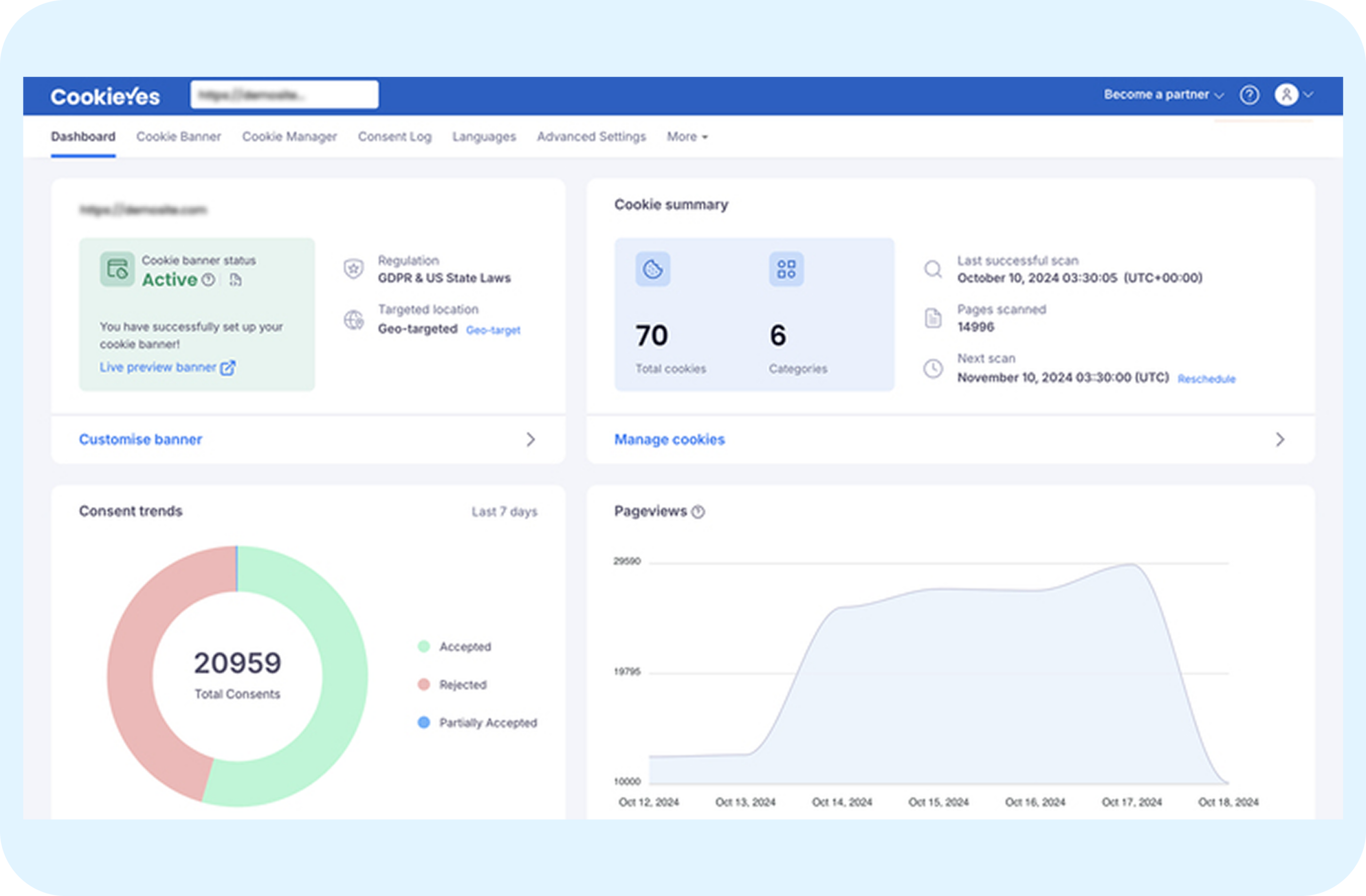
The core strategic shift for a high-growth WooCommerce operation is moving past the reactive view of compliance—simply trying to avoid fines—to treating it as a proactive, automated trust signal. In a market where data privacy is paramount, non-compliant or poorly designed consent flows are structural choke points that destroy customer lifetime value (LTV). An automated Consent Management Platform (CMP) integrated directly with your WooCommerce environment transforms this liability into an asset by guaranteeing a transparent, legally-sound foundation from the very first interaction, which is essential for global market scalability.
Achieving this level of trust automation requires more than just a visible cookie banner; it demands technical control over your entire data pipeline. This involves ensuring that all tracking mechanisms, particularly those for marketing and analytics, are dynamically managed based on the user’s explicit consent status. The key technical automations a WooCommerce store must deploy include:
- Geolocation-Based Rules: Automatically load the correct regulatory banner—e.g., GDPR in the EU, CCPA/CPRA in California, LGPD in Brazil—to minimize friction for users in non-regulated jurisdictions and ensure country-specific legal adherence.
- Script Auto-Blocking: Implement a mechanism that proactively scans the site and blocks all non-essential tracking scripts (from plugins, pixels, or third-party widgets) until the user has given affirmative, explicit consent for those specific categories.
- Consent Audit Trail: Automate the creation and secure storage of a tamper-proof record of every user’s consent choice (the ‘proof of consent’), which is a fundamental requirement under GDPR and essential for defending against regulatory challenge.
When compliance is fully automated in this manner, it removes the cognitive burden from the customer, allowing them to proceed through the funnel faster and with greater confidence. This transparency, facilitated by technical automation, significantly reduces abandonment rates at the critical entry point, thereby driving higher-quality segmentation and maximizing the ROI of all downstream marketing channels.

Consent-First Marketing: Why Data Transparency Boosts Email and SMS ROI
The traditional marketing playbook for WooCommerce stores prioritized list volume, often employing vague opt-ins that resulted in low-quality, non-compliant contacts. In a consent-first ecosystem, particularly for businesses leveraging email and SMS platforms (such as Klaviyo or other dedicated services), the metric shifts entirely to data quality. By providing a transparent and unambiguous consent experience—clearly stating what data is collected and precisely how it will be used, for example, for personalized SMS offers—you intentionally filter out passive or unengaged users. This initial act of transparency ensures the data fueling your automation platforms is high-integrity, which is the foundational element for boosting engagement and simultaneously mitigating regulatory risk.
To transition effectively to a consent-first model that maximizes your Email and SMS ROI, focus on refining the opt-in touchpoint to establish immediate trust:
- Clear Value Proposition: Explicitly state the direct, immediate benefit of opting in (e.g., “Get 10% off your first order & VIP access to new drops via SMS”).
- Granular Consent Fields: Do not bundle email and SMS consent; allow users to opt into each channel separately to prove free and informed choice, which is a core GDPR/CPRA requirement.
- Linked Privacy Policy: The consent form must contain a highly visible, one-click link to the specific section of your Privacy Policy detailing the email and SMS data usage for full technical transparency.
The commercial impact of this approach is quantifiable in terms of channel efficiency. When your segmentation and personalization engines are running exclusively on fully consented, high-intent data, your deliverability rates increase, spam reports plummet, and, crucially, conversion rates per campaign rise due to higher relevance. This efficiency drives down the effective Customer Acquisition Cost (CAC) for both email and SMS channels. Furthermore, by respecting the user’s choice from the first interaction, you dramatically reduce long-term list churn, thereby directly improving the Customer Lifetime Value (LTV) associated with every consented customer.
Data Breach Statistics: How Security Failures Destroy Customer Lifetime Value (LTV)
The latest data breach statistics, such as those published by IBM, quantify the immediate financial impact of a security failure, but for a WooCommerce business, the critical metric is the long-term, non-recoverable loss of Customer Lifetime Value (LTV). A security incident moves the relationship from a trusted transaction to a high-risk liability in the customer’s mind. This LTV destruction is not a simple churn rate spike; it’s a systemic breakdown in the trust-based commerce model, where the perceived negligence of the merchant becomes a permanent psychological barrier against future transactions. The cost of a breach is therefore exponentially higher than the fine itself, as it requires re-acquiring customers who have already paid the highest price—their personal data.
To mitigate this structural LTV damage, the operational focus must pivot from reactive damage control to proactive, transparent data governance embedded within the WooCommerce architecture. The goal is to minimize the attack surface and, more importantly, maximize trust signals. For high-growth eCommerce, a data breach audit is a fundamental component of the growth strategy, not just a compliance exercise. Your recovery plan should center on three key LTV-protection vectors:
- Zero-Party Data Gating: Limit the collection and retention of Personally Identifiable Information (PII) and payment data to the absolute minimum necessary for transaction fulfillment, thus minimizing the value of any compromised database.
- Transparent Incident Response: Implement a clear, immediate communication protocol that explains how the breach occurred, what data was affected, and the exact steps taken to secure the environment, demonstrating accountability rather than obfuscation.
- Post-Breach LTV Re-Engagement: Offer a specific, high-value, non-monetary incentive to impacted customers—such as a year of premium identity protection or an exclusive value-add service—to demonstrate a genuine investment in repairing the damaged trust relationship.
Scaling Your WooCommerce Revenue: Proactive Data Audits for Global Market Entry
Expanding a WooCommerce store into new global markets, particularly regions governed by stringent privacy laws like GDPR and CCPA, requires shifting the data strategy from reactive compliance to proactive risk mitigation. A pre-launch data audit is not merely a legal checkbox; it is a foundational step for market entry scalability. Non-compliance, even accidental, can immediately sabotage brand trust and introduce unpredictable legal liabilities, turning new growth channels into massive financial and reputational drains. Before activating any international advertising or analytics campaigns, a complete, structural audit of your current data processing activities is essential to define the correct legal-technical framework for each target country.
The output of this audit directly informs the strategic deployment of a Geo-Targeted Consent Management Platform (CMP). By pinpointing which tracking technologies are deployed and the specific legal consent model required in your expansion markets, you can automate a compliant and conversion-friendly user experience. This strategy ensures that users outside regulated zones do not face unnecessary friction, while customers in high-risk zones (like the EU/UK) receive the diretrizry, high-integrity consent flow. This intelligent deployment is the only way to scale international revenue predictably, safeguarding Customer Lifetime Value (LTV) from the first international impression.
- Third-Party Tag Inventory: A full scan to identify all marketing, analytics, and personalization scripts (cookies, pixels) firing on your site, especially those that process user data, which must then be categorized for GDPR/CCPA compliance.
- Geo-Compliance Mapping: Determine which major privacy laws (e.g., GDPR, CCPA, LGPD) apply to your current and prospective user base, and map the necessary consent model (opt-in vs. opt-out) for each region to ensure compliance-by-default.
- Consent-to-Tag Flow Verification: Testing the technical integrity of your current CMP to ensure that non-essential third-party tags are genuinely blocked by default before consent is given (pre-consent blocking) and only fire upon explicit user opt-in.
Ready to take your e-commerce to the next level?
The latest data privacy statistics on escalating GDPR fines and crippling data breach costs are not merely regulatory warnings—they are leading indicators of a failing growth strategy. If your WooCommerce store is struggling with unpredictable paid media ROAS, or if your email and SMS list segments feel brittle, the root cause is often upstream: the compromised, low-quality data fueling your entire ecosystem. Treating compliance as a necessary legal expense, instead of a foundation of user trust, is a short-sighted gamble that rapidly accumulates ‘data debt,’ directly eroding the Customer Lifetime Value (LTV) of every customer you acquire.
To transition from playing defense to aggressively scaling profit, you need to engineer a data-driven system where consent, tracking, and conversion work as a unified engine. We specialize in building this integrated architecture for DTC/eCommerce brands, acting as an extension of your team to ensure your consent flows, CRM, and marketing automation systems maximize ROAS and long-term LTV. Stop building your growth on guesswork and non-compliant data. Book one of our data-driven & conversion-focused audits today to receive a clear, actionable blueprint for monetizing privacy and ensuring your data pipeline is built for the future.