






The common approach to analytics cookies is to treat them as a passive technical necessity, simply collecting data until a looming privacy regulation forces a quick, reactive fix. This ‘set-it-and-forget-it’ mindset is the single greatest hidden cost for modern eCommerce, resulting in fragmented, low-quality customer data that makes everything from Email segmentation to SMS personalization unpredictable and inefficient. The industry’s default assumption—that all data is equally valuable—is leading brands astray, causing you to constantly overspend on re-acquisition because your Customer Lifetime Value (LTV) models are built on a shaky, non-compliant foundation.
The hard truth for 2025 is that the regulatory landscape, coupled with the inevitable shift toward cookieless tracking, is forcing a critical strategic pivot: the quality of your analytics is now fundamentally determined by the quality of your user consent. To future-proof your revenue expansion, you must move beyond mere compliance to a privacy-first analytics strategy that treats consent as a high-value customer touchpoint. This ultimate guide will break down the technical structure and compliance standards of analytics cookies, providing you with a clear, actionable blueprint for privacy-first tracking that not only mitigates legal risk but actively drives higher-quality opt-ins and sustainable LTV.
How Compliant Analytics Cookies Fuel WooCommerce Conversion Rate Optimization
The transition to a compliant analytics setup on WooCommerce is not a defensive liability; it is an immediate strategic asset for Conversion Rate Optimization (CRO). The principle is simple: only compliant data is quality data. When user data is collected through clear, informed consent—as mandated by GDPR and CCPA—the resulting data set is inherently less tainted by forced compliance or user frustration. This data integrity is foundational, as CRO relies on accurately segmenting traffic and measuring behavioral metrics (like funnel abandonment, time on page, and conversion paths) to identify true points of friction, rather than just measuring the noise created by a non-compliant cookie banner.
Leveraging this high-integrity data directly leads to more effective, targeted optimization efforts. The key is to ensure your Consent Management Platform (CMP) is seamlessly integrated with your analytics and marketing platforms to dynamically filter and activate scripts based on user choice. This technical rigor allows for precise A/B testing and segmentation, focusing efforts on the audience that is legally and ethically available for tracking.
- Accurate Funnel Analysis: Compliant analytics ensures scripts fire only after explicit consent, providing a true picture of the consented user journey from product page to checkout, eliminating the statistical noise of pre-consent drop-offs or non-tracked users.
- Ethical Personalization: High-quality, consented analytics data allows for granular user segmentation, enabling ethical, high-converting personalization strategies—such as dynamic content recommendations or re-targeting—for only those users who have explicitly agreed to analytical/marketing tracking.
- Reliable A/B Testing: When A/B tests are run on a fully consented user base, the results are statistically reliable and legally sound. This allows WooCommerce merchants to confidently roll out site-wide changes based on valid data, optimizing layouts and calls-to-action for true performance gains.
The ‘Consent-First’ Blueprint for High-ROI Email & SMS List Growth
The ‘Consent-First’ strategy for email and SMS list growth represents an architectural shift from a volume-based approach to a high-integrity, high-ROI model. Rather than viewing the compliant cookie banner as a legal obstacle, a WooCommerce consultant must leverage it as the initial, critical screening process. When a user is presented with a transparent consent interface and chooses to opt-in for analytics cookies, they signal a higher level of trust and intent. This foundational, legally sound data acquisition allows for ethical segmentation, ensuring that all subsequent, higher-value marketing efforts—like Klaviyo-driven pop-ups or SMS sign-up forms—are targeted exclusively at this compliant, high-quality prospect pool.
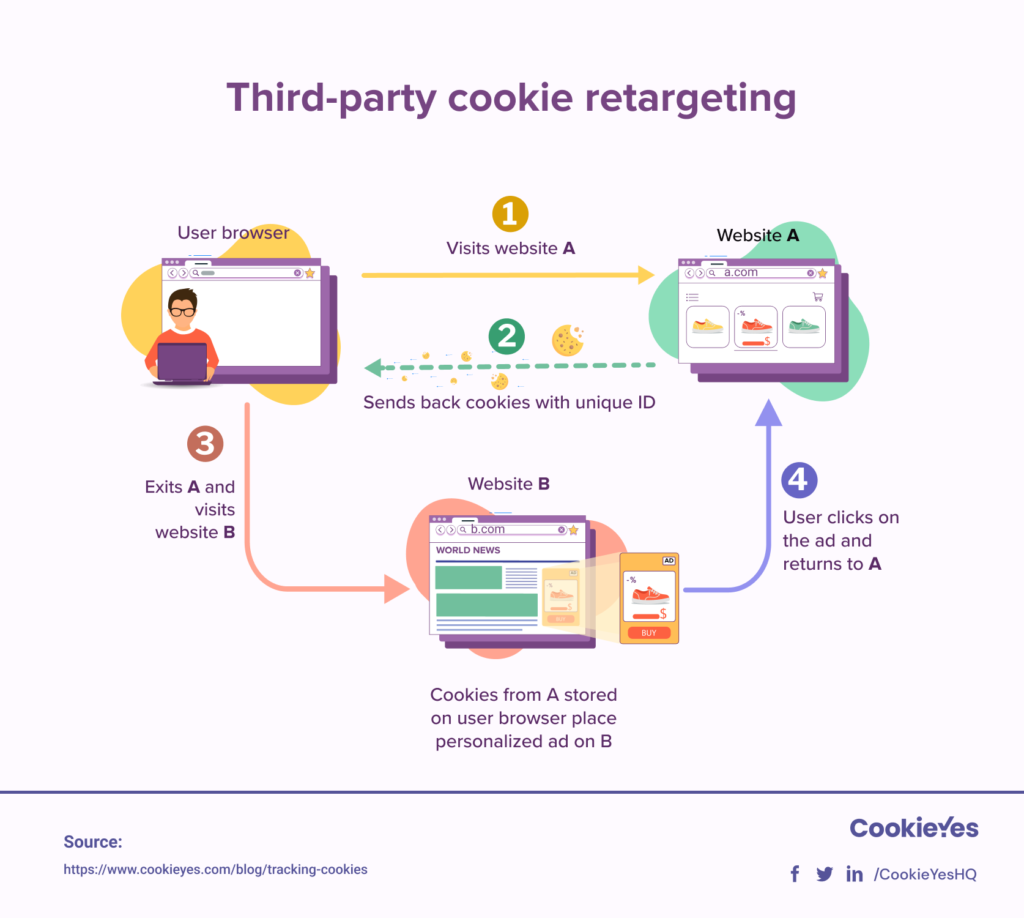
To execute this blueprint for predictable, high-value list growth, the technical integration between your Consent Management Platform (CMP) and your marketing automation stack must be flawless. You must use the consent signal as a governing rule for all downstream lead capture activities. The following three actions form the core of this compliant strategy:
- Conditional Pop-ups: Integrate your Consent Management Platform (CMP) with your list tools (e.g., Klaviyo forms) to ensure subscription pop-ups are only triggered for users who have provided explicit consent for ‘analytics’ or ‘marketing’ cookie categories.
- Double Opt-In Enforcement: Mandate a rigorous double opt-in process for SMS and email, ensuring the final opt-in explicitly references your updated privacy policy and the consent for recurring communications to satisfy global compliance standards.
- Consent Data Syncing: Establish a data pipe that synchronizes the user’s granular consent status (e.g., ‘Analytics Opt-in: True’) from the CMP directly into the subscriber properties within your marketing automation platform (Klaviyo), enabling compliant hyper-segmentation.
Implementing this framework is the only way to achieve sustainable customer lifetime value (LTV) in the current privacy landscape. The inevitable result of this transparency is a decrease in lead volume from the top of the funnel, but a significant corresponding increase in the quality, engagement, and ultimately, the LTV of every single acquired subscriber, as the entire relationship is predicated on explicit, high-trust consent.
Automating Data Quality: The Key to Predictable Customer Lifetime Value (LTV)
The foundation of a predictable Customer Lifetime Value (LTV) model for your WooCommerce store is not the sheer volume of data you collect, but its inherent quality and compliance. Non-compliant data, often derived from analytics cookies fired without explicit consent, is “dirty data”—it introduces systemic legal risk and, critically, renders all subsequent segmentation and LTV modeling unreliable. By automating the technical enforcement of consent, you transform regulatory mandates like GDPR and CCPA into a data hygiene protocol that filters out noise and ensures every session, conversion, and purchase event is legally robust and accurate. This allows for a trustworthy, apples-to-apples comparison between customer cohorts, which is essential for forecasting and strategic resource allocation.
Achieving this level of predictable data quality requires a strategic integration of your Consent Management Platform (CMP) directly with your analytics and marketing infrastructure. The CMP must not merely display a banner; it must act as a gatekeeper for all non-essential analytics cookies, dynamically controlling script execution based on user choice. This technical diligence ensures the data flowing into your LTV calculation is clean from the first interaction.
-
- Granular Consent-Gating: Ensure all non-essential analytics cookies (e.g., Google Analytics, Facebook Pixel, heatmaps) are classified within your CMP and blocked until the user explicitly opts in to that specific category.
- Consent Mode Integration: Implement the latest version of the Google Consent Mode (GCM) to correctly signal the user’s consent status to Google’s services. This allows for privacy-preserving data modeling while maintaining a connection between ad spend and outcome.
- Automated Cookie Auditing: Run daily or weekly automated scans of your WooCommerce site to identify new or unclassified analytics cookies introduced by plugins or third-party integrations. Unvetted cookies contaminate data quality and create immediate compliance debt.
Beyond the Cookie: Future-Proofing WooCommerce Tracking
The impending deprecation of third-party cookies necessitates a fundamental architectural shift for WooCommerce merchants to maintain data fidelity and beyond. Relying solely on client-side analytics—where a user’s browser dictates all tracking events—creates a massive, unquantifiable data gap as consent rates drop and browser restrictions tighten. Future-proofing your analytics is not about finding a replacement cookie, but about pivoting your entire data collection infrastructure to a server-side, first-party model.
This technical migration allows you to control the data stream, enrich it with server-side information (like true Customer Lifetime Value), and ensure compliance before it ever hits a marketing platform like Facebook or Google Ads. This is executed through a combination of proprietary data points and robust consent signaling:
- Server-Side Tagging (SST): Move marketing and analytics tags (like Google Analytics 4 or Meta Pixel) from the user’s browser directly to a controlled cloud environment (e.g., Google Tag Manager Server Container). This shields data from ad blockers and extends cookie lifespan, boosting conversion event accuracy.
- First-Party Customer Data Platform (CDP): Integrate tools that unify customer data from all touchpoints—including post-purchase, loyalty programs, and email—to create a persistent, cookieless customer identifier. This identifier replaces the anonymous cookie ID with an authenticated ID, maintaining continuity of the customer journey.
- Consent Mode Implementation: Utilize a Consent Management Platform (CMP) that integrates directly with analytics tools (like Google Consent Mode). When a user denies cookies, this feature uses machine learning to model conversion behavior for the missing data, ensuring your reporting remains statistically sound and legally compliant.
By implementing this server-side and consent-aware framework, your WooCommerce store transitions from passively collecting low-quality, high-risk third-party data to actively collecting high-quality, consent-driven first-party data. This strategic shift transforms data from a regulatory liability into a reliable, high-integrity asset that fuels precise targeting, accurate attribution, and scalable, compliant growth.
Turning Compliance Friction into a High-Converting Trust Signal
The diretrizry cookie consent mechanism is often mismanaged as a necessary evil, resulting in a friction point that breaks the user journey on WooCommerce sites. However, for a privacy-first analytics strategy to succeed, this point of compliance must be reframed as the user’s first ethical touchpoint with the brand. By presenting a consent request that is transparent, legally sound, and intuitively designed, you immediately validate the customer’s perception of your brand’s integrity. This foundational act of respect drastically lowers the cognitive friction and suspicion that leads to premature session abandonment, effectively turning a compliance hurdle into a psychological conversion accelerator.
To transition the analytics cookie banner from a liability to a high-converting asset, focus on engineering transparency and control into the user experience. This goes beyond mere legal sufficiency; it is a design imperative that instills trust from the first interaction:
- Symmetric Design: Ensure the ‘Accept All’ and ‘Reject All’ buttons possess equal visual weight and prominence on the first layer of the banner. This eliminates the manipulative ‘dark pattern’ of hidden rejection, signaling that the choice offered is genuine and immediate.
- Granular Control: Do not rely solely on an ‘Accept All’ button. Provide an easily accessible second layer of control allowing users to specifically opt-in or opt-out of distinct cookie categories (e.g., ‘Analytics,’ ‘Marketing’). This satisfies regulatory requirements for informed consent.
- Pre-Blocking Logic: Implement a robust Consent Management Platform (CMP) that technically pre-blocks all non-essential analytics cookies until the user gives explicit, affirmative consent. This non-default compliance demonstrates a clear, technical commitment to privacy standards.
The commercial benefit of this trust signal is quantifiable and extends beyond initial session preservation. Analytics data secured through an explicit, high-integrity consent flow is inherently higher quality data. This fidelity allows your WooCommerce operation to execute more reliable A/B tests, perform accurate customer segmentation, and build high-ROI personalization campaigns with confidence. When a customer actively provides consent, they are engaging in a micro-conversion that qualifies their intent and ensures your conversion rate optimization (CRO) efforts are built on a legal and trustworthy foundation, ultimately bolstering long-term Customer Lifetime Value (LTV).
Ready to take your e-commerce to the next level?
The conversation around analytics cookies is often confined to technical compliance, but the real challenge is commercial. If your retention efforts feel like they’re stalling revenue, or if you suspect you’re keeping the wrong customers, the problem likely stems from compromised data quality at the point of collection. Relying on outdated or non-compliant analytics tracking isn’t a minor oversight—it’s a structural failure that contaminates your customer lifetime value (LTV) models, inflates your true customer acquisition cost (CAC), and undermines the ROI of your entire WooCommerce operation.
Predictable eCommerce growth in 2025 demands more than a basic cookie solution; it requires a unified, high-integrity data system where consent, tracking, CRM, and paid media are seamlessly integrated. We act as an extension of your in-house team, specializing in engineering these compliant frameworks to ensure every data point is high-quality and actionable. Stop building your marketing on speculation. The path to maximizing your Profit, Retention, and LTV begins with clarity: book one of our data-driven & conversion-focused audits today to uncover precisely how your current analytics setup is costing you revenue.