





Many eCommerce brands operate under the comforting illusion that rule-based segmentation provides the ultimate control over their customer journeys, believing that “if customer bought X, send Y” is the peak of personalization. But what if this reliance on static, rigid logic is actually acting as a silent ceiling on your revenue expansion? For high-growth businesses, the hidden cost of inaction lies in the growing gap between human-managed rules and the real-time behavioral signals of millions of customers, leaving massive amounts of money on the table by delivering irrelevant messages based on outdated assumptions.
The hard reality is that manual, rule-based segments are yesterday’s tool for optimization and cannot match the speed or reactivity required to maximize Customer Lifetime Value (LTV) in a competitive landscape. Transitioning to AI predictive segmentation is no longer just a technical upgrade; it is a strategic necessity to ensure every communication reflects a customer’s current intent rather than a past event. This guide explores how leveraging predictive models allows your brand to move beyond “safe” logic into a high-performance engine that boosts engagement and fuels scalable growth through precision targeting.
What is AI predictive segmentation?
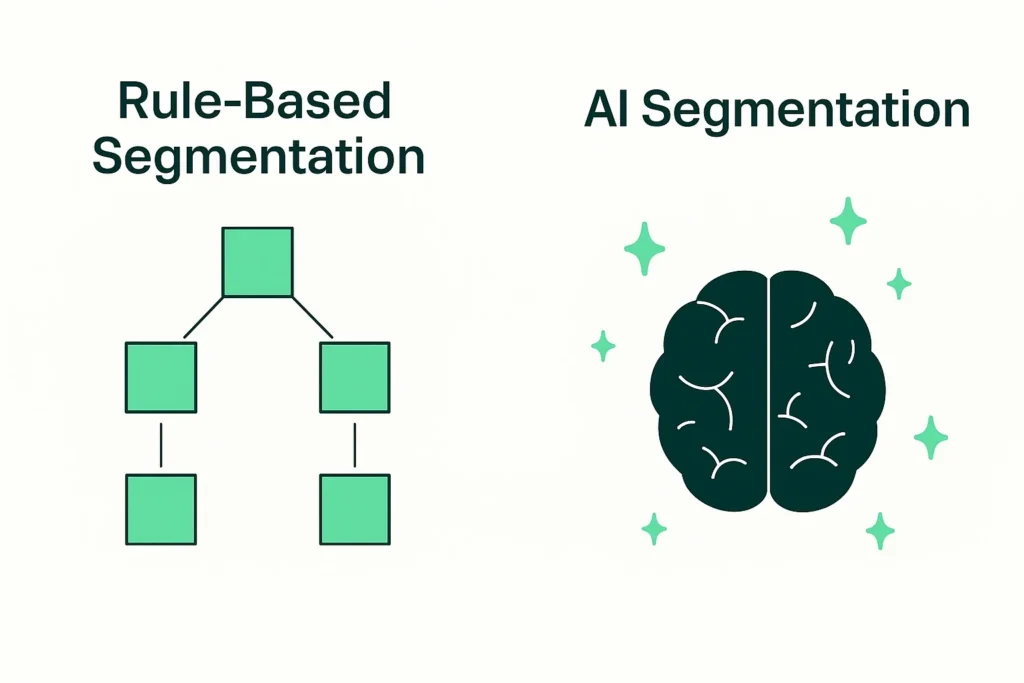
AI predictive segmentation is a sophisticated approach to audience management that uses machine learning models to group customers based on their predicted future actions rather than just historical data. While traditional rule-based methods rely on static filters—such as “purchased in the last 30 days”—predictive models analyze millions of behavioral signals in real time to identify underlying patterns. For a WooCommerce store, this means moving from reactive marketing to proactive engagement, allowing you to target users based on their calculated intent and potential value to the business.
- Predictive Scoring: Models rank customers by the probability of taking a specific action, such as purchasing a high-ticket item or churning, allowing for high-precision targeting.
- Clustering: AI programmatically identifies user groups with similar characteristics and behaviors that manual analysis might miss, such as a segment of mobile users who browse late at night but only convert on desktop.
- Dynamic Re-calibration: Unlike static lists, AI segments update continuously as new data flows in, ensuring that a customer is moved into or out of a segment the moment their behavior shifts.
By shifting the focus from “who the customer was” to “what the customer will likely do next,” predictive segmentation allows brands to optimize for long-term Customer Lifetime Value (CLV). This transition reduces the technical debt and human error associated with managing hundreds of manual rules, replacing them with an automated engine that ensures every communication is relevant to the customer’s current lifecycle stage and needs.
How does predictive AI improve WooCommerce engagement?
Predictive AI shifts WooCommerce engagement from reactive, rule-based logic to a proactive model that anticipates customer intent. While standard rule-based segmentation relies on historical snapshots, predictive models analyze millions of real-time signals to identify patterns that a human operator would overlook. For a high-growth store, this means moving beyond simple “bought X, send Y” workflows toward a system that dynamically adjusts communication based on the likelihood of future actions, such as purchase probability or churn risk.
- Dynamic Intent Scoring: AI assigns real-time scores to visitors based on their browsing behavior, allowing you to trigger high-urgency offers only to those showing immediate purchase intent while nurturing colder leads with educational content.
- Hyper-Personalized Product Discovery: By processing unstructured data and past interactions, predictive engines suggest products that align with a customer’s evolving needs rather than relying on static “top sellers” or broad category rules.
- Proactive Retention: Predictive analytics can detect subtle declines in engagement frequency or transaction volume, enabling brands to deploy personalized recovery incentives before a customer officially churns.
Implementing these AI-driven insights allows WooCommerce brands to deliver relevance at scale, ensuring that every touchpoint serves to increase long-term Customer Lifetime Value (CLV). By reducing the noise of irrelevant messaging, you build deeper brand trust and capture revenue that static, yesterday-focused segments typically leave on the table.
Why is rule-based segmentation stalling your growth?
Traditional rule-based segmentation relies on static “if-then” logic that assumes customer behavior is linear and predictable. While these manual rules provide a sense of control for WooCommerce merchants, they create a “silent ceiling” on growth because they cannot account for the millions of real-time signals that modern consumers generate. When your segments are built on outdated assumptions—like assuming a customer who bought a specific category once will always want more of it—you end up sending irrelevant content that destróis brand trust and diminishes Customer Lifetime Value (CLV).
- Data Latency: Manual rules often rely on historical data that quickly becomes obsolete. By the time a merchant updates a segment for “recent buyers,” the customer’s intent may have already shifted, leading to missed windows of opportunity for high-intent cross-sells.
- Scalability Bottlenecks: As your product catalog and customer base expand, the number of rules required to maintain “personalization” becomes unmanageable. This complexity leads to overlapping segments and conflicting messaging, which creates a disjointed customer experience.
- Inability to Predict Intent: Rule-based systems are reactive, focusing on what a customer did in the past. They lack the predictive capacity to identify “at-risk” customers before they churn or to spot “high-potential” shoppers who haven’t made a large purchase yet but are showing behavioral patterns of intent.
Transitioning from these rigid frameworks to AI-driven predictive models allows your store to move at the speed of the market. Instead of managing a labyrinth of manual filters, you leverage machine learning to automate the discovery of high-value segments, ensuring that every touchpoint is optimized for long-term revenue expansion rather than short-term comfort.
How to use AI to increase customer lifetime value?
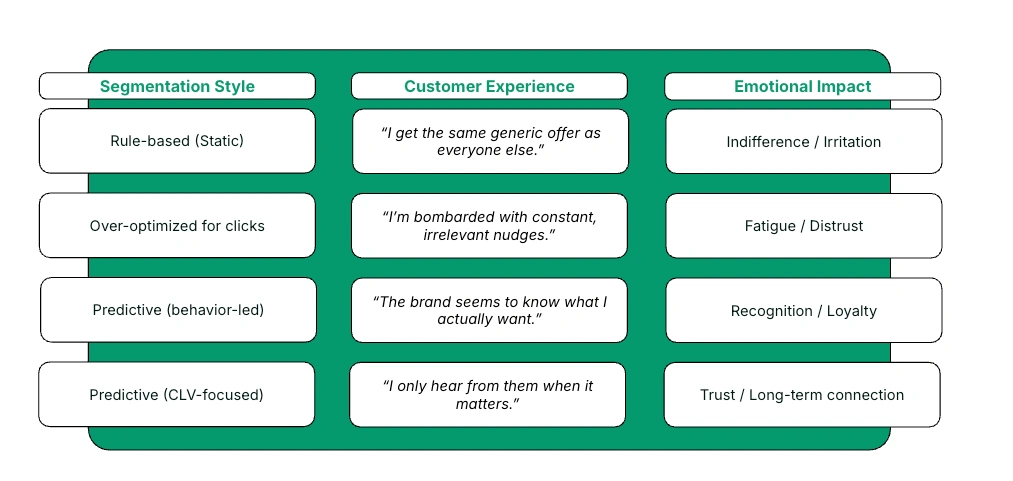
To increase customer lifetime value (CLV) with AI, WooCommerce merchants must shift from reactive, rule-based workflows to proactive, behavioral forecasting. AI models process millions of data points—including purchase frequency, browse behavior, and support interactions—to predict the future monetary potential of each individual customer. By identifying high-propensity segments early, you can disproportionately allocate your marketing resources toward the users most likely to scale their spend, rather than wasting budget on discount-seekers who dilute your margins.
- Predictive Churn Prevention: AI identifies subtle patterns in declining engagement before a customer stops buying, allowing you to trigger personalized win-back offers at the exact moment of risk.
- Hyper-Personalized Upselling: Instead of generic “customers also bought” suggestions, machine learning predicts which specific product tier or complementary accessory aligns with a customer’s unique lifecycle stage and purchasing power.
- Dynamic Retention Spend: Predictive models calculate the ideal intervention cost for each user, ensuring you don’t over-invest in low-value accounts or lose high-CLV prospects to competitors due to a lack of attention.
Ultimately, the goal is to manufacture value rather than just measuring it. By integrating predictive insights directly into your orchestration layer, your WooCommerce store can automate complex decision-making processes—such as determining the optimal timing for a loyalty reward or the most effective channel for a re-engagement campaign. This closed-loop system ensures that every interaction is a calculated step toward maximizing long-term profitability and sustainable brand growth.
What are the best practices for AI predictive targeting?
Transitioning from rule-based logic to AI predictive targeting requires a shift from managing static cohorts to governing dynamic models. To ensure these models drive sustainable revenue expansion rather than chasing short-term engagement spikes, eCommerce brands must implement rigorous data hygiene and ethical guardrails. The effectiveness of predictive targeting is fundamentally limited by the quality of the underlying data; fragmented or unauthenticated data streams will lead to inaccurate purchase probability scores and diminished brand authority.
To maximize the ROI of your predictive infrastructure, prioritize these three pillars of implementation:
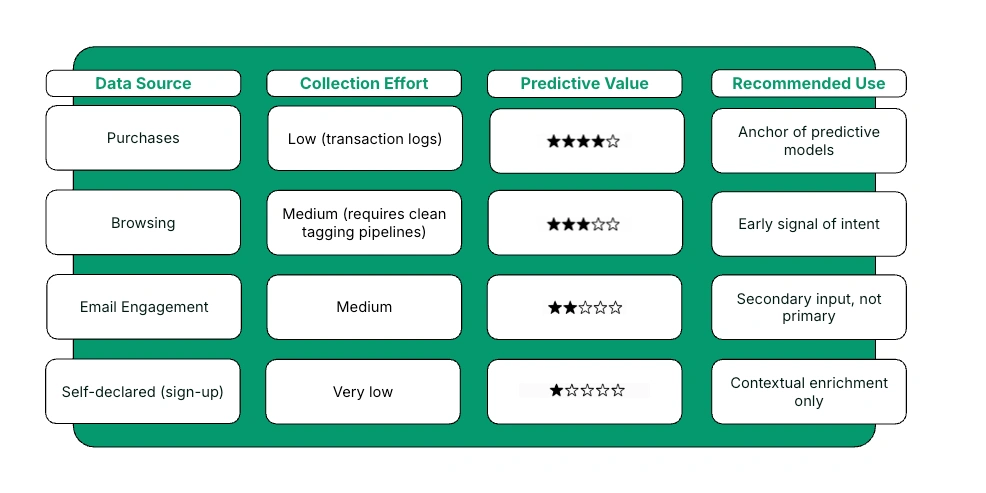
- Unified Data Foundation: Audit your WooCommerce data to ensure all customer touchpoints—product usage, support history, and web engagement—are captured in a single source of truth. AI models require clean, high-granularity datasets to identify the subtle purchase triggers that traditional rules overlook.
- CLV-Centric Optimization: Validate every AI-driven segment against long-term Customer Lifetime Value rather than immediate click-through rates. Avoid “black-box” models that prioritize high-frequency engagement at the expense of profit margins or customer trust.
- Continuous Feedback Loops: Implement real-time monitoring to detect model bias or drift. As consumer behavior shifts, your predictive models must iteratively adapt to new signals to ensure targeting remains relevant and doesn’t rely on outdated assumptions.
Ultimately, predictive targeting should act as a strategic enabler of “anticipatory commerce.” By moving beyond reactive “If X, then Y” workflows, you can deliver individualized product recommendations and adaptive content that reflect the customer’s current intent, effectively reducing churn and scaling performance without the technical bottlenecks of manual segmentation.
Ready to take your e-commerce to the next level?
While mastering AI predictive segmentation is a technical leap forward, the business reality for high-growth WooCommerce brands is that even the most advanced models will fail if they aren’t anchored to long-term profitability. If your retention efforts feel like they are stalling revenue expansion, or if you suspect that your reliance on static, rule-based segments is causing you to chase empty engagement at the expense of true customer lifetime value, you are facing a structural ceiling on your growth. Transitioning from “yesterday’s tools” to a system that captures millisecond signals requires more than just better software; it requires a strategic alignment of your entire data infrastructure to ensure every message serves the customer’s current needs while driving measurable ROI.
To move beyond generic automation and build a high-performance growth engine, you need a partner that acts as an extension of your in-house team to synchronize tracking, CRM, and lifecycle marketing into a unified system. We help DTC brands maximize profit and LTV by eliminating guesswork through our rigorous, data-driven and conversion-focused audits. By integrating sophisticated predictive targeting with privacy-compliant data collection and advanced analytics, we ensure your marketing spend is always optimized for the highest-value outcomes. If you are ready to stop relying on outdated assumptions and start building a scalable, AI-driven infrastructure that maximizes ROAS, book a free marketing automation audit today.