





We’ve all heard the mantra that aggressive customer acquisition is the only lever for eCommerce growth, believing that as long as the top-of-funnel is flowing, the business is safe. But what if this narrow focus on traffic is leading your brand astray by ignoring the massive compliance risks that act as a silent ceiling on your revenue expansion? For high-growth stores, the hidden cost of inaction regarding the California Consumer Privacy Act (CCPA) lies in the potential for devastating legal penalties and decimated customer trust, which leave massive amounts of money on the table by eroding the very foundation of your database marketing.
The hard reality is that treating data privacy as a mere legal checkbox rather than a strategic asset is a recipe for stagnant Customer Lifetime Value (LTV). As the CPRA introduces even stricter provisions to the existing CCPA framework, failing to integrate professional compliance into your automated Email and SMS workflows is no longer just a technical oversight; it is a structural barrier to scale. This guide explores how mastering CCPA compliance allows you to safeguard your brand’s reputation and unlock sustainable growth, ensuring that your data-driven communication remains a high-performance engine for long-term profitability.
What is CCPA and how does it affect WooCommerce stores?
The California Consumer Privacy Act (CCPA) is a landmark privacy regulation that grants California residents significant control over their personal data, including the right to know what is collected, the right to delete it, and the right to opt-out of its sale. For WooCommerce store owners, this is not merely a legal checkbox but a fundamental shift in data management. Because WooCommerce inherently processes sensitive customer information—including billing addresses, purchase histories, and IP addresses—any store doing business in California that meets specific revenue or data volume thresholds must establish clear protocols for transparency and consumer rights fulfillment.
- Data Collection Transparency: WooCommerce stores must provide a comprehensive privacy policy and a “Notice at Collection” that details exactly what personal information is being gathered through checkout fields, tracking pixels, and marketing plugins.
- Consumer Rights Fulfillment: Store owners must implement technical workflows to handle “Right to Know” and “Right to Delete” requests, ensuring that data stored within the WordPress database and shared with third-party processors can be exported or purged upon verified request.
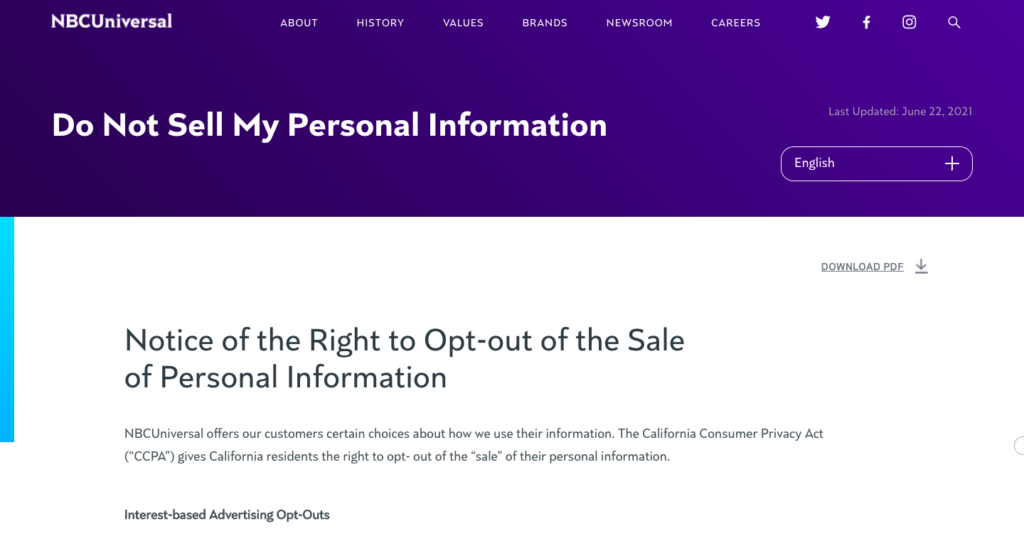
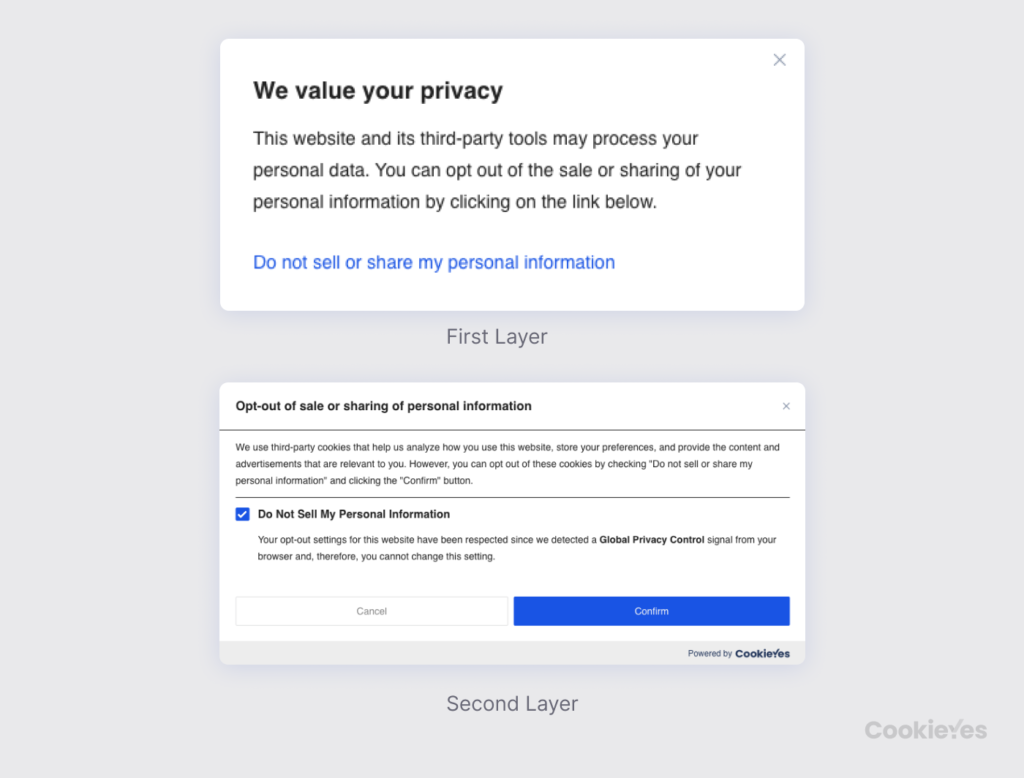
- Opt-Out Mechanisms: If your store uses behavioral tracking for advertising or shares data with third-party marketing platforms, you must provide a “Do Not Sell or Share My Personal Information” link to remain compliant with CCPA and the subsequent CPRA amendments.
Beyond avoiding administrative fines, CCPA compliance serves as a critical trust signal for high-growth eCommerce brands. In an era where consumers are increasingly wary of data breaches and unauthorized tracking, integrating robust privacy controls directly into your WooCommerce checkout and account management flows protects your brand reputation. Failure to automate these requests often leads to operational bottlenecks and increased legal exposure, particularly as the California Privacy Protection Agency (CPPA) ramps up enforcement against businesses with insufficient security and disclosure practices.
Why is CCPA compliance important for eCommerce revenue growth?
For high-growth WooCommerce stores, CCPA compliance is a strategic lever for revenue expansion rather than a mere legal hurdle. In an era where data transparency directly influences consumer behavior, brands that proactively manage privacy rights build a foundation of trust that reduces cart abandonment and increases long-term loyalty. By aligning your technical infrastructure with California’s strict standards, you signal professional maturity to high-value customers who prioritize data security when choosing where to shop.
- Competitive Advantage: Transparent data practices differentiate your store from less-sophisticated competitors, making privacy a unique selling proposition (USP) that can boost conversion rates among privacy-conscious demographics.
- Future-Proofed Scalability: Implementing robust CCPA and CPRA protocols ensures your marketing automation and data processing workflows are prepared for the ripple effect of similar privacy laws emerging across other states and global markets.
- Risk Mitigation: Avoiding penalties of up to $7,500 per intentional violation protects your bottom line from significant capital drains and prevents the reputational damage that often follows a public compliance failure or data breach.
Integrating compliance into your growth strategy allows for cleaner data acquisition and more effective segmentation. When users trust how their personal and sensitive information is processed, they are more likely to engage with personalized marketing efforts and automated decision-making technologies. This technical diligence ensures that your scaling efforts are built on a compliant, high-integrity database that sustains revenue growth without the looming threat of regulatory intervention.
How to implement CCPA privacy settings in your marketing automation?
Implementing CCPA privacy settings within your marketing automation workflows is a critical step for WooCommerce merchants to avoid the “silent ceiling” of regulatory fines and consumer distrust. In a high-growth environment, compliance must be technical and automated, ensuring that your data handling practices—from lead capture to email segmentation—align with the “Do Not Sell or Share” mandates of the CPRA. By synchronizing your WordPress consent signals with your marketing stack, you ensure that user preferences are respected across every touchpoint without manual intervention.
- Dynamic Consent Mapping: Ensure your WooCommerce store uses a CCPA-compliant cookie banner that passes “opt-out” signals directly to your marketing automation platform via API. This ensures that if a user clicks the “Do Not Sell” link, their contact profile is instantly tagged to exclude them from high-intent data sharing or third-party advertising audiences.
- Automated Data Processing Agreements (DPA): Audit your third-party integrations, such as Mailchimp or Klaviyo, to confirm they have signed DPAs and support CCPA data deletion requests. Your automation should be configured to propagate a “Request to Delete” from WooCommerce to all connected marketing services simultaneously.
- Global Privacy Control (GPC) Integration: Modern CCPA compliance requires honoring browser-level GPC signals. Configure your marketing stack to recognize these automated signals as valid opt-outs, ensuring that tracking scripts and data collection are restricted before the user even interacts with your site’s manual privacy settings.
Transitioning to an automated privacy framework safeguards your brand equity and protects your conversion rates from the fallout of non-compliance. For WooCommerce brands aiming for scalable growth, treating privacy as a programmatic feature rather than a legal hurdle allows you to build a transparent, high-performance communication engine that fosters long-term customer loyalty and sustainable revenue.
What are the core consumer data privacy rights under CCPA?
For high-growth WooCommerce stores, understanding CCPA rights is the first step toward building a compliant data architecture that preserves customer trust. These rights provide California residents with granular control over their digital footprint, requiring merchants to move beyond static privacy policies and implement active data management systems. For a scaling eCommerce brand, failing to facilitate these requests doesn’t just invite legal risk; it creates a friction point in the customer journey that can stifle long-term retention.
- Right to Know: Consumers can request a detailed disclosure of the specific categories of personal information collected, the business purpose for collection, and the identities of third parties with whom the data is shared.
- Right to Delete: This allows individuals to request the permanent removal of their personal data from your store’s database and all downstream service providers, excluding data required for legal obligations or transaction completion.
- Right to Opt-Out: Merchants must provide a clear mechanism, often a “Do Not Sell or Share My Personal Information” link, allowing users to stop the sale of their data or its sharing for cross-context behavioral advertising.
- Right to Non-Discrimination: Your store cannot penalize customers for exercising their privacy rights by denying services, providing lower-quality products, or charging different prices.
- Right to Correct: Introduced by the CPRA amendments, this allows consumers to demand the rectification of inaccurate personal information held within your WooCommerce records.
Implementing these rights effectively requires a technical infrastructure that can verify identities and process Data Subject Access Requests (DSAR) without manual bottlenecking. As a WooCommerce merchant, you must ensure your marketing automation and CRM tools are synced to honor these signals instantly. With the 2023 CPRA expansion, you must also respect the right to limit the use of sensitive personal information, such as precise geolocation or financial data, ensuring it is only used for the primary service requested by the customer.
How to automate WooCommerce data requests to ensure CCPA compliance?
Automating Data Subject Access Requests (DSARs) is a technical necessity for high-growth WooCommerce stores to meet the CCPA’s strict 45-day response window while minimizing operational overhead. Manual retrieval of personal information across fragmented databases—including order history, metadata, and marketing logs—is prone to human error and creates significant security risks. By implementing a programmatic workflow, merchants can ensure that every request to access, delete, or opt-out is verified and fulfilled through a secure, encrypted pipeline.
To establish a robust automated compliance engine, WooCommerce brands should leverage specialized privacy management tools and internal hooks to streamline the following processes:
- Identity Verification Automation: Integrate multi-factor authentication or automated email verification flows to programmatically confirm a requestor’s identity before any sensitive data is compiled or transmitted.
- Data Mapping and Retrieval: Utilize API-driven discovery tools to automatically scan your WooCommerce environment, connected CRMs, and payment gateways to aggregate all instances of a consumer’s PII into a single, portable report.
- Secure Delivery Portals: Automate the generation of secure, time-limited download links for DSAR fulfillment, ensuring that personal data is never sent via unencrypted email attachments which could lead to secondary data breaches.
Transitioning from a reactive to an automated compliance posture not only protects your brand from civil penalties but also builds significant customer trust. For scaling eCommerce operations, delegating these repetitive legal requirements to a verified automation stack allows your team to focus on high-value revenue-generating activities without compromising on consumer data sovereignty.
Ready to take your e-commerce to the next level?
While mastering the core definitions and regulatory requirements of CCPA is a fundamental requirement for legal operation, the business reality for high-growth WooCommerce brands is that privacy compliance is often the silent bottleneck in data-driven scaling. If your retention efforts feel like they are stalling revenue or if you suspect your attribution models are crumbling due to unoptimized consent management, you are facing a structural threat to your LTV. Relying on basic, out-of-the-box privacy settings is no longer a technical choice; it is a direct compromise of your ability to collect high-intent customer data and leverage it for profitable automation.
To transform compliance from a legal burden into a competitive advantage, you need a technical partner that synchronizes your privacy framework with your broader growth objectives. We act as a strategic extension of your team, building integrated eCommerce systems where consent, advanced tracking, and CRM automation work in perfect concert to maximize ROAS. Our process begins with rigorous, data-driven & conversion-focused audits to eliminate guesswork and identify exactly how privacy-compliant data collection can fuel your marketing performance. If you are ready to build a scalable, compliant infrastructure that protects both your customers and your profit margins, book a free consultation today.