






We’ve all heard the mantra that hyper-focused compliance is a purely defensive cost of doing business, often believing that strict privacy standards must inevitably come at the expense of a seamless user experience. But what if this narrow obsession with restriction is actually acting as a silent ceiling on your revenue expansion? For high-growth eCommerce brands, the hidden cost of inaction lies in neglecting functional cookies, which leaves massive amounts of money on the table by failing to preserve the personalized interactions and preferences that drive modern conversion rates.
The hard reality is that a fragmented browsing experience directly correlates to a decaying Customer Lifetime Value (LTV) in 2026. Transitioning to a strategic deployment of functional cookies is not merely a technical checkbox; it is a growth necessity that allows your storefront to remember login details and language settings while supporting high-intent features like web chat and embedded video with near-zero friction. This guide explores how mastering functional cookies provides the critical infrastructure needed to eliminate technical debt and fuel behavioral engagement, ensuring every session becomes a driver for scalable growth.
What are functional cookies and how do they work?
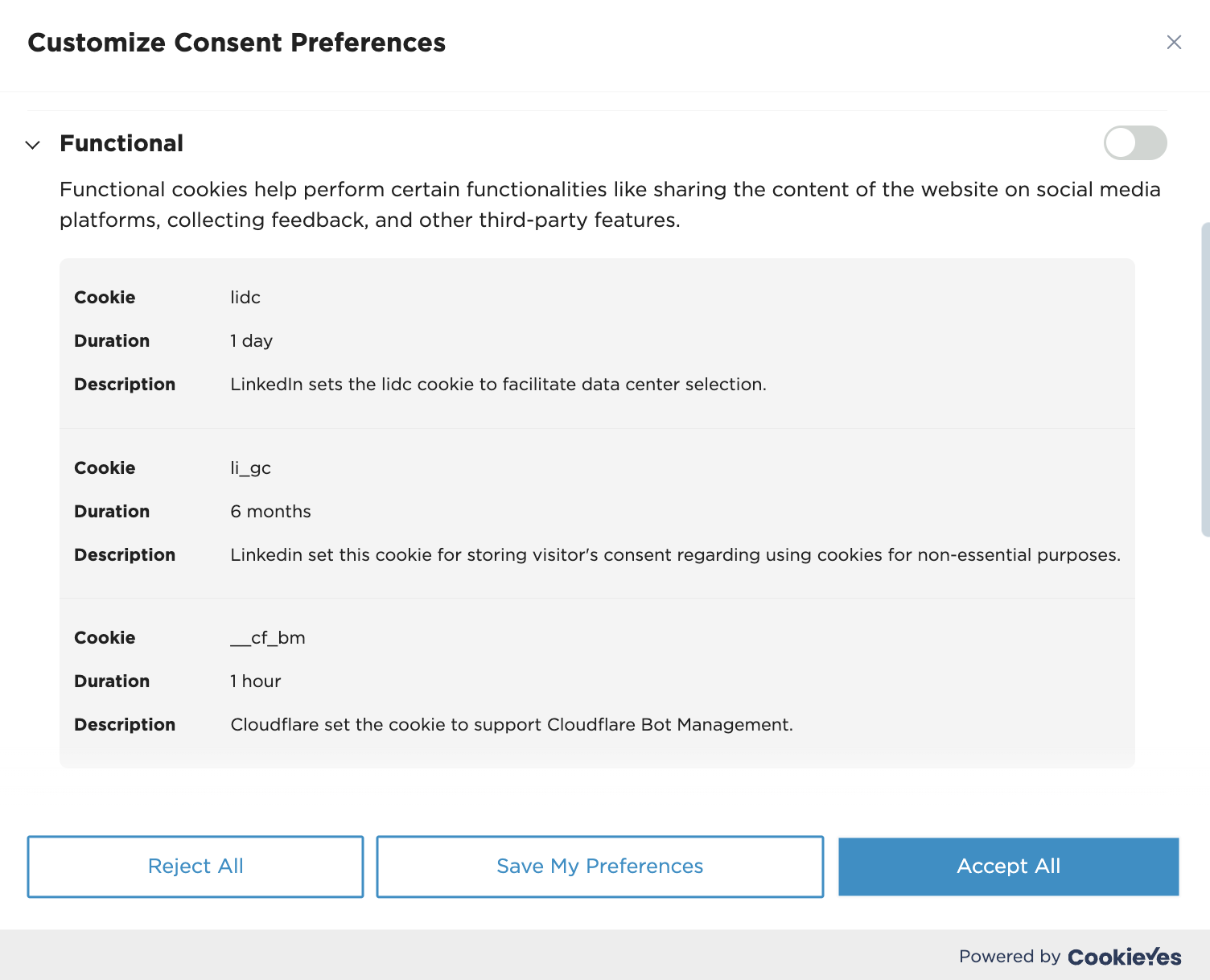
Functional cookies, or functionality cookies, are a specific subset of first-party cookies designed to enhance the user experience by remembering specific choices and settings. Unlike strictly necessary cookies that are required for a website to load, functional cookies are non-essential but critical for providing a personalized WooCommerce journey. They act as a memory bank for your store, ensuring that once a visitor makes a selection—such as choosing a preferred currency, language, or font size—those settings persist throughout their session and upon their return, eliminating the friction of repetitive configuration.
- Data Storage: When a user selects a preference, such as switching to a specific regional setting, the website creates a small text file stored locally on the user’s browser.
- State Recognition: Upon subsequent page loads or return visits, the server retrieves this unique identifier to automatically apply the previously saved settings without requiring server-side authentication.
- Feature Activation: Beyond basic settings, functional cookies enable advanced frontend capabilities such as live chat persistence, embedded video playback preferences, and customized search filters that optimize the conversion path.
For high-growth WooCommerce brands, these cookies are technical bridge-builders between generic browsing and a tailored shopping experience. By maintaining the state of interactive elements like web chat sessions and personalized layout choices, they reduce cognitive load for the customer. While they do not track users across different domains like marketing cookies, their role in boosting site usability and perceived performance makes them a cornerstone of modern eCommerce infrastructure that babiddings high-end functionality with regulatory transparency.
Why are functional cookies important for WooCommerce user experience?
For high-growth WooCommerce stores, functional cookies are the silent workhorses that transform a generic storefront into a personalized shopping environment. While strictly necessary cookies handle the basics of the checkout process, functional cookies bridge the gap between utility and engagement by remembering user-specific configurations. This reduces friction in the customer journey, ensuring that returning visitors do not have to re-select preferences, which directly correlates with higher retention rates and improved brand affinity.
- Persistent Personalization: These cookies store critical data such as language preferences and currency settings, ensuring that international customers experience a localized interface every time they return to your store.
- User Convenience: By remembering login details via “Remember Me” features and maintaining the state of interactive elements like wishlists or recently viewed products, you provide a seamless flow that encourages deeper site exploration.
- Enhanced Site Features: Functional cookies enable high-value integrations such as live chat support, embedded product demo videos, and advanced search filters that would otherwise reset or fail to function during a single session.
Implementing a robust functional cookie strategy is essential for optimizing your store’s performance and conversion funnel. By providing a consistent and customized experience, you mitigate the risk of “bounce” caused by repetitive administrative tasks, allowing the user to focus entirely on the product value. For a WooCommerce brand looking to scale, these technical details represent a strategic investment in user experience that safeguards long-term Customer Lifetime Value (LTV).
How to implement functional cookies while maintaining GDPR compliance?
Implementing functional cookies within a WooCommerce environment requires a clear distinction between what is technically necessary and what constitutes a preference-based enhancement. Under GDPR, while strictly necessary cookies for core store functions—like maintaining a shopping cart—do not require prior consent, functional cookies often fall into a category that necessitates informed user choice. For high-growth brands, the technical implementation must ensure that these scripts only execute after a user has interacted with a consent management platform (CMP) to maintain legal integrity without sacrificing the personalized features that drive conversion.
- Granular Categorization: Audit your site scripts to ensure that features like language switchers, currency converters, and web chat widgets are correctly tagged as functional. This prevents them from being misclassified as strictly necessary, which could lead to non-compliance, or as marketing, which might lead to them being blocked unnecessarily.
- Prior Consent Mechanism: Integrate your WooCommerce store with a CMP that supports “prior consent.” This ensures that functional scripts, such as those used for embedded videos or personalized search bars, are held in a “pending” state and only fired once the user provides affirmative consent via your cookie banner.
- Transparency and Documentation: Update your privacy and cookie policies to explicitly list each functional cookie, its specific purpose (e.g., “remembering regional settings”), and its lifespan. Under GDPR, users must have a clear understanding of what data is being stored to fulfill the “informed” requirement of valid consent.
To achieve a babidding between a high-performance user experience and strict data protection, developers should leverage a “consent-aware” tag management system. By using variables to trigger functional tags only when the appropriate consent signal is detected, you eliminate the risk of automated data collection. This technical rigour not only builds customer trust through transparency but also protects your domain from the regulatory scrutiny that comes with unauthenticated tracking and improper cookie deployment.
What are the best examples of functional cookies for eCommerce?
Functional cookies serve as the bridge between basic site utility and a high-performance, frictionless shopping experience. In a WooCommerce environment, while strictly necessary cookies handle the mechanical requirements of the cart and checkout, functional cookies are responsible for the personalization layers that drive repeat engagement. For high-growth brands, these cookies are strategic assets used to reduce cognitive load for the customer, ensuring that the storefront adapts to their specific preferences without requiring repetitive manual configuration.
- Localization and Currency Preferences: These cookies store a visitor’s choice of language and regional currency, ensuring that international shoppers see localized pricing and content immediately upon their next visit, which is critical for reducing bounce rates in cross-border trade.
- Recently Viewed Products: By persisting a list of products a user has interacted with, these cookies power “Recently Viewed” widgets that facilitate easy navigation and act as a powerful internal cross-selling tool.
- Dismissed Banners and Notices: To prevent “banner fatigue,” functional cookies remember when a user has interacted with or dismissed a specific store notice or promotional popup, maintaining a clean and professional user interface.
- Customer Support Persistence: These cookies allow live chat sessions and help desk widgets to remain active and synchronized as a customer moves between different product categories, ensuring a seamless support experience.
From a strategic standpoint, the best examples of functional cookies are those that directly impact retention and average order value (AOV) by removing micro-frictions. However, because these are categorized as non-essential for the core functioning of the site, they require clear disclosure within your privacy policy and must be properly managed within your consent management platform (CMP) to ensure GDPR and CCPA compliance. Balancing this technical convenience with transparency is essential for building long-term customer trust and maintaining a scalable eCommerce infrastructure.
How to use functional cookies to improve store performance and conversion?
For high-growth WooCommerce stores, functional cookies are the silent workhorses that transform a generic browsing session into a high-converting, personalized experience. By retaining specific user choices locally on the browser, you eliminate the repetitive data entry and choice fatigue that often lead to cart abandonment. From a performance standpoint, these cookies allow your storefront to render personalized elements—such as local currency or preferred language—instantly, without waiting for round-trip database queries, which significantly reduces perceived latency and improves the overall user experience.
- Cart Persistence: Use functional cookies to ensure items remain in the shopping cart across multiple sessions, allowing high-intent users to return and complete their purchase without the friction of rebuilding their order.
- Localized Personalization: Store location-based preferences like currency and shipping regions to provide immediate price transparency, which is critical for reducing bounce rates during the initial discovery phase.
- Session Continuity: Maintain user interface settings, such as layout preferences or recently viewed items, to create a cohesive environment that encourages deeper catalog exploration and increases average session duration.
Strategically implementing these features directly addresses the technical bottlenecks that destrói customer trust. When a returning user finds their shopping state exactly as they left it, the psychological barrier to transaction is lowered. By bridging the gap between data privacy and technical utility, functional cookies ensure that your WooCommerce store operates as a sophisticated, responsive engine capable of capturing revenue at every touchpoint of the customer lifecycle.
Ready to take your e-commerce to the next level?
While understanding the technical definition and implementation of functional cookies is a critical first step, the business reality for high-growth WooCommerce brands is that a seamless user experience is worthless if your data collection isn’t driving measurable profit. If your personalization efforts feel like they are stalling revenue or if you suspect that your reliance on basic cookie settings is creating a silent ceiling on your conversion rates, you are facing a structural barrier to scale. For sophisticated DTC brands, the babidding between privacy compliance and high-performance tracking is not just a technical box to tick; it is the foundation of your ability to capture intent and maximize Customer Lifetime Value (LTV) in an increasingly regulated environment.
To move beyond basic compliance and transform your storefront into a data-driven growth engine, you need a partner that synchronizes your consent management with your broader marketing objectives. We act as a strategic extension of your team, helping eCommerce brands maximize ROAS and Retention through integrated systems where tracking, CRM, and automation work in perfect concert. Our process begins with rigorous, data-driven & conversion-focused audits to eliminate guesswork and identify the exact technical bottlenecks in your customer journey. If you are ready to build a privacy-compliant infrastructure that actually fuels long-term growth, book a free consultation today.