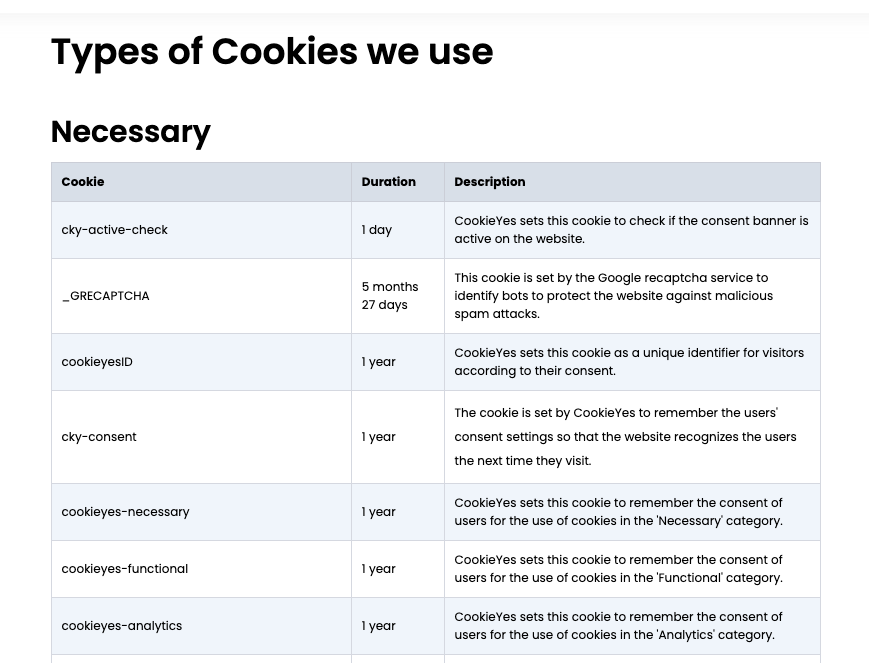






The common mantra for e-commerce compliance is to treat every cookie as a liability, leading brands to implement aggressive, ‘ask for everything’ cookie banners that create immediate friction. This all-or-nothing approach is based on the flawed assumption that you must impede the user journey to satisfy regulators, driving up cart abandonment and silently eroding Customer Lifetime Value (LTV). But what if the very rule you’re trying to follow—informed consent—actually provides a crucial, overlooked exemption that allows you to automate a smoother, high-trust experience from the first click?
The hard reality is that this blanket consent strategy is leaving significant revenue expansion on the table. Regulations like GDPR carved out a strategic path for “strictly necessary cookies” that are essential for the site’s function or a service explicitly requested by the user. Understanding and leveraging this precise legal distinction is the difference between a compliant but conversion-crushing banner, and a frictionless, high-LTV customer acquisition machine. We will break down the exact criteria from the Working Party 29 Opinion to show you how to eliminate needless friction and build your email and SMS lists without compromising on integrity or compliance.
Maximizing WooCommerce Checkout Conversion with Strictly Necessary Cookies
For a WooCommerce store, the concept of ‘strictly necessary’ cookies is not just a legal compliance point; it is a critical conversion optimization safeguard for the checkout funnel. By legal definition, these are cookies essential for providing a service explicitly requested by the user—such as managing the shopping cart or facilitating the purchase. This means they are exempt from the initial consent requirement, allowing them to load immediately and ensuring zero friction from the moment a customer adds an item to the cart right through to payment processing. Protecting this exemption is non-negotiable for maintaining peak conversion rates.
The fundamental necessity of these exempted cookies directly maps to core WooCommerce functionalities. An audit of your checkout must confirm that the following critical elements function perfectly even before non-essential cookies are accepted:
- Session Management: Retaining items in the WooCommerce cart across page loads and ensuring the correct user is associated with their session data using cookies like
woocommerce_cart_hashandwoocommerce_items_in_cart. - Security and Anti-Fraud: Implementing temporary cookies necessary for detecting and mitigating fraudulent activity during the payment authorization and validation steps.
- Payment Gateway Handshake: Facilitating the secure, server-to-server communication required for a payment to be processed successfully, including temporary tokens for transaction validation.
The operational risk lies in misclassification. Many site owners mistakenly lump non-essential, but useful, analytics cookies into this ‘strictly necessary’ category, which is a dark pattern that invalidates the consent-free status and exposes the business to regulatory fines. To truly maximize checkout conversion, an automated Consent Management Platform (CMP) is essential. It must continuously scan the site to precisely differentiate between genuinely necessary first-party WooCommerce cookies and optional marketing pixels, ensuring only the former load prior to consent. This technical rigor guarantees a compliant, high-speed, and frictionless checkout experience, even for users who reject all non-essential tracking.
How Legal Cookie Exemptions Automate Frictionless Customer Journeys
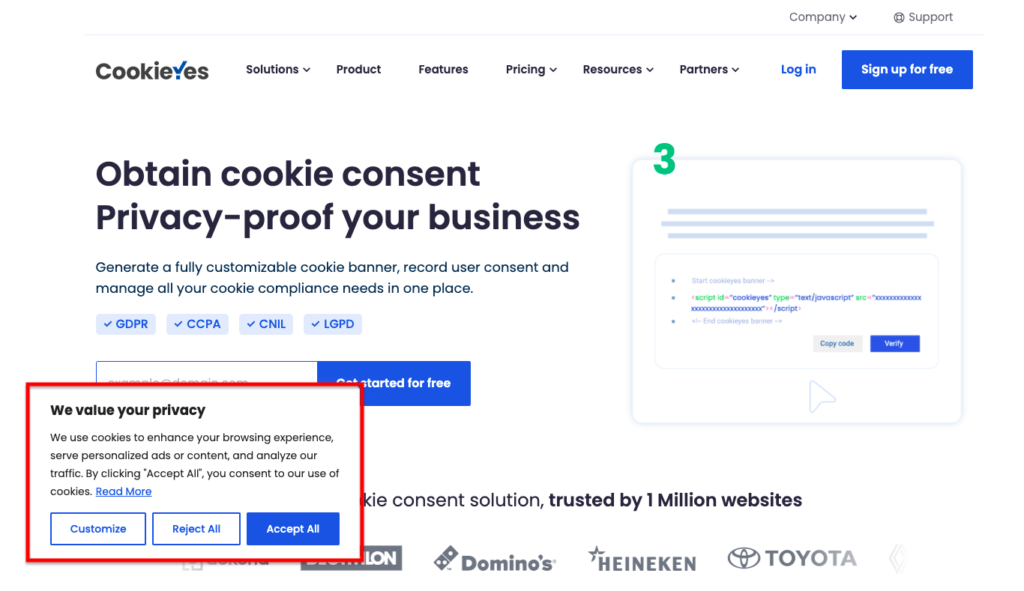
Legal cookie exemptions, specifically those covering ‘strictly necessary’ cookies, are the single most effective technical mechanism to eliminate friction from essential customer journeys on a WooCommerce store. By correctly classifying and whitelisting cookies that are purely for the “sole purpose of carrying out the transmission of a communication over an electronic communications network” or those that are “strictly necessary for the provider of an information society service explicitly requested by the user,” you legally bypass the requirement for a first-layer consent banner for these core functions. This automation ensures that session management, shopping cart persistence, and fundamental security protocols are active from the moment the user lands on the site, preventing the high abandonment rates typically associated with a diretrizry consent interaction before critical actions can be performed.
The strategic imperative for any WooCommerce consultant is to conduct a meticulous, continuous audit to ensure all truly essential cookies leverage this exemption without risking non-compliance. A misclassified marketing or analytics cookie that is exempting itself will expose the business to significant regulatory risk. The following are the most common and crucial examples that fall within the scope of legal exemption and should be technically managed outside of the initial consent flow:
- Session Cookies: Essential for tracking a user’s input across multi-page interactions, such as maintaining login state, remembering items placed in the shopping cart, or carrying form data through a checkout sequence.
- User-Centric Security Cookies: Used exclusively to detect and prevent security risks, such as repeated failed login attempts or other abusive behaviors, thereby securing the service that the user has explicitly requested.
- Load Balancing Cookies: Necessary for distributing network traffic across multiple servers, a technical requirement to deliver the service effectively and reliably, and not for personal tracking or marketing purposes.
The Consent-Free Data Edge: Securing Your Core Revenue Analytics
The ‘Consent-Free Data Edge’ for a WooCommerce consultant is the strategic ability to maintain core revenue analytics derived exclusively from strictly necessary cookies, which are legally exempt from explicit user consent under global privacy frameworks like the e-Privacy Directive. This exemption is critical because it insulates your fundamental conversion data—session IDs, checkout flow status, and site functionality—from user opt-out decisions. By accurately identifying and leveraging these essential first-party data points, you secure an always-on, high-integrity data stream that provides a reliable baseline for measuring actual sales performance and diagnosing structural friction within the purchase funnel, regardless of a user’s consent on marketing trackers.
To implement this edge, you must perform a rigorous technical audit to ensure your WooCommerce store strictly adheres to the legal definition of ‘necessary,’ avoiding the common error of misclassifying functional or preference cookies. Only those technical mechanisms indispensable for providing the core service explicitly requested by the user—such as adding an item to the cart—are exempt. The following essential cookies, which secure your baseline revenue metrics, typically fall under this consent-free umbrella:
- Session Management Cookies: These track the user’s temporary ID for login sessions or to distinguish one user from another, which is necessary for the seamless service of browsing the site.
- Shopping Cart Persistence: Cookies that retain the items a user has placed into their WooCommerce shopping cart are strictly necessary for the core service of an eCommerce transaction.
- Input/Form Data Cookies: Temporary cookies that remember the information a user has entered into an online form across different pages, preventing data loss (e.g., during a multi-step checkout process).
The actionable strategy is to integrate a robust Consent Management Platform (CMP) that is configured to automatically recognize and permit these strictly necessary cookies while auto-blocking all others before any explicit consent choice is made. For your analytics, separate your core WooCommerce sales reporting—which relies on this consent-free operational data—from your marketing performance tracking. This architectural separation ensures that your most vital metrics (e.g., Order Completion Rate, Cart Abandonment) are legally clean and consistently measurable, providing a non-diminished view of the structural health of your store.
Protecting Your Purchase Funnel: The Exemption for Essential Site Functions
The legal exemption for strictly necessary cookies is the only structural firewall available to protect the integrity of a WooCommerce store’s purchase funnel from the moment a user lands on the site. These cookies are defined by their necessity to fulfill a service explicitly requested by the user (Working Party 29 Opinion 04/2012). For an eCommerce platform, this translates directly to the core transactional functions: cart persistence, session management, and security. By accurately classifying and deploying only these essential cookies prior to explicit consent, you eliminate the legal friction that would otherwise break the user journey between adding a product and completing the checkout, thus safeguarding your highest-value conversion path.
To ensure continuous compliance and optimal funnel performance, a technical audit must be performed to isolate only those cookies that are indispensable for these functions. Misclassifying marketing or non-essential analytics cookies under the ‘strictly necessary’ umbrella is a direct violation of compliance principles and is viewed as a deceptive dark pattern. Your Consent Management Platform (CMP) must be configured to load these exempted cookies automatically and block all others by default, thus preserving the user experience while maintaining a legal, consent-free checkout process.
- Session ID Cookies: Anonymously maintains the user’s state across page loads, which is essential for identifying them as they navigate from a product page to the cart.
- Cart Content Cookies: Stores the details of the items a customer has placed in their WooCommerce shopping cart. Without this, the cart would empty between page views.
- User Input Cookies: Remembers the user’s input in a multi-step form during a single session, such as retaining information entered during the checkout process before payment submission.
- Security/Authentication Cookies: Ensures the legitimacy of the user’s session, such as confirming a logged-in state or providing protection against Cross-Site Request Forgery (CSRF).
Beyond Consent: Using Exemption Rules to Build High-Integrity Marketing Lists
The strategic value of ‘strictly necessary’ cookie exemptions extends beyond simple regulatory compliance; it acts as a foundational benchmark for trust that should inform all subsequent data collection, including marketing list growth. For a WooCommerce operation, consistently and rigorously defining what is exempt—and automatically blocking everything else—sends an immediate, non-verbal signal of ethical data stewardship to the user. When a customer observes that the brand respects their data rights by limiting collection to only service-critical functions (per the Working Party 29 criteria), the perceived risk associated with opting into an email or SMS list is significantly reduced.
This heightened trust is the engine for building what we term a high-integrity marketing list. While the opt-in for marketing communications is not exempt and requires clear, explicit consent, leveraging the principles of the exemption rules improves the legality and quality of that consent. The goal is to move beyond simply ticking a consent box and prove the user has made an informed, active choice. This legal defensibility translates directly into higher engagement rates and better segmentation for lifecycle marketing through platforms like Klaviyo.
Achieving this high-integrity list relies on extending the core compliance philosophy to your sign-up flow. Specifically, we advise on the following best practices for all marketing consent events:
- Explicit Marketing-Only Opt-in: The request for email or SMS marketing consent must be a separate and specific action, clearly differentiated from the general cookie consent or checkout process. It should not be a pre-checked box or a required field.
- Proof of User Request (Double Opt-in): Implement a diretrizry double opt-in (confirmed opt-in) mechanism for all list sign-ups. This process creates an auditable record that strongly mirrors the ‘explicitly requested service’ criterion for cookie exemptions, legally validating the intent behind the subscription.
- Clear Scope of Use: Ensure the opt-in language explicitly defines what the user is consenting to (e.g., “Weekly product updates and exclusive discounts”). This clarity prevents ‘purpose creep’ and ensures the captured data is used only for the services the user genuinely requested, maintaining compliance and preventing list churn.
By intentionally setting a higher, auditable standard for consent that mirrors the legal stringency of cookie exemptions, a WooCommerce store transforms its marketing database into a reliable, high-value asset. This compliance-driven approach reduces the long-term financial risk from regulatory fines and, more critically, minimizes the systematic corruption of data that plagues low-integrity lists, leading to predictably scalable, profitable customer relationships.
Ready to take your e-commerce to the next level?
The true risk isn’t merely misclassifying a cookie and missing the legal exemption for strictly necessary functions—it’s the strategic liability of building your entire growth model on a foundation of low-integrity, non-consented data. If your ad platforms feel volatile, or if you suspect your revenue forecasting is contaminated, the core issue often stems from prioritizing volume over the quality and legality of the data you collect for all other cookie categories. Failing to integrate a compliant, conversion-first consent flow means you are systematically eroding your Customer Lifetime Value (LTV) and restricting your long-term profit ceiling for your WooCommerce operation.
Sustainable profitability is an engineering challenge, not a legal one. We help DTC/eCommerce brands shift their focus from merely checking the compliance box to building data ecosystems where consent, tracking, CRM, and performance marketing work in unified alignment to maximize ROAS and LTV. If you are ready to move beyond compliance as a cost center and use it as a competitive advantage to secure your next phase of scalable growth, the first step is a precise diagnosis. Schedule one of our data-driven & conversion-focused audits today to uncover exactly how your current consent architecture is limiting your LTV and receive a clear, actionable blueprint for optimizing your data collection for maximum long-term profit.