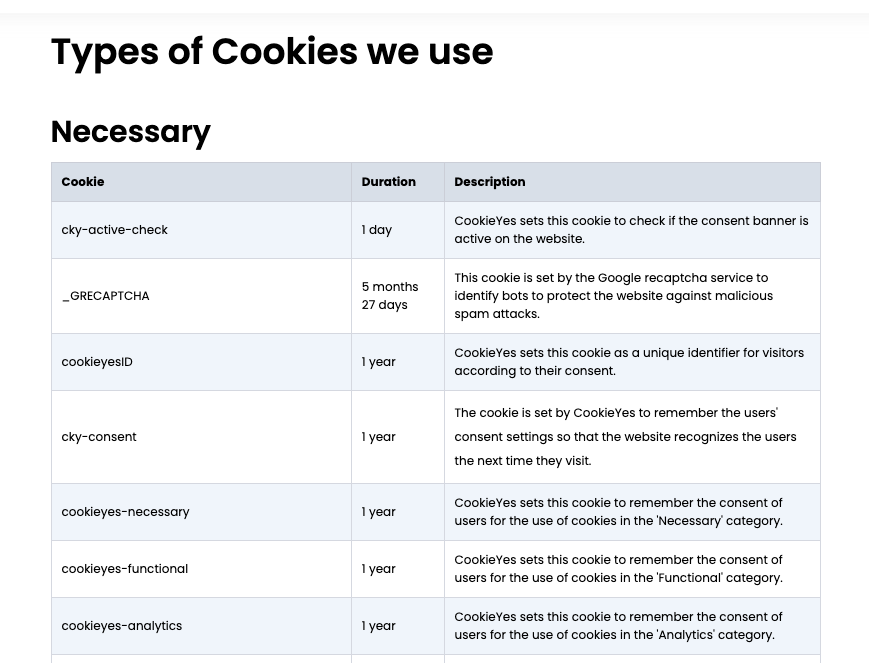






Many eCommerce consultants operate under the silent belief that non-essential cookies—analytics, advertising, and personalization trackers—are just a liability, a regulatory hurdle to be minimized or even deceptively bypassed. This mindset, rooted in minimizing friction, is leaving significant revenue expansion opportunities on the table. By failing to integrate explicit, compliant consent flows, brands are acquiring brittle, low-quality data that directly cripples the effectiveness of their Email and SMS marketing efforts.
The truth is, non-essential cookies are the engine of Customer Lifetime Value (LTV), but only when the consent is high-quality and legally sound. The hidden cost of inaction is a structural failure in your data pipeline, where unverified consent leads to unpredictable ad performance and stunted list growth. This guide breaks down the essential eight-step blueprint for turning your non-essential cookie management from a compliance checkbox into a strategic asset that automates user trust and scales your WooCommerce LTV predictably.
How Non-Essential Cookie Consent Automates Trust for WooCommerce Conversions
The management of non-essential cookies—those used for analytics, advertising, and rich personalization—is the critical friction point that separates a high-converting WooCommerce store from a liability risk. Since non-essential cookies process personal data and therefore require explicit, opt-in consent under major global regulations like GDPR, the compliance mechanism becomes the customer’s first true engagement with your brand’s data integrity. A confusing, manipulative, or non-compliant banner (a ‘dark pattern’) immediately establishes distrust, regardless of the quality of your product, spiking abandonment rates. Conversely, a transparent, high-integrity consent experience automates trust, signaling to the user that their privacy is respected before a purchase is solicited.
- Default Block Automation: For a WooCommerce store, the foundation of trust is ensuring that all non-essential scripts (e.g., Google Analytics, Facebook Pixel, Klaviyo trackers) are automatically blocked before consent is given. A robust Consent Management Platform (CMP) must handle this dynamic script blocking seamlessly without developer input.
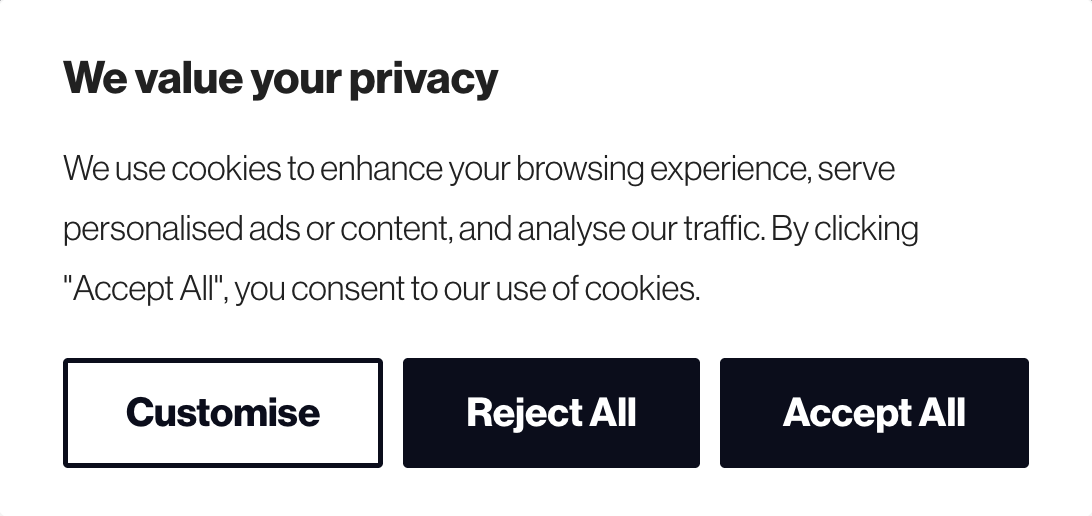
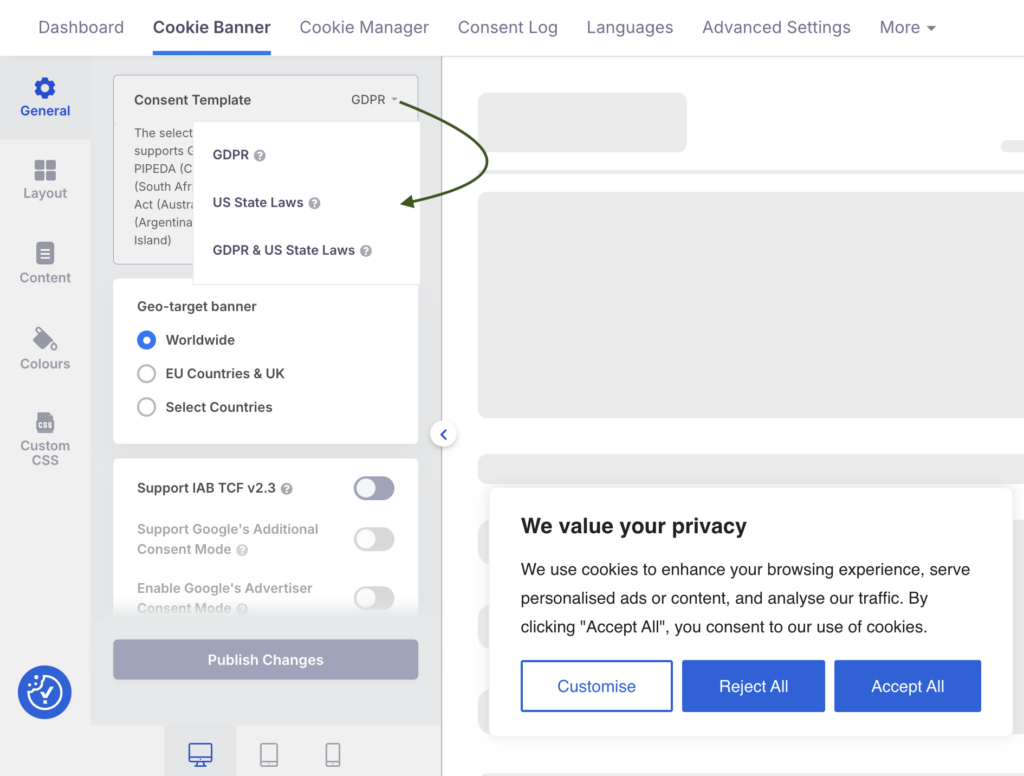
- Equally Prominent Choice: Compliance and conversion are maximized when the user is presented with equally easy choices on the first layer: ‘Accept All’ and ‘Reject All’. This eliminates cognitive friction and proves you value their choice, which is a powerful pre-conversion trust signal.
- Granular Control Access: The ‘Cookie Settings’ or ‘Preferences’ button must be clearly visible and allow users to toggle specific non-essential categories (like Analytics, Preference, or Marketing) independently, ensuring the consent captured is truly informed and legally valid for future auditing.
By implementing these principles, a WooCommerce operation transforms the cookie consent process into a strategic, data-qualifying step. The resulting dataset consists only of users who have willingly, legally consented to tracking, providing a high-quality foundation for retargeting, email list growth, and LTV-focused marketing efforts. This consent-first approach ensures compliance is not a cost, but an ethical filter that elevates the quality and predictability of all downstream conversion funnels.
Protecting Your Email/SMS List Growth: The ‘Consent-First’ Strategy for Non-Necessary Data
The strategic pivot to a ‘consent-first’ model for managing non-essential cookies instantly redefines your WooCommerce store’s relationship with its users. Instead of viewing the cookie banner as a conversion roadblock, it becomes the initial point of brand integrity. By providing clear, compliant consent options, especially for data used in subsequent marketing efforts like email and SMS, you establish a relationship founded on transparency. This approach ensures that while the initial volume of collected data may stabilize, the quality and compliance of that data—which directly feeds your list growth—is dramatically higher, translating into superior long-term Customer Lifetime Value (LTV).
Maximizing the ethical growth of your email and SMS lists requires a technical handshake between your Consent Management Platform (CMP) and your marketing automation tools. You must ensure that non-essential cookie consent governs the visibility and functionality of your lead capture forms. This seamless integration acts as an automated compliance filter, ensuring every subscriber has a verifiable and legal consent trail that extends from the cookie banner right through to your Klaviyo or SMS platform. Key areas of focus include:
- Conditional Lead Capture: Ensure that high-friction opt-in forms (e.g., pop-ups, fly-outs) for email or SMS only appear to users who have explicitly granted consent for the relevant data processing categories (Analytics/Marketing) via your CMP.
- Robust Consent Record Syncing: Implement a system to pass the granular consent status—beyond just a simple ‘opt-in’—from the CMP directly into your customer profile properties within Klaviyo or other SMS marketing platforms.
- Double Opt-In for SMS: Always utilize a double opt-in mechanism for SMS list growth, which provides irrefutable proof of consent and dramatically reduces list churn and potential legal risks associated with TCPA/CTIA compliance.
The Hidden Cost of Non-Compliance: How Vague Cookie Policies Cripple Customer LTV
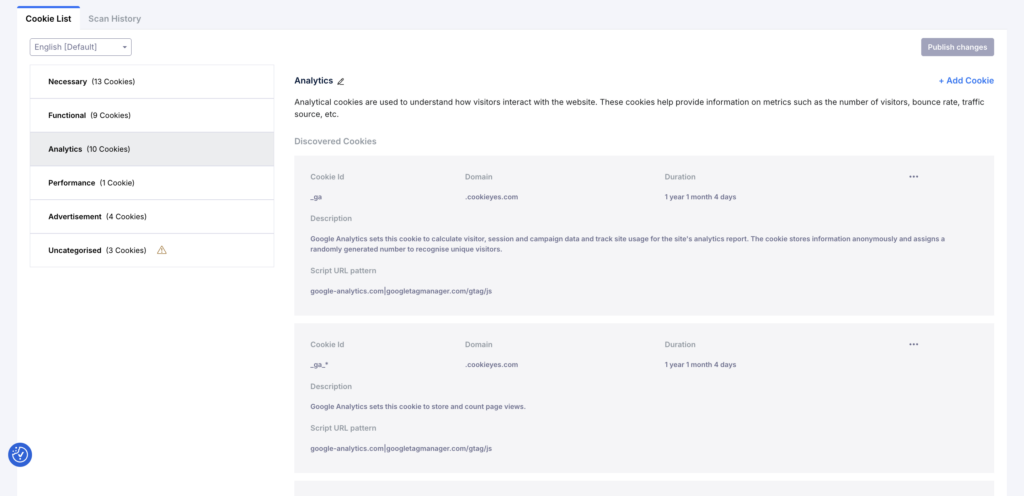
The cost of non-compliance with non-essential cookies extends far past the risk of regulatory fines. A vague or deceptive cookie policy—one that lacks clear category descriptions, obscures the ‘Reject’ option, or fails to properly auto-block non-essential scripts pre-consent—creates a fundamental systemic failure in your WooCommerce data pipeline. This lack of transparency destróis user trust at the very first touchpoint on your site. When users feel manipulated into accepting tracking, their subsequent engagement is brittle and low-intent, which directly compromises the quality of first-party data used for critical LTV-driving functions like retargeting, personalization, and email segmentation. This low-quality, legally ambiguous data forces marketing spend into inefficient channels, generating an unnecessarily high Customer Acquisition Cost (CAC) that makes a sustainable LTV model impossible.
The tangible impact of this lack of clarity can be seen across core commercial metrics:
- Conversion Rate: Low-trust banners spike abandonment rates and reduce the immediate willingness to transact, as users prioritize leaving over engaging with a seemingly non-compliant site.
- Repeat Purchase Rate: Customers who feel tricked into an ‘Accept All’ are less likely to feel comfortable returning, destroying the high-intent, long-term loyalty necessary for scalable LTV.
- Email List Health: Consents gained through dark patterns result in high unsubscribe or spam complaint rates, which cripples sender reputation and the overall quality of your most valuable first-party data asset.
To fix this LTV drain, your WooCommerce store must transition its consent mechanism from a mere legal shield to a core trust asset. The solution lies in granular, transparent consent management that technically supports pre-consent blocking for non-essential categories (Analytics, Advertising, Functional). Your policy and banner must explicitly offer users clear, equally prominent controls for “Accept” and “Reject” actions. This ensures that every piece of data collected post-consent is legally robust and high-intent, dramatically improving the predictability and ROI of your marketing automation and personalization efforts.
Scaling Global Revenue: Using Auto-Blocking to Automate Privacy Compliance
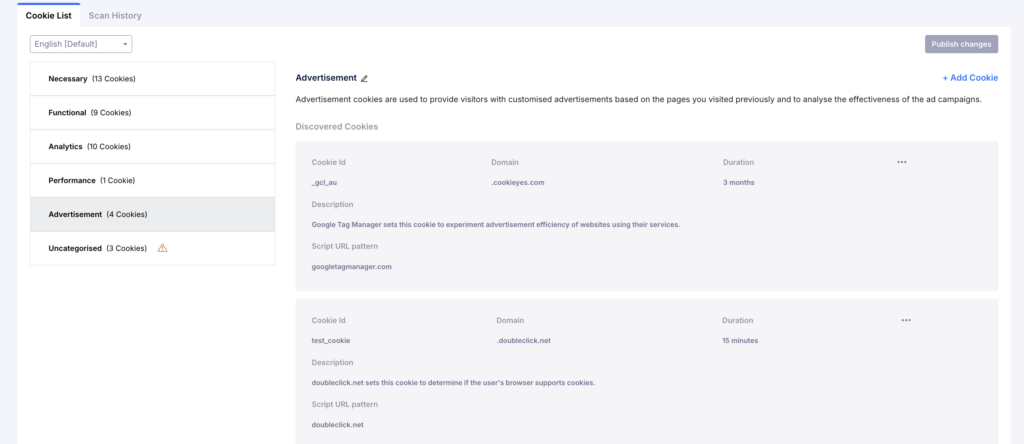
Auto-blocking is the technical backbone of a globally compliant WooCommerce store. It ensures that all non-essential cookies—specifically those used for analytics, advertising, and personalization—are held back until explicit, informed user consent is received. For operations scaling across multiple jurisdictions, such as those governed by the EU’s GDPR or Brazil’s LGPD, relying on manually tagged or blocked scripts is an unsustainable operational risk. A robust Consent Management Platform (CMP) with true auto-blocking capabilities automates this legal obligation at the script level, eliminating human error and immediately shifting your compliance posture from reactive to proactive—the foundational step for generating scalable, ethical revenue.
The core commercial benefit of deploying this technology is the immediate elimination of ‘data debt.’ By ensuring every subsequent data stream is legally validated by explicit consent, you are building high-integrity customer profiles. This deep compliance allows you to confidently allocate budgets for personalized marketing, paid media, and advanced analytics, knowing your data foundation is not brittle. For a WooCommerce store pursuing global growth, auto-blocking is not just a privacy feature, but a strategic tool that simplifies multi-regional deployment.
- Legal Firewall: Automatically prevents non-consented tracking from firing, regardless of the user’s geographical location, drastically minimizing the risk of privacy-related fines.
- Data Integrity: Filters your analytics to include only consented users, resulting in a smaller but significantly higher-quality data set for more accurate Customer Lifetime Value (LTV) and Return On Ad Spend (ROAS) calculations.
- Global Deployment Scalability: Allows a single WooCommerce instance to instantly conform to varied regulatory standards (strict opt-in versus soft opt-out) without requiring complex, time-consuming per-country code modifications.
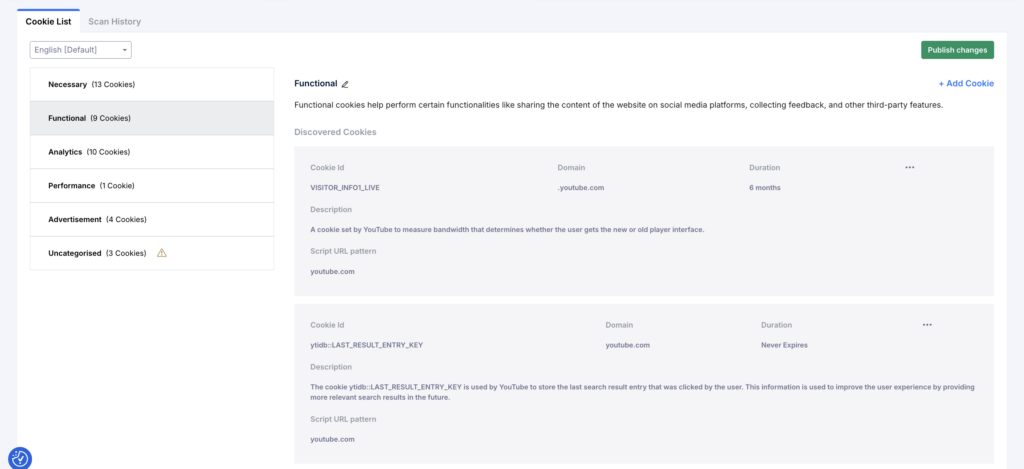
Turning Analytics and Advertising Cookies into High-Quality and Compliant Data Streams
The core objective with non-essential cookies, which include critical analytics and advertising trackers, is to move past the volume game and into a quality-first data strategy. Collecting a high quantity of data through vague or coercive consent—such as dark patterns—results in a legally brittle and inaccurate dataset that is inefficient for performance marketing. A compliant consent flow ensures that every data point in your stream is not only legal but also reflects a genuine, informed user decision. This ‘opted-in’ data is inherently higher quality, leading to superior segmentation, more accurate conversion modeling, and a stronger foundation for Lookalike Audience generation.
To convert these necessary tools into high-quality, compliant data streams, your WooCommerce site must prioritize user control and transparency at the technical layer. This means moving beyond generic pop-ups and providing a mechanism that validates consent before execution:
- Granular Control: The preference center must allow users to toggle consent for ‘Analytics’ and ‘Advertising’ cookies distinctly from one another, rather than forcing a single choice for all non-essential purposes.
- Pre-Consent Auto-Blocking: Implement server-side or script-level geo-blocking to ensure that all non-essential trackers (e.g., Google Analytics, Meta Pixel) are physically prevented from loading until the user explicitly provides consent for that specific category.
- Clarity of Purpose: Use your preference center to clearly define the function of advertising and analytics cookies in simple, non-legalistic language, thereby fulfilling the ‘informed’ requirement of GDPR/CCPA.
By enforcing this opt-in mechanism, you eliminate the legal risk associated with passively collected data and future-proof your growth models. While the initial raw ‘Accept All’ rate may decrease, the reliability of the remaining consented data dramatically increases, driving a more consistent and predictable Customer Lifetime Value (LTV) because your marketing automation and reporting are based on a foundation of legitimate user trust.
Ready to take your e-commerce to the next level?
If your customer acquisition costs (CAC) are rising while your Customer Lifetime Value (LTV) feels stagnant, the issue often isn’t your ad creative—it’s the quality of the data feeding your segments. A flawed non-essential cookie strategy doesn’t just risk regulatory non-compliance; it systematically corrupts your entire marketing data set, giving you an inflated, low-intent audience for retargeting and automation. This lack of true, high-quality consent means your WooCommerce growth is built on a foundation of unvalidated data, making your ROAS unpredictable and your scaling efforts unsustainable.
We help DTC/eCommerce brands solve this by moving beyond mere compliance to build high-profit, data-driven systems. We act as an extension of your in-house team, specializing in unifying tracking, consent, CRM, paid media, and automation to maximize ROAS and LTV. Stop guessing where your data is breaking down. Schedule one of our data-driven & conversion-focused audits today to uncover exactly how your current consent architecture is limiting your LTV and receive a clear, actionable blueprint for building a truly profitable growth engine.