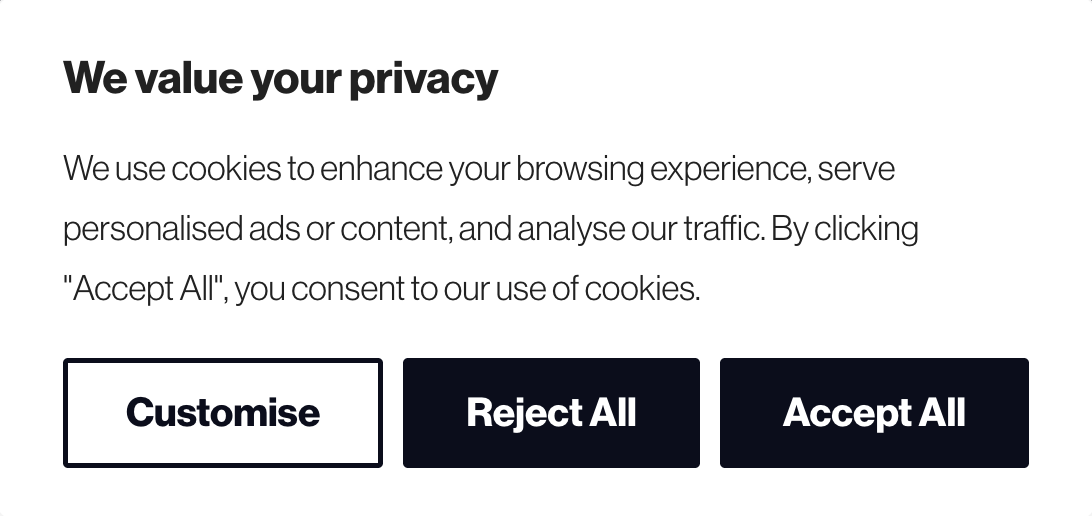






Many eCommerce brands operate under the illusion that a standard English-only cookie banner is a sufficient compliance checkbox, believing that as long as the legal requirements are technically met, the user experience remains unaffected. But what if this neglect of localized communication is actually acting as a silent ceiling on your global revenue expansion? For high-growth stores, the hidden cost of inaction lies in the immediate friction and uncertainty created when a visitor encounters a consent barrier they cannot read, which often leads to instant bounces and a direct loss of Customer Lifetime Value (LTV) at the very start of the user journey.
The hard reality is that failing to speak your customer’s language in mission-critical compliance touchpoints is a strategic liability that risks your primary domain’s trust and conversion potential. Transitioning to auto-translated, multilingual cookie banners is not merely a technical preference; it is an essential growth lever that ensures your brand meets users exactly where they are, eliminating the cognitive load of a language barrier and fostering the confidence required for meaningful engagement. This guide explores how leveraging intelligent translation infrastructure provides the clarity needed to fuel cross-border efficiency and transform diretrizry compliance into a driver for scalable global growth.
What is a multilingual cookie banner and why is it important?
A multilingual cookie banner is a dynamic consent management tool that automatically detects a visitor’s preferred language—typically via browser settings or geolocation—and displays the cookie notice in that specific dialect. For high-growth WooCommerce stores expanding into international markets, this is not merely a cosmetic feature but a critical component of a localized user interface. It ensures that the very first interaction a customer has with your brand is intelligible, removing the immediate “cognitive friction” that occurs when a user is confronted with a legal notice they cannot decipher.
- Informed Consent: Under global privacy frameworks like the GDPR, consent is only legally valid if it is “informed,” which inherently requires that the user understands the information being presented.
- Bounce Rate Mitigation: Presenting a banner in an unfamiliar language often leads to immediate site abandonment or “blind clicking,” where users reject all cookies out of frustration, potentially breaking essential site functionality.
- Trust and Authority: Localizing the consent experience signals professional maturity and respect for regional preferences, which significantly enhances the perceived credibility of a store operating across borders.
Implementing an auto-translated or multilingual banner effectively bridges the gap between technical compliance and high-performance user experience. By delivering clear, localized information, you empower users to make intentional consent choices, which ultimately stabilizes your data collection and builds a foundation of transparency that is essential for long-term customer retention in competitive global markets.
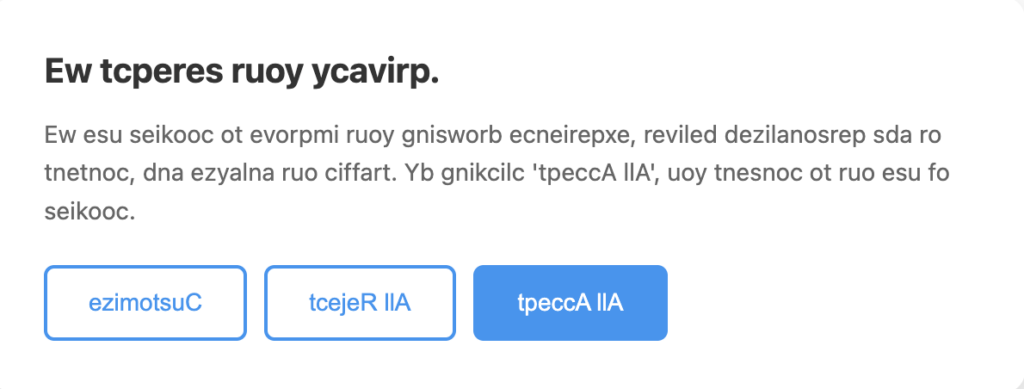
Why do auto-translated cookie banners improve WooCommerce UX?
In the high-stakes environment of global WooCommerce scaling, the user experience begins the moment a visitor lands on your site, often before they even see a product. An auto-translated cookie banner is not merely a compliance checkbox; it is a critical touchpoint that eliminates the cognitive friction caused by a language barrier. When a store presents legal and privacy information in a language the visitor does not understand, it triggers immediate skepticism and can lead to high bounce rates as users hesitate to interact with unfamiliar elements.
- Frictionless Navigation: Auto-translation ensures that the very first interaction is seamless, preventing the “quick pause” of uncertainty that occurs when a user is forced to guess the intent of a diretrizry site element.
- Informed Consent: For a WooCommerce store to be truly transparent, users must actually comprehend the choices they are making regarding their data. Providing this information in their native tongue empowers them to make confident consent decisions.
- Brand Authority: Implementing a multilingual interface signals that your brand is a legitimate international player, immediately elevating the perceived professionalism and reliability of your store in foreign markets.
By leveraging auto-translation, you shift the burden of localization from your development team to an automated, responsive infrastructure. This ensures that as your WooCommerce store attracts traffic from diverse regions, your privacy interface remains as accessible and user-friendly as your checkout process. Ultimately, removing this initial technical hurdle is a strategic move to safeguard your conversion rates and foster long-term customer trust across the global eCommerce landscape.
How do multilingual cookie banners help with global eCommerce compliance?
For global WooCommerce stores, compliance is not a static requirement but a regional variable that shifts based on the visitor’s location. A multilingual cookie banner is a critical technical asset because most privacy regulations, including the GDPR in Europe and Law 25 in Quebec, explicitly state that consent must be “informed.” If a user cannot comprehend the disclosure due to a language barrier, the consent collected is legally void, exposing the brand to significant regulatory risks and potential fines of up to 4% of global turnover.
- Informed Consent Validity: Regulations like the GDPR require that information about data processing be provided in clear and plain language. Translating your banner ensures that technical disclosures regarding tracking pixels and cookies meet the legal threshold for transparency across different jurisdictions.
- Geo-Specific Requirement Matching: Advanced multilingual solutions allow you to toggle between opt-in models for EU residents and opt-out models for California residents (under CCPA/CPRA) while maintaining the correct local language. This ensures you aren’t over-restricting tracking in regions where it is not legally required while remaining fully compliant where it is.
- Enforcement Accuracy: Regulators are increasingly scrutinizing “dark patterns,” which include providing consent options in a language that differs from the site’s primary content. Automated translation ensures that your compliance interface remains consistent with the user’s intent and browser settings, removing the friction that leads to high bounce rates during the consent phase.
By implementing a programmatic, multilingual approach to consent, WooCommerce merchants shift from a reactive “one-size-fits-all” model to a proactive global strategy. This not only mitigates legal exposure in high-stakes markets like the EU and Canada but also ensures that your analytics data remains accurate and compliant, protecting both your revenue streams and your brand’s international reputation.
Why should I use auto-translated cookie banners to increase customer trust?
For high-growth WooCommerce stores, trust is the primary currency that converts international browsers into loyal customers. When a user lands on your site and is immediately met with a cookie banner in a language they do not understand, it creates a “cognitive friction” that signals a lack of localized care. This technical oversight often leads to a “bounce” or a generic refusal of all cookies, which directly hampers your ability to collect the data necessary for behavioral marketing and personalization.
- Demonstrated Transparency: By presenting privacy choices in the visitor’s native tongue, you fulfill the ethical and legal requirement of informed consent, showing that you prioritize their understanding over simple compliance.
- Reduced Bounce Rates: Uncertainty leads to exit; auto-translation removes the language barrier that causes users to abandon the site when faced with an unintelligible legal pop-up.
- Brand Professionalism: A multilingual interface suggests a sophisticated, global operation, reinforcing the customer’s confidence in your store’s security and logistical capabilities.
Implementing auto-translated banners ensures that your brand’s first interaction with a global audience is one of clarity rather than confusion. By removing the “silent ceiling” of a mono-language consent interface, you foster a more inclusive environment that encourages meaningful engagement. This strategic shift transforms a legal hurdle into a powerful trust-building asset, ensuring that your data-driven growth strategies are built on a foundation of genuine customer confidence.
How to integrate a multilingual cookie banner with your WooCommerce store?
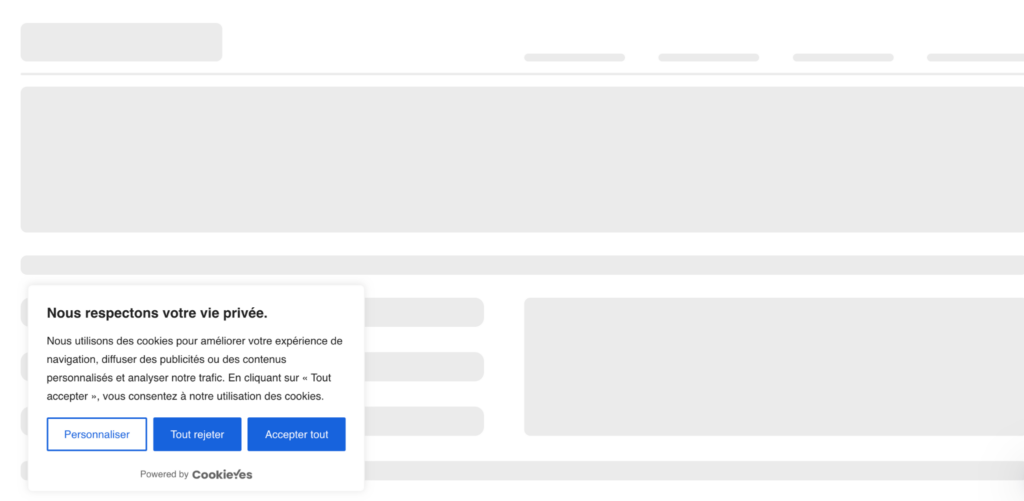
Integrating a multilingual cookie banner into your WooCommerce store requires a technical strategy that aligns your consent management platform (CMP) with your site’s existing translation framework. For high-growth stores, the goal is to ensure that the banner’s language dynamically matches the user’s interface, preventing the “language friction” that often leads to immediate site exits. This is typically achieved by leveraging a CMP that natively supports major WordPress translation engines or offers automated browser-language detection.
To execute a seamless integration, you should follow these technical implementation steps:
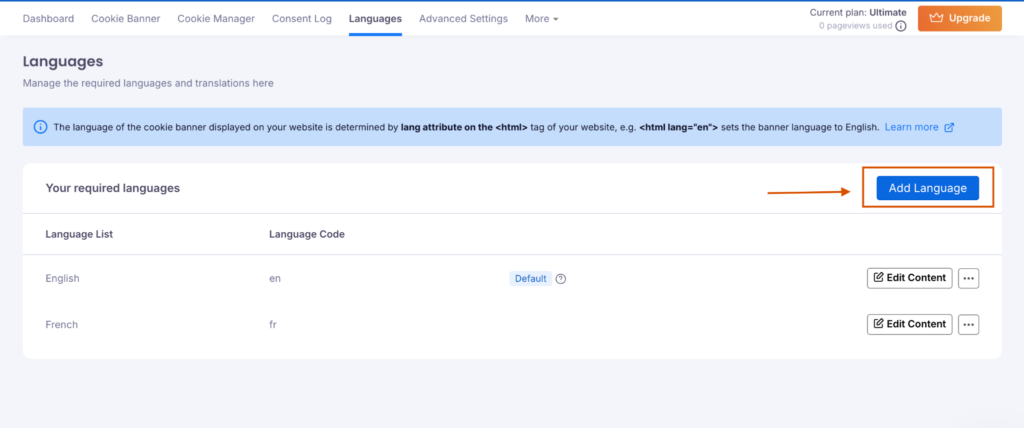
- Plugin Selection and Compatibility: Choose a CMP plugin, such as CookieYes or Complianz, that explicitly supports integration with WPML, Polylang, or TranslatePress to ensure banner strings are registered in your translation tables.
- Language Mapping and Auto-Translation: Activate the multilingual settings within your CMP dashboard to enable auto-translation features, which use browser headers or Geo-IP data to serve the correct localized text.
- Policy Page Synchronization: Map your localized Privacy and Cookie Policy URLs within the banner settings so that the “Read More” links direct users to the policy version written in their active language.
By automating this workflow, you remove the manual burden of managing separate scripts for every region you serve. A correctly integrated banner not only satisfies the legal requirement for “informed consent” under GDPR by being readable, but also maintains the professional integrity of your brand’s global user experience.
Ready to take your e-commerce to the next level?
While implementing a multilingual cookie banner is a vital technical step for improving user experience, the broader business reality for high-growth WooCommerce brands is that fragmented consent data is a silent killer of marketing ROI. If your global expansion efforts feel like they are stalling revenue, or if you suspect that a lack of localized trust is driving up your customer acquisition costs, you are likely facing a structural gap in your data infrastructure. Relying on generic, single-language banners in a cross-border market is not just a UX oversight; it is a direct compromise of your ability to collect high-quality first-party data and power the personalized automation that drives long-term profitability.
To move beyond basic compliance and transform your privacy framework into a competitive growth engine, you need a partner that integrates consent management into your wider ecosystem of tracking, CRM, and paid media. We act as a strategic extension of your team, helping DTC brands maximize Profit, Retention, and LTV through data-driven systems where every customer interaction is accurately captured and ethically leveraged to maximize ROAS. Our process begins with rigorous, conversion-focused audits to eliminate guesswork and identify the exact technical bottlenecks in your global customer journey. If you are ready to stop losing sales to language barriers and build a scalable, privacy-compliant system that fuels performance, book a free consultation today.