





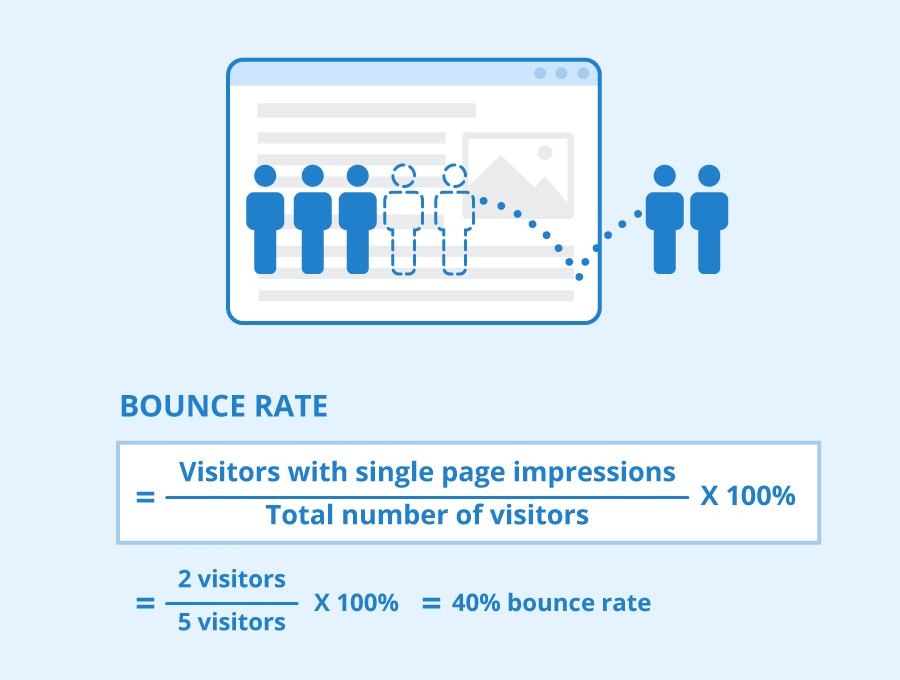
The common industry mantra suggests that high traffic is the ultimate victory for any eCommerce brand, but this focus often masks a devastating reality: the hidden cost of the bounce. When 55% of your hard-earned visitors spend fewer than 15 seconds on your site before disappearing, you aren’t just losing a session; you are witnessing a massive revenue leak that hollows out your Customer Lifetime Value (LTV). This passive acceptance of a high bounce rate is the silent killer of scalable growth, acting as a structural barrier that prevents high-intent prospects from ever entering your conversion funnel or engaging with your downstream Email and SMS marketing flows.
To stop leaving money on the table, store owners must pivot from viewing bounce rate as a vanity metric to treating it as a critical failure in the customer experience. Every user who leaves without clicking a second page represents a wasted acquisition cost and a missed opportunity to build the data profile necessary for sophisticated retargeting. This guide moves beyond basic definitions to provide a strategic blueprint for capturing attention within those first critical seconds, ensuring your platform delivers the immediate value required to protect your margins and fuel long-term revenue expansion.
Optimizing WooCommerce Speed to Slash Bounce Rates and Build Revenue
For a WooCommerce store, site speed is the most fundamental technical lever for reducing bounce rate. When 55% of your visitors decide whether to stay or leave within 15 seconds, a three-second load time consumes 20% of your critical window for persuasion before a single product image even appears. High latency triggers immediate friction, signaling a lack of professional reliability and causing users to abandon the site in favor of faster competitors, which directly hemorrhages potential revenue.
- Managed WooCommerce Hosting: Moving beyond generic shared hosting to environments specifically tuned for high-frequency database queries is the first step in stabilizing Time to First Byte (TTFB).
- Object Caching: Implementing Redis or Memcached reduces the server load by storing the results of complex database lookups, ensuring that product and category pages render near-instantly for repeat traffic.
- Image Compression and WebP Conversion: Automating the delivery of next-gen image formats ensures that high-resolution product galleries do not bottleneck the browser’s rendering process, especially on mobile devices.
Beyond the immediate reduction in bounces, optimizing for speed creates a compounding effect on your bottom line. Search engines prioritize fast-loading stores in organic rankings, lowering your customer acquisition costs while providing the seamless user experience necessary to transition a first-time visitor into a high-value, repeat customer. In the high-stakes environment of eCommerce, every millisecond saved is a direct investment in your conversion rate and long-term revenue growth.
Leveraging Automation to Capture Attention in the First 15 Seconds
The 15-second window is a critical threshold for WooCommerce stores; if a visitor isn’t engaged by then, the likelihood of a bounce increases exponentially. Automation allows you to move beyond static page elements and respond to user behavior in real-time, ensuring that the most relevant value proposition is front and center before the user decides to leave. By implementing systematic, triggered interactions, you can bridge the gap between initial interest and active engagement without manual intervention.
- Behavioral Triggers: Use automation tools to detect exit intent or prolonged inactivity, triggering a targeted overlay or a “limited-time” offer that re-engages the user just as their attention begins to wane.
- Dynamic Content Personalization: Automatically adjust hero images or call-to-action text based on the visitor’s referral source or previous browsing history to provide an immediate sense of relevance and “product-market fit.”
- Automated Social Proof: Deploy real-time notification streams that show recent purchases or live view counts, creating a “busy store” environment that validates the site’s credibility and encourages the visitor to explore further.
Shifting from a passive storefront to an automated, responsive environment directly addresses the core causes of high bounce rates. When your site proactively surfaces the specific information or incentive a user needs within those first few seconds, you transform a fleeting visit into a meaningful session, ultimately protecting your acquisition spend and increasing the probability of a conversion.
Transforming High-Bounce Traffic into High-Value Email and SMS Leads
A high bounce rate often signals a disconnect between user intent and on-page value, but it also represents a massive missed opportunity for zero-party data collection. When a visitor is on the verge of leaving, the goal shifts from an immediate sale to securing a long-term communication channel. By implementing high-intent lead capture mechanisms, WooCommerce store owners can pivot from losing a visitor forever to building a high-value list that fuels future revenue through automated email and SMS workflows.
- Exit-Intent Triggers: Deploy behavior-based pop-ups that activate only when a user moves their cursor toward the browser close button, offering a time-sensitive discount or a high-value lead magnet in exchange for their contact information.
- Personalized Incentive Alignment: Match the lead capture offer to the specific category or product page the user is viewing, ensuring the value proposition is highly relevant to the interest they have already demonstrated.
- Multi-Channel Opt-ins: Utilize “Mobile-First” SMS opt-in buttons alongside traditional email fields to lower friction for mobile users, significantly increasing the conversion rate of fleeting traffic into reachable leads.
By treating exit-intent traffic as a separate segment of your marketing funnel, you create a safety net for your acquisition spend. Capturing an email or phone number transforms a single-session bounce into a repeatable engagement loop, allowing you to nurture the prospect through automated drip campaigns. This strategy effectively lowers your blended customer acquisition cost (CAC) and ensures that even if a visitor isn’t ready to buy in the first 15 seconds, they remain a viable part of your store’s growth trajectory.
Deploying Personalized Retargeting to Recover Lost eCommerce Revenue
High bounce rates often signal a mismatch between user intent and on-page content, but a bounce doesn’t have to mean a permanent loss of revenue. For WooCommerce store owners, personalized retargeting acts as a high-precision recovery mechanism that re-engages users based on the specific behavior they exhibited before leaving. Instead of generic brand awareness ads, effective retargeting utilizes granular data to present the exact products or categories a visitor viewed, effectively bridging the 15-second attention gap and pulling them back into the sales funnel.
- Dynamic Product Ads (DPAs): Automatically serve ads featuring the exact WooCommerce products a user viewed or added to their cart, ensuring the creative is always relevant to their demonstrated interests.
- Behavioral Segmentation: Segment your retargeting audiences based on time spent on site or scroll depth; for example, a user who spent two minutes reading a guide but didn’t buy should receive an educational retargeting ad rather than a hard-sell discount.
- Incentivized Re-engagement: Deploy specific offers like limited-time discounts or free shipping exclusively to “high-intent bouncers”—those who visited your checkout page but didn’t convert—to lower the barrier to entry for their return visit.
The success of a retargeting campaign depends on the technical synergy between your WooCommerce data and your advertising pixels. By leveraging server-side tracking and the Conversion API, you can ensure that your retargeting audiences are updated in real-time, preventing the common friction point of showing ads for products a customer has already purchased. This data-driven approach transforms lost traffic into a predictable revenue stream by treating every bounce as an opportunity for a personalized second impression.
Scaling Growth by Aligning Customer Experience with Predictable LTV Boosts
Scaling a WooCommerce store requires moving beyond the initial click and focusing on the long-term relationship between user experience (UX) and Customer Lifetime Value (LTV). A high bounce rate is often a symptom of a “leaky bucket” where expensive traffic fails to convert due to friction points. By aligning every touchpoint with the customer’s intent, you reduce immediate exits and establish the trust necessary for repeat purchases. This alignment transforms your store from a transactional site into a growth engine where reduced bounce rates directly correlate with predictable revenue increases.
To effectively bridge the gap between initial engagement and long-term loyalty, focus on these three critical technical and strategic pillars:
- Personalized Landing Paths: Use dynamic WooCommerce blocks to match landing page content with the specific referral source or search intent, ensuring the visitor finds exactly what they expected within the first 5 seconds.
- Frictionless Checkout Performance: Optimize the technical path to purchase by minimizing scripts and implementing one-page checkouts, as any latency at this stage exponentially increases the risk of a final-step bounce.
- Behavioral Data Integration: Leverage customer behavioral data to trigger automated, relevant follow-up sequences that re-engage users who showed high intent but exited early, effectively capturing LTV that would otherwise be lost to a bounce.
Ready to take your e-commerce to the next level?
While lowering your bounce rate is a vital technical benchmark, the deeper business reality is that a high bounce rate is often a symptom of a fragmented customer journey that fails to capture high-intent traffic. If your acquisition efforts feel like they are stalling revenue despite high traffic, or if you suspect your storefront is failing to convert the segments that matter most, the core issue is a systemic leak in your conversion funnel. Optimizing for the first 15 seconds is not just about keeping a visitor on the page; it is about building a precise, high-performance ecosystem that turns fleeting attention into measurable profit and long-term Customer Lifetime Value (LTV).
Moving beyond basic bounce rate reduction requires a sophisticated, data-driven strategy where your tracking, CRM, and automation work in perfect synchronization. We act as a strategic extension of your in-house team to help DTC brands eliminate the guesswork and scale with precision. Our methodology begins with rigorous, data-driven & conversion-focused audits to identify the exact structural friction points in your WooCommerce store—ensuring every marketing dollar spent on Paid Media and CRM flows is maximized for ROAS. If you are ready to stop losing potential customers and start building a more profitable, automated growth engine, book a free consultation today.