






We’ve all heard the mantra that localizing an eCommerce store is simply about translating product descriptions and currency symbols to unlock new markets. But what if this narrow focus on the front-end experience is creating a silent barrier to your global revenue expansion? For high-growth brands, the hidden cost of international scaling lies in the trust gap created by monolingual legal documents, where failing to provide a privacy policy in a user’s native language leads to abandoned checkouts and a significant decline in Customer Lifetime Value among non-English speaking cohorts.
The hard reality is that modern regulations like the GDPR and Quebec’s Law 25 have transformed linguistic accessibility from a courtesy into a strict legal mandate, making clear communication a cornerstone of ethical data practices. Transitioning to a multilingual privacy policy is not just a compliance checkbox; it is a strategic necessity that fosters transparency and ensures that every customer, regardless of their region, feels secure enough to share the personal data that fuels your automated marketing workflows. This guide breaks down the critical requirements for providing privacy terms in multiple languages, helping you eliminate technical debt and build the cross-border trust essential for sustainable global growth.
What is a multilingual privacy policy?
A multilingual privacy policy is a version of your standard privacy notice that has been translated and localized for multiple languages and regions. For a WooCommerce store operating internationally, this is more than just a direct translation; it is a strategic effort to ensure that data practices and user rights are communicated in a way that is clear and plain to a diverse audience. By providing these terms in a user’s native language, you remove the “silent ceiling” on trust that occurs when complex legal jargon becomes a barrier to accessibility.
- Linguistic Accuracy: Ensuring that technical legal concepts like “data processing” and “consent” are translated with terminological precision to avoid misunderstandings.
- Legal Alignment: Adapting the policy to meet the specific transparency requirements of regional laws such as the GDPR in Europe or CalOPPA in California.
- Cultural Context: Adjusting the tone and presentation to match the expectations of different global markets, thereby strengthening brand credibility.
Implementing this infrastructure on your WooCommerce site demonstrates a commitment to transparency and user rights, which is critical for high-growth brands. When users can clearly understand how their data is collected and used, friction is reduced, and the foundation for a secure, long-term customer relationship is established. Ultimately, a multilingual privacy policy ensures that your legal obligations are met while simultaneously enhancing the overall user experience across all operational territories.
Why do WooCommerce stores need privacy policies in multiple languages?
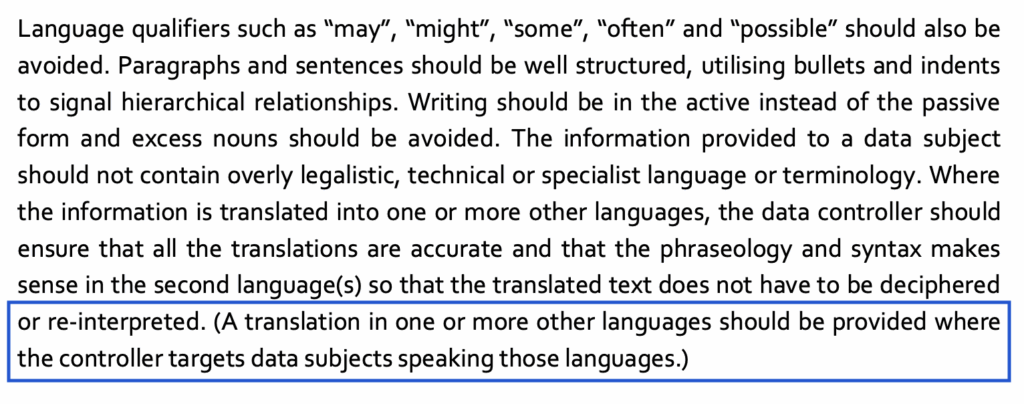
For high-growth WooCommerce stores, international expansion is not just about currency conversion and shipping logistics; it is fundamentally about legal and linguistic transparency. When you scale into new markets, your privacy policy must transition from a static legal document to an accessible disclosure that satisfies the specific regulatory requirements of the regions where your customers reside. Failing to provide these terms in a language the user understands can lead to “uninformed consent,” which many regulators, particularly under GDPR, view as a breach of transparency mandates.
- Regulatory Compliance: Laws like the GDPR and Quebec’s Law 25 require that privacy information be provided in clear and understandable language. If your storefront is localized but your legal terms remain in English, you risk significant fines for failing to meet the “intelligibility” standard.
- Conversion and Trust: A multilingual privacy policy acts as a trust signal during the checkout process. By ensuring that non-English speaking customers can verify how their billing and shipping data is processed, you reduce friction and lower abandoned cart rates in international markets.
- Accessibility Standards: Following WCAG guidelines across all language variants ensures that your store is inclusive. Providing a translated policy demonstrates a serious commitment to user rights and helps protect your brand from the legal risks associated with digital inaccessibility.
Ultimately, a localized privacy policy is a strategic asset for any WooCommerce merchant aiming for global scale. By bridging the linguistic gap, you move beyond mere technical compliance and establish a robust foundation of transparency that is essential for building long-term customer loyalty and safeguarding your store’s reputation across borders.
How to comply with GDPR and CCPA using a multilingual privacy policy?
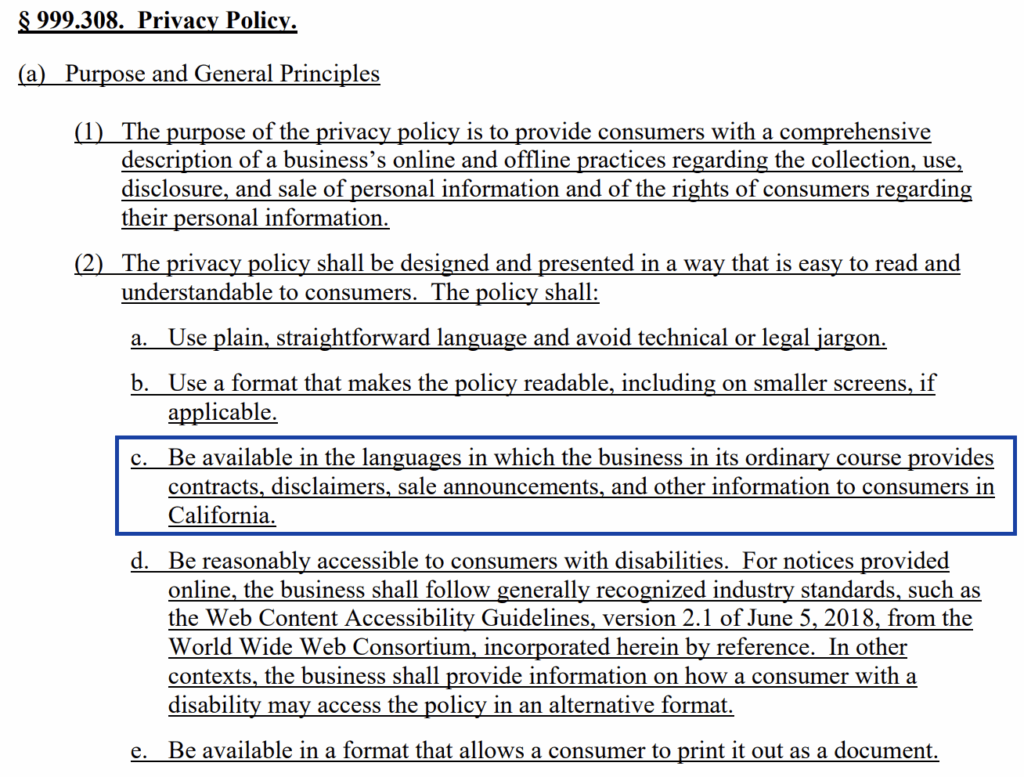
Achieving compliance with the GDPR and CCPA through a multilingual privacy policy requires moving beyond simple literal translation to functional localization. Both regulations emphasize the “right to be informed” in a clear and understandable manner, which is legally impossible if a user cannot comprehend the language of the document. For high-growth WooCommerce stores, this means your policy must be technically accurate to the specific legal jurisdictions of your target markets while remaining linguistically accessible to the end-user.
- Linguistic Clarity: Translate policies into the primary languages of the regions where you conduct business to meet the GDPR’s “intelligibility” standard and the CCPA’s “plain language” requirement.
- Regional Specificity: Incorporate distinct clauses for different laws, such as specific “Do Not Sell My Personal Information” links for California residents and detailed legal basis explanations for EU citizens.
- Dynamic Accessibility: Implement automated language detection or clear manual selectors on your WooCommerce site to ensure the correct version of the policy is served to the user based on their browser settings or geographical location.
By integrating these localized elements, you mitigate the risk of regulatory fines and build a foundation of trust that is critical for international revenue expansion. A well-implemented multilingual policy signals to global customers that your brand respects their data rights as much as their purchasing power, effectively removing technical and legal friction from the customer journey.
When is a translated privacy policy required for international eCommerce?
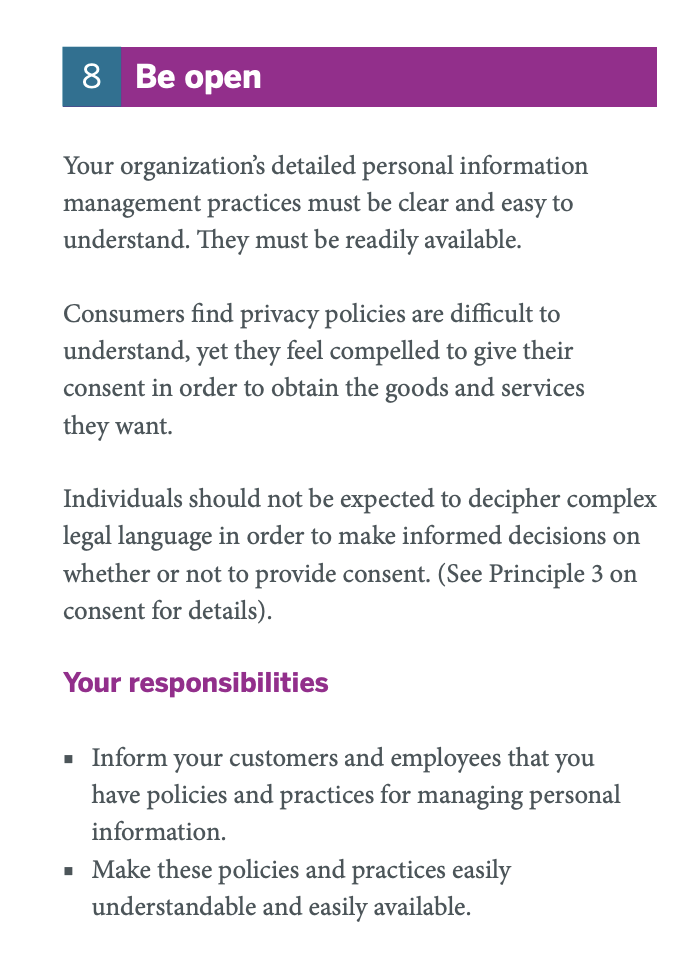
For international WooCommerce stores, a translated privacy policy is not merely a courtesy; it is a legal necessity triggered the moment your business targets residents in specific jurisdictions. Global regulations like the GDPR and Quebec’s Law 25 mandate that privacy information be provided in clear, plain language that the user can understand. If your storefront actively markets to a specific region—evidenced by local currency, top-level domains, or localized marketing content—regulatory bodies assume your “clear language” must match the language used to solicit the sale.
- Active Targeting: When your store uses localized advertising, local contact numbers, or specific regional subdomains, you are legally obligated to provide the privacy terms in the corresponding language to ensure “informed consent.”
- Jurisdictional Mandates: Specific laws, such as Quebec’s Law 25, require that confidentiality policies be published in French if you are carrying on an enterprise in that province, regardless of your physical location.
- Transparency Requirements: Under GDPR Article 12, data controllers must provide information in an accessible and easy-to-understand format; failure to translate a policy for a significant portion of your user base can be viewed as a structural barrier to transparency.
Strategically, implementing a multilingual privacy policy removes a “silent ceiling” on international conversion rates. High-growth brands recognize that trust is a prerequisite for data sharing; if a customer cannot comprehend how their data is stored or processed due to a language barrier, they are significantly more likely to abandon their cart. By aligning your legal documentation with your localized shopping experience, you ensure that compliance supports your revenue expansion rather than acting as a technical bottleneck.
How to implement a multilingual privacy policy on your WooCommerce site?
Implementing a multilingual privacy policy on your WooCommerce site requires a strategic blend of translation accuracy and technical integration. For high-growth stores, the process moves beyond simple text translation to ensuring that the correct legal document is served based on the user’s selected language or geographical location. This technical alignment is crucial for maintaining compliance with regional mandates like the GDPR or CCPA, which often require that privacy information be provided in a language the consumer understands.
To execute this effectively within the WordPress ecosystem, store owners should adopt a systematic approach to content distribution:
- Plugin Integration: Utilize dedicated translation plugins such as WPML or Polylang to create linked versions of your privacy policy page, allowing the system to automatically toggle the content when a user switches the site language.
- Dynamic Footer Links: Configure your theme settings or use a code snippet to ensure that the privacy policy link in the footer dynamically updates to point to the translated version corresponding to the active language sub-directory.
- Consent Management Alignment: Synchronize your multilingual policy with a Consent Management Platform (CMP) like CookieYes, ensuring that cookie banners and preference centers are also displayed in the user’s local language to provide a cohesive compliance journey.
By delegating the distribution logic to robust translation and compliance tools, you eliminate the risk of serving untranslated legal terms that could lead to regulatory friction. This ensures that as your brand scales globally, your legal infrastructure remains as accessible and user-centric as your product offerings.
Ready to take your e-commerce to the next level?
While establishing a multilingual privacy policy is a fundamental requirement for international compliance, the business reality for high-growth WooCommerce brands is that legal accessibility is only one piece of the global expansion puzzle. If your international scaling efforts feel like they are stalling revenue despite increasing traffic, or if you suspect that a lack of localized trust is eroding your conversion rates in key markets, you are facing a structural barrier to growth. Relying on basic translations or fragmented consent management is not just a compliance risk; it is a direct compromise of your brand integrity and your ability to build long-term loyalty with a global audience.
To move beyond basic compliance and build a high-performance international storefront, you need a partner that synchronizes your technical infrastructure with your broader growth objectives. We act as a strategic extension of your team, helping DTC brands maximize Profit, Retention, and LTV through data-driven systems where consent, CRM, and advanced tracking operate in perfect concert across every border. Our process begins with rigorous, conversion-focused audits to eliminate guesswork and identify the exact technical bottlenecks in your customer journey. If you are ready to move from manual localization to a scalable, privacy-compliant system that maximizes global ROAS, book a free consultation today.