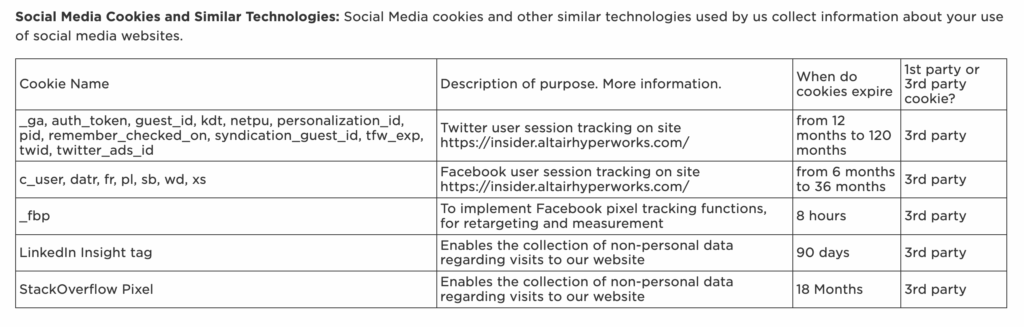






In the age of GDPR and CCPA, most brands treat their cookie banner as a purely necessary evil—a piece of required legal friction that must be minimized to salvage conversion rates. This mindset often leads to poor design, vague consent language, or the use of ‘dark patterns’ that destroy trust, operating under the assumption that any compliance measure is an automatic revenue ceiling. The hidden cost of this inaction isn’t a simple regulatory fine, but the long-term erosion of Customer Lifetime Value (LTV) that results when customers feel manipulated before they even make their first purchase.
But what if your cookie consent experience could be a powerful trust touchpoint — a seamless extension of your brand that actually improves user experience and supports revenue expansion? Global leaders understand that compliance is not a cost center, but a critical opportunity to build deep customer loyalty. This guide breaks down 10 real-world, data-driven examples from brands like Ahrefs and Domino’s, showing you the exact, compliant features they use to turn a legal requirement into a strategic advantage, proving that a thoughtful banner can be both CCPA/GDPR ready and conversion-friendly.
How GDPR-Compliant Banners Automate Trust and Boost WooCommerce Conversions
For a modern WooCommerce store, the cookie banner is no longer a liability—it’s a critical touchpoint for automating user trust, which is the foundational precursor to conversion. Non-compliant or poorly designed banners are a friction point that breaks the user journey, signaling to the customer that the brand prioritizes data extraction over transparency. Conversely, a clearly compliant banner, especially one that offers granular, easy-to-access control (Accept, Reject, Settings), immediately reduces perceived risk and elevates brand authority. This subtle psychological shift is crucial: by giving users real control, you convert a required legal interaction into a moment of positive engagement, making the user more willing to proceed to the product page or checkout.
Maximizing this trust-to-conversion pipeline on WooCommerce requires focusing on banner features that enhance user experience while ensuring legal rigor. When evaluating your compliance solution, concentrate on features that minimize friction without sacrificing consent quality:
- Geo-Targeted Compliance: Instead of a one-size-fits-all banner, a strong CMP automatically detects the user’s location (e.g., EU for GDPR, California for CCPA) and deploys the appropriate legal template. This ensures minimal friction for non-EU/non-California users while maintaining strict compliance where required.
- Automated Cookie Scanning and Categorization: A key feature for WooCommerce is continuous, automatic scanning of cookies used by third-party plugins (Analytics, Klaviyo, Facebook Pixel). This ensures that consent settings are always accurate and dynamically block/unblock scripts based on the user’s choice, preventing compliance breaches without developer intervention.
- Conversion-Friendly Design: The banner must be fully customizable to match the WooCommerce theme and brand aesthetics, ensuring the design feels integrated and trustworthy, not like a disruptive third-party overlay. Custom colours, fonts, and clear, unambiguous button placement are non-negotiable conversion assets.
Implementing a GDPR-compliant banner via a dedicated Consent Management Platform is therefore a strategic investment that offloads the complexity of global data law onto an automated system. This allows the WooCommerce operator to refocus on core conversion metrics, knowing that the foundation of legal consent and user trust is securely managed, ultimately leading to a higher quality of converted traffic and stronger long-term Customer Lifetime Value.
Maximizing Email List Growth: The Consent-First Strategy for Klaviyo and SMS Marketing
The shift to a consent-first model treats the cookie banner not as an obstacle, but as the first opportunity to establish brand integrity. By presenting a clear, compliant consent experience, you instantly differentiate your WooCommerce store from those using ‘dark patterns.’ This initial act of transparency significantly increases the quality of the user relationship, making them far more receptive to subsequent value exchanges, such as opting into your Klaviyo email list or SMS marketing. While the raw opt-in rate may see a minor short-term dip compared to non-compliant, forced-consent methods, the lifetime value (LTV) of the explicitly consented subscriber is substantially higher because the relationship is built on trust, not dark-pattern manipulation.
To maximize your list growth through this compliant approach, the technical integration between your Consent Management Platform (CMP) and your marketing stack (Klaviyo/SMS) is crucial. You must ensure your systems leverage the consented data points to govern all subsequent marketing activities. Here are the core actions:
- Conditional Pop-ups: Only present email/SMS subscription pop-ups (Klaviyo forms) to users who have already given consent for ‘analytics’ or ‘marketing’ cookies via the CMP, ensuring you legally capture and utilize that lead data.
- Double Opt-In Enforcement: For SMS in particular, use a clear double opt-in process that explicitly references the privacy policy and consent for recurring messages. This is the gold standard for compliance and for preventing high-churn, low-value contacts.
- Consent Syncing: Implement a data sync that passes the user’s specific consent status (e.g., opted-in for email and SMS) from the CMP directly into the Klaviyo/SMS customer profile properties. This allows for hyper-segmentation and prevents non-compliant marketing to partially or fully rejected users.

The Trust Touchpoint: Turning CCPA Compliance into Scalable eCommerce Revenue
CCPA compliance, particularly the “Do Not Sell or Share My Personal Information” (DNS) mandate, should not be treated as a purely defensive legal hurdle. For a WooCommerce store, it is an opportunity to transform the cookie banner into a proactive ‘Trust Touchpoint.’ When a user sees a transparent, easy-to-use CCPA consent mechanism, it instantly signals ethical data handling, which drastically reduces the perception of risk. This foundational trust directly correlates with improved customer sentiment, increased average order value (AOV), and a higher likelihood of long-term loyalty, moving the conversation from mere data collection to customer partnership.
To effectively convert this compliance requirement into a revenue asset, the CCPA mechanism must integrate seamlessly with the user experience and marketing tools. This involves technical diligence to ensure the opt-out mechanism is functional and non-deceptive, moving beyond the bare minimum legal requirement to a design that reinforces brand value.
The ultimate value of a CCPA-compliant, transparent banner is the quality of the data collected post-consent. When consent is freely and clearly given, the resulting first-party data you use for segmentation, personalization, and audience building is legally robust and ethically clean. This clean data allows for more effective, compliant, and ultimately profitable marketing campaigns, which is the true engine for scalable and sustainable eCommerce revenue growth, shielded from future regulatory fines and privacy-related customer churn.
Beyond Compliance: Using Smart Consent Flows to Improve Customer Lifetime Value (LTV)
The shift from merely checking a compliance box to proactively optimizing your consent flow is a critical pivot for sustainable Customer Lifetime Value (LTV) within a WooCommerce environment. A purely compliant banner prevents legal issues, but a smart consent flow acts as a powerful, ethical segmentation tool that qualifies customer intent from the first interaction. By ensuring the user experience is intuitive, transparent, and aesthetically aligned with your brand, you minimize unnecessary friction and, more importantly, signal that you value their data rights. This immediate foundation of trust is the first, often-overlooked, step in building a high-LTV customer base that feels respected.
To leverage your cookie consent implementation for LTV, you must utilize the consent data to personalize the subsequent customer journey. The objective is to move from a binary Accept/Reject outcome to a dynamic segmentation based on the level of consent provided. This allows your marketing budget for platforms like Klaviyo and SMS to be allocated exclusively to segments that have explicitly authorized the most profitable tracking—a strategic defunding of low-intent, non-consenting traffic and a focus on customers who have given a clear, permission-based path to engagement.
Here are three ways to transition your consent flow into a growth mechanism:
- Segmented Post-Consent Funnel: Immediately trigger different welcome or new-customer sequences based on the consent outcome. Users who accept all cookies can be targeted with full, optimized retargeting campaigns, while those who only accept essential cookies should be immediately directed to a zero-party data collection touchpoint, such as an on-site quiz or preference center, to recover valuable segmentation information.
- High-Intent Cookie Gating: For non-essential cookies related to advanced analytics or personalization, use the consent preference mechanism as a behavioral signal. A customer who actively manages their choices and selectively consents often exhibits higher data literacy and engagement, making them a potential high-value segment for personalized, full-price offers that bypass broad discounting.
- Dynamic Offer Presentation: Integrate the consent status directly with your on-site conversion tools. For example, a customer who declines marketing cookies should not be shown a generic, deep-discount pop-up that relies on tracking. Instead, present them with an ethical, non-tracked incentive (like a free value-add guide or exclusive content) that encourages email sign-up, preserving price integrity while fostering a direct, permission-based relationship.

Why Abandonment Rates Drop When Your Cookie Banner is Conversion-Friendly
The reduction in abandonment rates stemming from a conversion-friendly cookie banner is rooted in a fundamental shift from viewing legal compliance as a friction point to seeing privacy as a core trust signal. Most abandonment at this stage is triggered by two factors: cognitive friction—where the user is faced with confusing options or non-standard design—and a breach of trust, often due to perceived “dark patterns” like hidden reject buttons. When a banner is compliant, intuitive, and aligned with the brand aesthetic, it acts as a transparent gatekeeper, validating the user’s perception of the WooCommerce site as professional and trustworthy. This immediate establishment of respect for the user’s rights smooths the transition past the compliance layer and into the core shopping experience.
For a WooCommerce store, converting this legal necessity into a UX asset requires strategic design choices that lower decision anxiety and maintain momentum. We observe a significant drop in site exit and bounce rates when the banner implements the following structural elements, prioritizing efficiency and transparency:
- Symmetric Choice: A key principle of legitimate consent is offering equally prominent “Accept All” and “Reject All” action buttons. This prevents the intentional manipulation that forces clicks, allowing users to proceed quickly with their chosen level of consent and removing the frustration that leads to an immediate bounce.
- Contextual Placement: Utilizing non-intrusive banner formats, such as a footer bar or a discreet push-down notification, rather than a full-screen overlay. Minimizing content obstruction reduces the user’s sense of being blocked from their goal, thereby preserving the session’s momentum.
- Clarity and Policy Access: Using clear, plain language instead of dense legalese, coupled with an easily accessible link to the full privacy policy. This transparency is the core conversion factor, signaling that the brand respects the user’s time and choice.
By implementing these features, the cookie banner shifts from being a psychological roadblock to a moment of micro-conversion, securing consent efficiently and allowing the customer journey to continue with higher confidence and lower session volatility, ultimately improving funnel health from the very first impression.

Ready to take your e-commerce to the next level?
The real commercial risk of a non-optimized cookie banner extends far beyond simple legal compliance; it is a structural failure that directly compromises your Customer Lifetime Value (LTV). If your list growth is stagnant or your paid media performance feels unpredictable, the core issue is often the quality and legality of the data you’re collecting. A poorly designed consent flow, even one that technically passes regulatory muster, breeds customer friction and devalues your entire data ecosystem. Stop viewing compliance as a necessary evil and recognize it for what it is: the foundational precursor to capturing high-intent, high-quality data that fuels truly profitable, scalable growth.
Building a fully compliant, conversion-first data strategy requires precision, integrating your consent management platform seamlessly with your WooCommerce CRM, email, and SMS flows. We act as an extension of your in-house team, specializing in engineering these unified systems where tracking, consent, and automation work together to maximize ROAS and long-term LTV. If you want to move beyond compliance as a defense mechanism and use it as a competitive advantage, the first step is clarity. Schedule one of our data-driven & conversion-focused audits today to uncover exactly how your current consent architecture is limiting your LTV and receive a clear, actionable blueprint for optimizing your data collection for profit.