






The common misconception that haunts many high-growth eCommerce teams is that web accessibility is merely a vague ethical requirement or a minimal legal compliance chore to be addressed post-launch. This passive, delayed approach is, in fact, the silent, ongoing cost of inaction that is currently hemorrhaging future Customer Lifetime Value (LTV). By viewing inclusive design as optional, store owners are actively locking out a substantial portion of the global market—customers who possess high spending intent—creating an immediate and measurable revenue leak few technical audits capture.
The critical truth is that accessibility is the non-negotiable bedrock of scalable revenue expansion. When your store is inaccessible, every downstream marketing effort fails: a product image without accurate ALT text immediately cripples a high-converting abandoned cart email, and a broken keyboard path halts a customer journey triggered by SMS. This guide moves beyond the ‘buzzword’ of compliance, providing the essential, technical blueprint for store owners and developers to recognize universal design as a strategic advantage that maximizes market reach and drives predictable LTV today.
Unlocking Millions in Revenue: The ROI of Accessible WooCommerce Stores
The primary strategic error made by scaling WooCommerce merchants is viewing Web Content Accessibility Guidelines (WCAG) compliance as a cost center or a minimal legal requirement. This perspective actively leaves a massive revenue opportunity untapped. Accessibility must be reframed as a foundational Customer Acquisition and Conversion Rate Optimization (CRO) strategy, directly addressing the estimated 20-26% of the global population who rely on assistive technologies. By removing the technical friction of inaccessible checkouts, poorly structured product pages, and non-compliant navigation, you instantly unlock the spending power of a high-value customer segment and significantly increase your addressable market.
- Expanded Total Addressable Market (TAM): A fully accessible WooCommerce store instantly opens your funnel to the hundreds of millions of users globally with disabilities, a market whose disposable income rivals that of nations.
- Universal Conversion Optimization: The technical steps required for accessibility, such as clear focus indicators, logical tab order, proper form labeling, and high color contrast, make the entire shopping journey smoother and more intuitive for all users, reducing cart abandonment across the board.
- Inherent Technical SEO Uplift: Core accessibility elements like well-structured semantic HTML, accurate image alt text, and logical heading hierarchies (H1, H2, etc.) are fundamental Technical SEO best practices, leading to improved organic search rankings and higher quality non-paid traffic.
Therefore, the ROI is not theoretical. It is realized through immediate increases in conversion rate and long-term gains in Customer Lifetime Value (LTV) due to a demonstrably more reliable and trustworthy user experience. The technical investment in an accessible WooCommerce foundation is the single most effective way to future-proof your growth against both preventable revenue leaks and increasing legal scrutiny.

Automating a Seamless Experience: How A11Y Fixes Conversion-Killing Friction
Accessibility (A11Y) violations should be framed not as isolated compliance errors, but as systemic defects that generate measurable conversion friction for all users. A broken keyboard trap or missing form label immediately halts a screen-reader user, but it also frustrates mobile users, slows down fast-moving power users, and increases cognitive load across the board. The goal, therefore, is to transform A11Y from a costly, reactive end-of-cycle audit into a continuous, proactive layer of quality assurance that is structurally embedded into your WooCommerce development workflow. This is the only way to eliminate these silent conversion blockers at scale.
The volatility of a dynamic platform like WooCommerce means frequent code updates can unintentionally introduce critical accessibility failures, which quickly hemorrhage revenue. Relying on manual checks is unsustainable for a high-growth store. Automating your A11Y testing shifts your strategy from remediation to prevention, ensuring your funnel remains seamless and open to the widest possible audience. To achieve this, focus on embedding checks at three crucial points in your development lifecycle:
- CI/CD Integration: Integrate command-line A11Y tools (e.g., Pa11y or Axe-core) directly into your Continuous Integration/Continuous Deployment process. This ensures that every code merge automatically scans high-value templates, such as the cart and checkout, and fails the build if critical WCAG violations are detected.
- Component-Level Testing: Utilize libraries like Jest-Axe within your unit testing environment to run immediate accessibility assertions on individual UI components (buttons, links, forms) as they are written. This catches fundamental flaws instantly, dramatically reducing the technical debt associated with later fixes.
- End-to-End Flow Assertions: Extend your End-to-End (E2E) testing frameworks (e.g., Cypress, Playwright) to include A11Y assertions that validate the entire purchasing journey. This ensures the full, critical path from product selection to final payment is fully keyboard-navigable and usable for assistive technologies.
Implementing these automated gates does more than check a compliance box; it acts as an invisible guardian for your bottom line. By minimizing friction for customers who rely on accessible design, you are maximizing the number of users who can successfully complete a purchase, transforming a development requirement into a fundamental driver of improved conversion rate and scalable Customer Lifetime Value (LTV).
Fueling High-Converting Flows: Ensuring Email and SMS Marketing is A11Y-Compliant
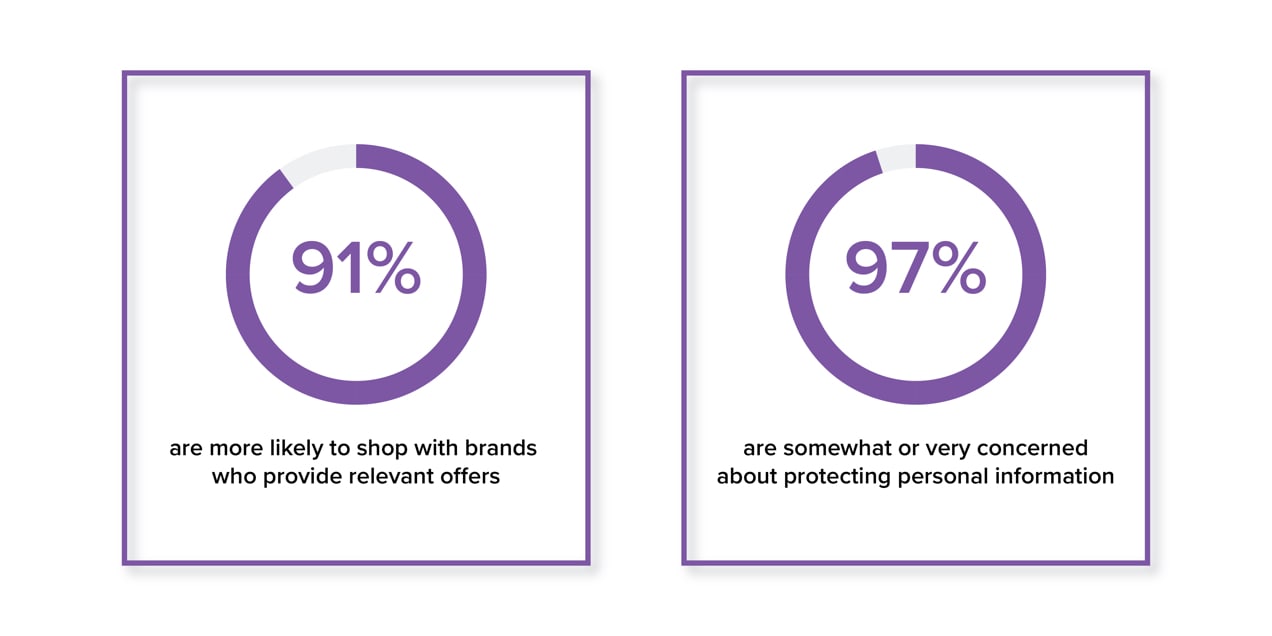
The conversion velocity of automated email and SMS flows is directly dependent on the clarity and speed of the product data they present. A common and critical technical failure occurs when these flows—such as abandoned cart or personalized recommendation sequences—feature product assets without proper accessibility metadata. For instance, an email containing a product image without accurate ALT text, or a recommendation SMS linking to a page with low-contrast buttons, immediately halts the customer journey for users relying on screen readers or other assistive technologies. This is more than a compliance error; it’s an active conversion leak that directs high-intent traffic to a roadblock. WooCommerce stores must implement accessibility checks at the data-source level to ensure the personalized content is consumable by 100% of the audience before the flow is initiated.
- Mandatory Descriptive ALT Text: Enforce a technical requirement that prevents any product image from being pushed into a marketing flow (Email/SMS) unless it has accurate and descriptive ALT text, which is the foundational element for screen reader users.
- WCAG AA Contrast Compliance: Program your dynamic email templates and SMS landing pages to strictly adhere to WCAG AA guidelines for text and background color contrast, ensuring that crucial elements like product titles and Call-to-Action (CTA) buttons are readable by low-vision users.
- Semantic HTML for Structure: For email templates, leverage robust, semantic HTML structures that correctly define headings, lists, and tables, which ensures screen readers interpret the content flow logically and predictably.
Integrating these accessibility requirements directly into your product data pipeline—prior to it being consumed by your marketing automation platform—is the definitive strategy for future-proofing your Customer Lifetime Value (LTV) efforts. This technical diligence ensures that personalization functions optimally for every customer segment, not just the majority. The result is a measurable improvement in marketing ROI: lower bounce rates from campaign links, higher user engagement metrics, and a more robust, inclusive funnel that shifts A11Y from a perceived cost into a scalable revenue driver for your business.
Beyond the Checklist: Making WCAG Compliance a Catalyst for Scalable Growth
WCAG compliance is not a finish line; it is the foundational quality standard for a modern, scalable WooCommerce store. Viewing it merely as a legal checklist is the primary strategic error, as this approach inevitably leads to ‘bolt-on’ fixes that introduce technical debt and slow down development velocity. True scalability requires shifting A11Y left—integrating it into the earliest phases of design and development. When compliance is a core engineering requirement, the resulting codebase is inherently cleaner, more robust, and more performance-optimized for every single user, not just those using assistive technologies.
- Universal UX Improvement: WCAG’s demand for clear navigation, logical focus order, and high color contrast forces a superior design aesthetic that reduces cognitive load and cart abandonment for all customers, not just those with impairments.
- Technical SEO Boost: Compliance with A11Y standards is essentially a high-level technical SEO audit. Proper semantic HTML structure, accurate image alt text, and logical heading hierarchies are exactly what search engine crawlers prioritize for indexation and ranking.
- Lower Technical Debt: A site built correctly with A11Y in mind from the start bypasses the cost, complexity, and risk of future legal retrofitting. This frees up developer resources to focus purely on high-impact, revenue-generating features and product innovation.
By leveraging the technical rigor of WCAG, a high-growth WooCommerce store secures a competitive advantage. The framework provides a universal blueprint for optimal site performance and user experience (UX), ensuring fundamental elements like keyboard navigation and form labeling are flawless. This systematic approach to quality, driven by accessibility requirements, creates a platform that is automatically more efficient at capturing organic traffic, converting visitors, and retaining long-term customer value, making compliance the ultimate catalyst for predictable, non-linear growth.
From Compliance Cost to Customer LTV: The Strategic Power of Accessible Design
The fundamental shift required for high-growth WooCommerce merchants is moving the perception of accessibility (A11Y) from a defensive legal compliance cost to a proactive Customer Lifetime Value (LTV) strategy. When we treat WCAG standards as merely a checklist to avoid lawsuits, we miss the quantifiable revenue opportunity. A universally designed storefront inherently optimizes the conversion path for every user, including the estimated 20-26% of the global population with some form of disability. By eliminating friction points—such as poor color contrast, lack of keyboard navigation, or missing image alt text—you are not just complying; you are maximizing the number of high-intent visitors who can complete the checkout process successfully.
This strategic integration of accessible design into your development lifecycle directly impacts LTV through improved retention and organic growth. The technical discipline required to achieve compliance lays a foundation of quality and speed, which are universal drivers of customer satisfaction. Designing for the needs of assistive technology users often results in an experience that is demonstrably faster and more reliable for every single visitor. This positive feedback loop converts transactional customers into loyal, repeat buyers who represent significantly higher LTV over time. The following technical elements, typically seen as compliance tasks, are actually LTV multipliers:
- Technical SEO Gains: Proper semantic HTML structure and accurate image alt text, both A11Y requirements, directly contribute to higher search engine rankings and lower bounce rates.
- Reduced Cart Abandonment: Ensuring a keyboard-accessible and screen-reader-friendly checkout flow systematically removes major technical barriers that lead to high-intent users abandoning their purchase.
- Lower Support Costs: An intuitive, well-labeled interface reduces confusion and frustration, leading to fewer customer support tickets related to basic site navigation or form usage.
Ready to take your e-commerce to the next level?
The tactical necessity of WCAG compliance is non-negotiable, but for a high-growth WooCommerce store, simply meeting the legal standard is a costly floor, not a profitable ceiling. The sobering truth is that if your conversion rate is flatlining, or if you suspect your non-inclusive funnel is actively deterring a massive, high-value segment of the market, the core problem is a systemic revenue leak. This isn’t just an ethical or technical pass/fail; it means you are acquiring customers only to lose them due to structural friction, resulting in severely suppressed Customer Lifetime Value (LTV).
True profitability is not found in isolated compliance efforts but in a cohesive, data-driven system where accessibility acts as an inherent conversion rate optimization tool. We act as a strategic extension of your in-house team, helping DTC/eCommerce brands radically increase Profit, Retention, and LTV. Our process begins with rigorous, no-guesswork, data-driven & conversion-focused audits to pinpoint the exact structural leaks in your current system—ensuring your tracking, CRM, and customer journey are all operating in concert for maximum ROAS and long-term growth. If you’re ready to pivot from basic adherence to a truly inclusive, high-performing commerce system, book a free consultation today.