






Customer retention rate is one of those metrics everyone tracks and almost nobody benchmarks correctly. Founders ask “what’s a good retention rate?” expecting a single number, but the honest answer depends on your product category, purchase cycle, and how you’re even calculating the metric in the first place. In this article, we’ll break down realistic retention rate benchmarks for ecommerce, explain how repeat purchase rate and cohort retention differ, and show why chasing a benchmark number without fixing the underlying retention drivers rarely moves the needle on actual profitability.
What Is a Good Customer Retention Rate for Ecommerce?
There’s no single “good” retention rate that applies across ecommerce — a subscription box brand and a furniture retailer operate on entirely different purchase cycles, so comparing their retention rates directly is meaningless. That said, general industry benchmarks give a useful starting point. Commonly cited ranges:
- Overall ecommerce average: retention rates typically fall in the 20-30% range across a 12-month window, though this varies significantly by category.
- Consumables and subscription-adjacent categories (beauty, supplements, food/beverage): often see retention rates above 30-40%, since the product itself drives repeat need.
- High-consideration, low-frequency categories (furniture, electronics, appliances): retention rates naturally sit lower, sometimes under 15%, because the purchase cycle itself is long.
The mistake most brands make is comparing their retention rate to a generic industry average without adjusting for category and purchase frequency. A furniture brand with 12% retention isn’t necessarily underperforming — it may simply reflect the category. What matters more than hitting an arbitrary benchmark is tracking your own retention rate over time and understanding whether it’s improving or declining relative to your own baseline, segmented by acquisition channel and customer cohort, rather than chasing a number pulled from an unrelated industry.
How Is Customer Retention Rate Actually Calculated?
Retention rate calculations vary more than most marketers realize, and using the wrong formula for your business model can produce a misleadingly optimistic — or pessimistic — number. The standard formula is:
Retention Rate = ((Customers at End of Period − New Customers Acquired) ÷ Customers at Start of Period) × 100
But ecommerce brands often need a variation better suited to purchase-based behavior:
- Repeat Purchase Rate: the percentage of customers who make a second purchase within a given window — often more actionable for ecommerce than a strict period-over-period retention formula.
- Cohort Retention: tracks a specific group of customers acquired in the same period and measures how many are still purchasing at 30, 60, 90, and 180 days out — this reveals decay curves that a single blended number hides.
- Revenue Retention: weights retention by spend rather than headcount, which matters when a small number of high-value repeat customers matter more than raw repeat purchase percentage.
The common mistake is reporting a single blended retention number to the whole business without breaking it down by cohort or acquisition channel. A blended rate can look stable while masking the fact that customers from one channel are churning fast and being replaced by new acquisition — which is a very different (and more fragile) business than one with genuinely durable retention.
Why Is Your Ecommerce Retention Rate Declining?
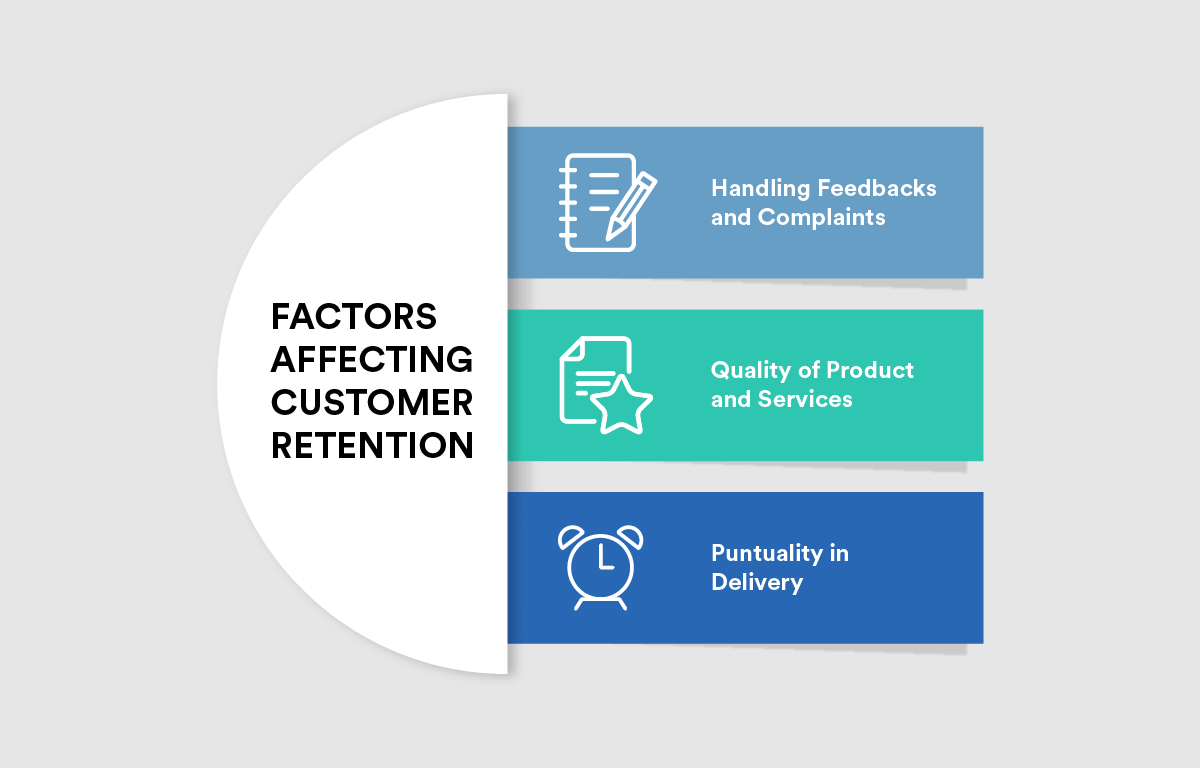
A declining retention rate is rarely caused by a single event — it’s usually the compounding effect of several smaller issues that individually seem minor but together destrói repeat purchase behavior. The most common causes:
- Weak or generic post-purchase communication: customers who receive no follow-up beyond a shipping confirmation have no reason to think about the brand again before their next need arises.
- Poor product-market fit for repeat purchase: some products are genuinely one-time buys, and no amount of email marketing will manufacture repeat demand that doesn’t naturally exist.
- Discount-dependent acquisition: customers acquired primarily through steep first-purchase discounts tend to retain worse, since the relationship was built on price rather than product loyalty.
- Fulfillment and experience issues: shipping delays, poor packaging, or a difficult returns process quietly suppress repeat purchase intent even when the product itself is good.
- No segmentation in retention efforts: treating all customers identically, regardless of purchase history or behavior, means messaging is rarely relevant enough to prompt a second purchase.
The assumption worth challenging here is that retention is primarily an email marketing problem. In reality, retention is downstream of the entire customer experience — acquisition quality, fulfillment, product fit, and communication all compound together, and fixing email cadence alone rarely reverses a genuine retention decline if the underlying acquisition or experience problems go unaddressed.
How Can Marketing Automation Improve Retention Rate?
Marketing automation is one of the highest-leverage tools for improving retention because it allows brands to act on customer behavior at scale, rather than relying on generic broadcast campaigns that treat every customer identically. Effective retention-focused automation typically includes:
- Post-purchase flows that educate customers on product use and set expectations, reducing the “buy once and forget” pattern.
- Replenishment or reorder reminders, timed to actual product usage cycles rather than arbitrary intervals.
- Win-back flows targeting customers approaching their typical repurchase window without having returned.
- Loyalty and VIP segmentation, rewarding repeat behavior in a way that reinforces it.
- Behavioral triggers based on browsing or engagement after the first purchase, catching intent before it fades.
For WooCommerce brands, the effectiveness of these flows depends heavily on how well purchase history and customer data are integrated into the CRM and automation platform — a generic time-based email sequence will always underperform one that’s triggered by actual purchase behavior and product category. Brands that connect WooCommerce order data directly into segmented, behavior-triggered flows consistently see stronger retention lift than those running static, one-size-fits-all campaigns, because the messaging arrives when it’s actually relevant to the customer’s purchase cycle.
When Should You Worry About a Low Retention Rate?
A retention rate below the general benchmark isn’t automatically a crisis — but there are specific conditions where it becomes a genuine threat to profitability rather than a normal category characteristic. You should be concerned when:
- Retention rate is declining over consecutive periods, even after adjusting for seasonality and category norms.
- CAC is rising while retention is flat or falling, meaning the business is increasingly dependent on new customer acquisition just to maintain revenue.
- Cohort analysis shows accelerating early-stage churn (customers not returning within their category’s typical repurchase window), signaling a first-purchase experience problem.
- A disproportionate share of revenue depends on a shrinking segment of repeat customers, making the business more fragile to any acquisition slowdown.
Conversely, a retention rate that looks “low” against generic industry benchmarks isn’t automatically a problem if it’s consistent with your category’s natural purchase cycle and stable or improving over time. The real signal to watch isn’t the absolute number — it’s the trend, and whether the business is becoming more or less dependent on constant new customer acquisition to sustain revenue.
Ready to take your e-commerce to the next level?
If your retention efforts feel like they’re stalling revenue, or if you suspect you’re pouring budget into acquiring customers who were never going to come back, benchmarking your retention rate against a generic industry number won’t fix the underlying issue. The real question isn’t whether your retention rate matches an average — it’s whether your acquisition, fulfillment, and lifecycle marketing are actually working together to build a customer base worth retaining.
This is exactly the kind of gap we help DTC and ecommerce brands close. As an extension of your in-house team, we build data-driven systems where tracking, consent, CRM, paid media, and automation work together to maximise ROAS, LTV, and long-term retention — not just a benchmark number on a dashboard. If you want an honest, cohort-level read on where your retention is actually breaking down, book a free marketing automation audit and get a data-driven, conversion-focused view of what’s really happening.