


In an era where digital noise is at an all-time high, the cost of missing a single conversation about your brand can be the difference between a viral growth moment and a public relations setback. For high-growth eCommerce brands, visibility isn’t just about search rankings; it is about real-time market intelligence. Many leaders focus heavily on internal metrics while leaving the vast expanse of the web unmonitored, effectively operating with a blind spot regarding their competitive standing and organic reputation.
A strategic monitoring framework transforms passive observation into a proactive engine for revenue. By leveraging automated alerts, brands can instantly identify high-value backlink opportunities, detect competitor moves before they scale, and engage with potential partners at the exact moment of relevance. This guide outlines how to deploy these monitoring strategies to protect your market share and capture the hidden growth opportunities that your competitors are likely overlooking.
What is Google Alerts and how does it work?
Google Alerts is a free content change detection and notification service that acts as an automated sentinel for your WooCommerce brand’s online presence. By monitoring Google’s vast search index for new web pages, news articles, and blog posts that match your specified keywords, it eliminates the need for manual, repetitive searches. For a high-growth eCommerce business, this tool functions as an essential, always-on listening station that tracks mentions of your brand, products, or competitors across the digital landscape.
- Keyword Indexing: The service crawls the web using Google’s search algorithms to identify new content matching your defined search terms.
- Automated Notification: Once matching content is indexed, Google bundles these findings into an email notification delivered directly to your inbox at your preferred frequency.
- Customizable Parameters: Users can refine alerts by source type (news, blogs, video), language, and geographic region to ensure the data is relevant to their specific market.
While the tool is powerful for broad web coverage, it is important to understand its technical limitations to set realistic expectations for your monitoring strategy. Google Alerts specifically scans for “new” content appearing in the index rather than tracking updates or visual changes to existing URLs, such as a competitor modifying their pricing page. Additionally, it does not monitor private networks, certain forums, or social media platforms, meaning it should be viewed as a foundational component of a larger, more comprehensive brand intelligence framework.
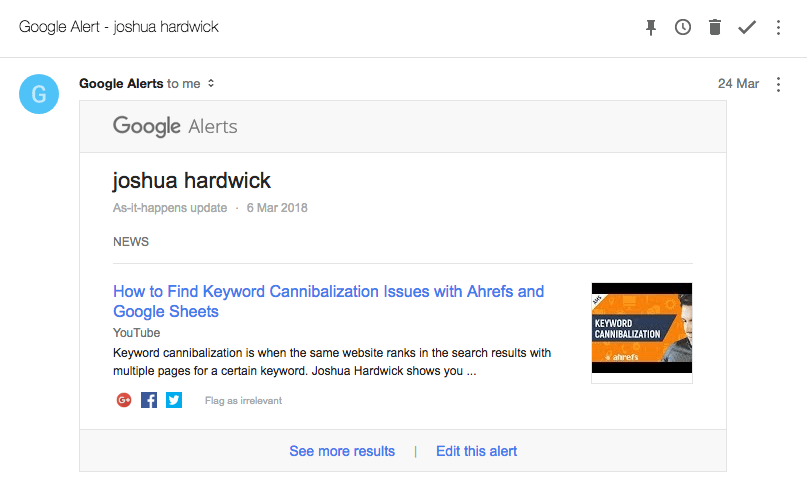
How to set up Google Alerts for your brand?
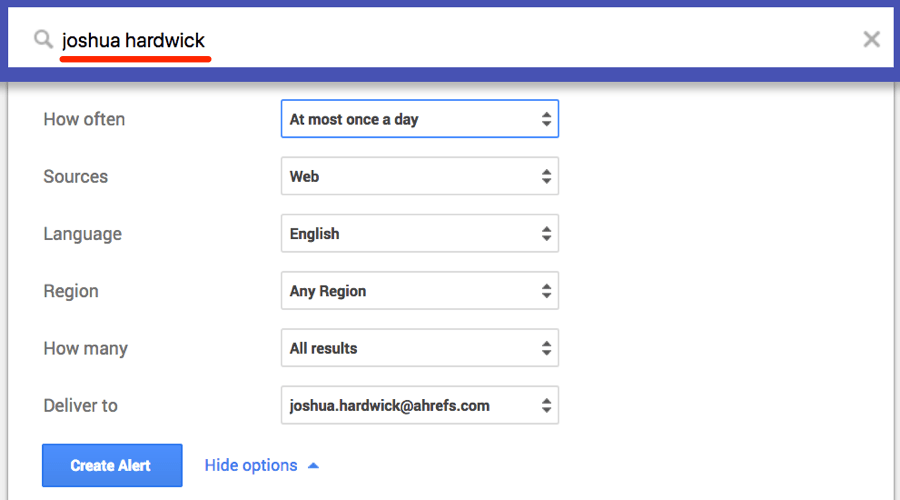
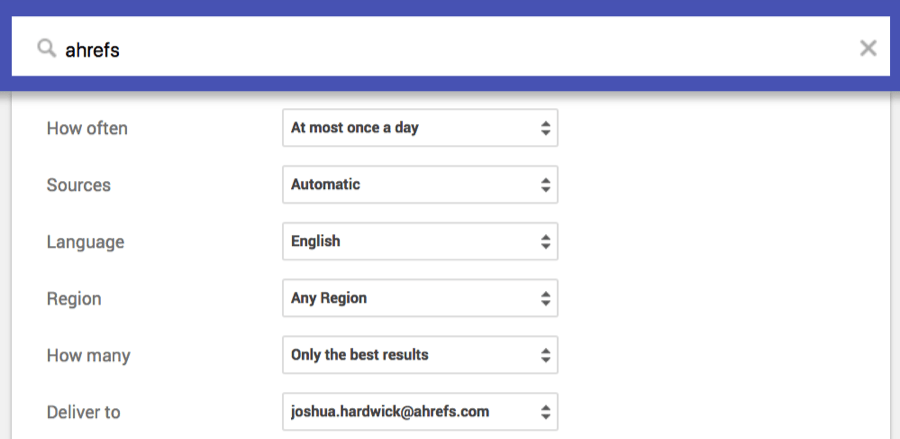
For high-growth WooCommerce brands, setting up Google Alerts is a foundational step in establishing a proactive brand monitoring engine. The process begins at google.com/alerts, where you define the specific keywords that act as digital tripwires across Google’s search index. To ensure high-signal data, you must configure your delivery settings to match your operational capacity, choosing between “As-it-happens” for critical reputation management or “At most once a day” for general industry tracking.
- Define Search Terms: Enter your brand name, core product titles, or unique URLs into the search box to monitor newly indexed content.
- Configure Source Filters: Use the “Show options” menu to specify sources like News, Blogs, or Video to ensure you are capturing mentions across the most relevant media types for eCommerce growth.
- Optimize Region and Language: Tailor your alerts to specific geographic markets where your WooCommerce store operates to filter out irrelevant global noise and focus on local customer sentiment.
While the initial setup is rapid, the strategic value lies in using Boolean operators—such as quotation marks for exact match phrases—to refine your results and reduce false positives. By moving beyond simple name tracking and establishing multiple alerts for competitors and industry-specific queries, you transform a basic notification tool into a comprehensive market intelligence dashboard.
Why should WooCommerce store owners use Google Alerts for brand monitoring?
For WooCommerce store owners, maintaining a high-performance digital presence requires constant vigilance over how your brand is perceived across the web. Google Alerts serves as an essential, cost-effective entry point for proactive brand monitoring, allowing you to track conversations, reviews, and mentions that directly impact your store’s reputation and search visibility. By receiving real-time notifications, you can gain immediate insights into your brand’s strengths and weaknesses, identifying critical areas for improvement before they escalate into larger issues.
- Reputation Safeguarding: Proactively monitor complaints or negative feedback in public forums and social media to respond quickly and protect customer trust.
- Growth Opportunity Identification: Uncover mentions related to your niche to reveal new opportunities for link building, brand collaborations, and high-intent customer engagement.
- Competitor Intelligence: Track competitor product launches, pricing changes, and customer reviews to refine your own marketing strategy and maintain a competitive edge.
Implementing an automated tracking system via Google Alerts transforms reactive management into a strategic growth engine. While it is a beginner-friendly tool that provides a broad view of brand sentiment, it is most effective when used to bridge the gap between simple mention tracking and actionable business intelligence. For high-growth brands, this awareness is a technical necessity that ensures you stay connected with your audience while protecting your domain authority and overall profitability.
How to use Google Alerts to uncover eCommerce growth opportunities?
For high-growth WooCommerce brands, Google Alerts serves as a sophisticated, zero-cost intelligence layer that transforms web mentions into actionable growth signals. By monitoring specific search terms, you can identify high-intent windows where your products or expertise are being discussed, allowing you to intercept potential customers and build brand authority. This proactive monitoring shifts your strategy from reactive SEO to real-time engagement, ensuring you capture revenue at the exact moment of peak interest.
- Competitive Poaching and Analysis: Monitor competitor brand names and product terms to identify gaps in their service or common customer complaints, providing a strategic opening to offer your WooCommerce store as a superior alternative.
- Unlinked Brand Mentions for SEO: Track mentions of your store or unique products to find websites that discuss your brand without linking back; reaching out to these sites to request a link is one of the most efficient ways to build high-quality backlinks and boost organic rankings.
- Influencer and Industry Trend Tracking: Follow key figures and niche technologies to identify emerging trends early, allowing you to update your product mix or content strategy before the market becomes saturated.
To maximize the utility of these alerts without being overwhelmed by noise, developers and store owners should utilize advanced search operators like quotation marks for exact phrase matching. By refining your criteria to focus on specific high-value keywords, you ensure that the data landing in your inbox is relevant to your strategic planning and capable of driving measurable increases in Customer Lifetime Value.
How to automate brand mention tracking for your online business?
For high-growth WooCommerce brands, transitioning from manual inbox monitoring to automated brand intelligence is a strategic necessity to maintain a competitive edge. By 2026, the standard for real-time information management requires integrating automated notification feeds directly into your operational stack. While Google Alerts provides a lightweight entry point by monitoring the web for specific keywords or competitor mentions, the true value for an online business lies in bridging the gap between raw data and immediate action via technical integration.
To build a robust automation framework that transforms mentions into growth opportunities, store owners should focus on the following integration points:
- Workflow Orchestration: Utilize tools like Zapier or Make to connect Google Alerts feeds to your internal communication platforms, such as Slack or Microsoft Teams, ensuring that high-intent mentions are relayed to the relevant team members instantly.
- CRM Enrichment: Integrate monitoring feeds directly with your CRM, like Salesforce, to automatically update customer or prospect records with the latest industry news and market trends.
- Operational Feedback Loops: Configure webhooks to trigger specific actions based on alert volume or sentiment, allowing your team to proactively manage reputation crises or capitalize on sudden spikes in market demand.
By automating the delivery of these alerts through Web APIs, your monitoring becomes more responsive and allows for trend prediction rather than simple reaction. This proactive approach ensures that your WooCommerce store can quickly pivot to capture qualified traffic and strengthen brand authority in a fast-paced digital ecosystem.
Ready to take your e-commerce to the next level?
While establishing basic Google Alerts is a logical entry point for brand monitoring, the business reality for high-growth WooCommerce brands is that reactive observation is not a substitute for a proactive acquisition strategy. If your market intelligence efforts feel like they are stalling revenue expansion, or if you suspect that missed mentions and uncaptured sentiment are eroding your competitive edge, you are facing a structural visibility gap that a free tool cannot bridge. Relying solely on surface-level alerts is a passive approach that often leaves significant revenue on the table by failing to convert digital signals into actionable customer acquisition and retention data.
To move beyond simple monitoring and build a high-performance growth engine, you need a partner that integrates real-time market data with your broader technical infrastructure. We act as a strategic extension of your team, helping DTC brands maximize Profit, Retention, and LTV through data-driven systems where CRM, automation, and advanced tracking work in perfect concert. Our process begins with rigorous, conversion-focused audits to eliminate guesswork and identify the exact bottlenecks in your customer journey. If you are ready to transition from manual tracking to a scalable, automated system that maximizes ROAS and long-term growth, book a free consultation today.



Comments