

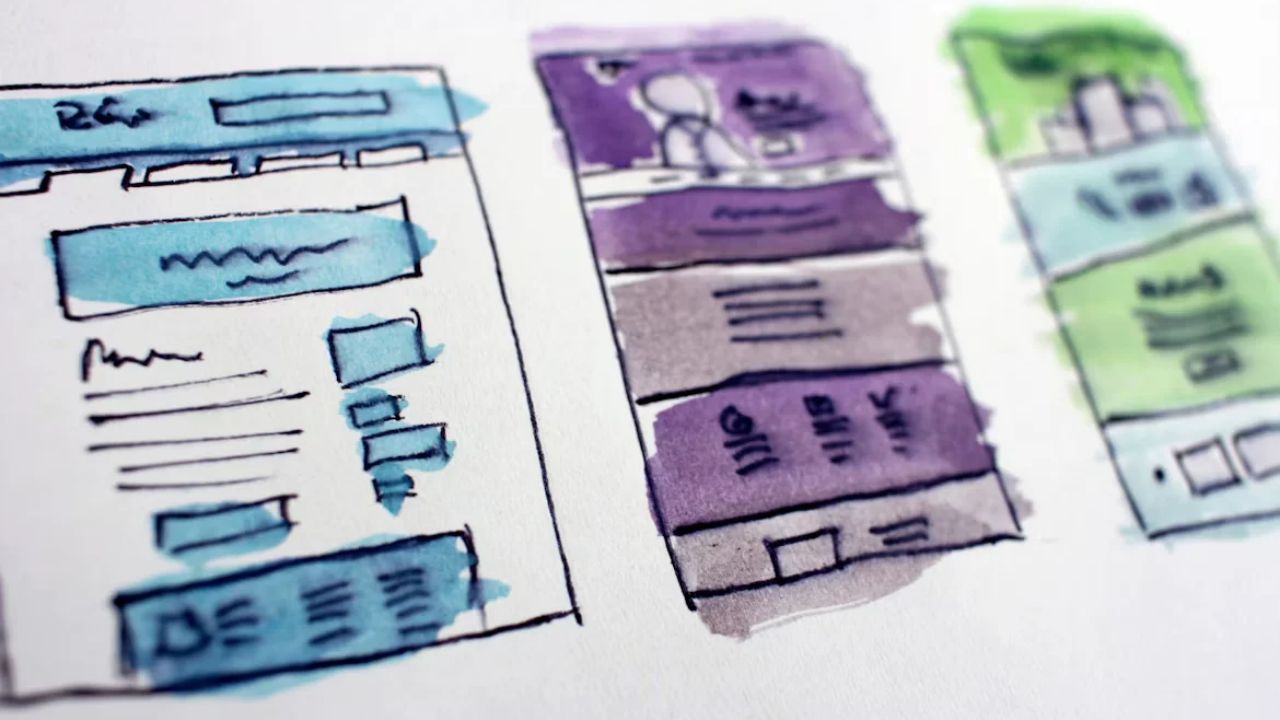
Most ecommerce brands run paid media, website experience, and email as three separate programmes with three separate owners, three sets of KPIs, and three versions of what the customer is supposed to hear. The result is a disjointed journey: an ad promises one thing, the landing page says another, and the follow-up email reads as if it came from a different company. In this article, we’ll show how to align paid media, website UX, and email into one connected customer journey, so each stage reinforces the next instead of working in isolation, and so your WooCommerce store converts more of the traffic it already pays for.
Why Do Paid Media, Website UX and Email Often Work in Isolation?
Channels end up siloed because organisations, tools, and reporting are structured around them. Paid teams optimise for ROAS inside ad platforms, web teams optimise for conversion rate inside analytics, and lifecycle teams optimise for open and click rates inside an email platform. Each can hit its targets while the overall journey underperforms.
The typical symptoms:
- Message mismatch: an ad highlights a specific offer or product, but the landing page opens with a generic homepage or different promotion.
- Disconnected data: ad platforms, the storefront, and the CRM each hold a partial view of the customer, so nobody sees the full path.
- Conflicting incentives: paid media may be rewarded for cheap first-purchase conversions with heavy discounts, while email later struggles to retain customers acquired on price alone.
- Duplicated or contradictory outreach: a customer who just purchased still receives retargeting ads and promotional emails for the same product.
The assumption worth challenging is that strong channel-level metrics add up to a strong journey. They often don’t. A channel can look efficient in its own dashboard precisely because it takes credit for conversions that another channel actually influenced. Alignment starts by recognising that the customer experiences one brand, not three departments, and by measuring success at the journey level, using blended metrics such as MER, contribution margin, and repeat purchase rate alongside channel numbers.
How Do You Map One Customer Journey Across Channels?
Mapping the journey means defining the stages a customer moves through and deciding which channel carries primary responsibility for each, along with what the customer should see, feel, and do next.
A practical mapping process:
- Define the stages: awareness, consideration, first purchase, post-purchase, and repeat purchase or win-back.
- Assign a primary role to each channel at each stage: paid media for discovery and retargeting, website UX for evaluation and conversion, email and SMS for nurture, onboarding, and retention.
- Write the handoff at each transition: what promise the ad makes, what the landing page must deliver on, what triggers the first email, and what that email should reference.
- Identify the key behavioural signals: product views, cart additions, checkout starts, purchases, and email engagement that determine which stage a customer is in.
- Document the single source of truth for each signal, such as WooCommerce order data or CRM status.
The common mistake is mapping the journey as a diagram and never turning it into rules. A journey map only matters if it changes what actually happens: suppressing ads for recent purchasers, switching landing page content by campaign, or triggering a specific email when a particular behaviour occurs. Keep the first version simple, with three or four stages and clear handoffs, then refine as data accumulates.
How Can Landing Page UX Reinforce What Your Ads Promised?
The click from ad to landing page is where most journey breaks occur, because a visitor arrives with specific expectations created by the ad. If the page doesn’t confirm those expectations immediately, they leave, and the ad spend is wasted.
Ways to maintain continuity:
- Match message, offer, and imagery: the headline, product, and visual should echo the ad, so the visitor knows instantly they are in the right place.
- Land on the most relevant page, not the homepage: send traffic to the specific product, collection, or tailored landing page that fulfils the promise.
- Carry through offers automatically: if an ad mentions a discount or free shipping, apply or display it without requiring a code the visitor must hunt for.
- Optimise for the device the ad was seen on: most social ad traffic arrives on mobile, so speed, tap targets, and checkout simplicity matter as much as copy.
- Capture intent for later follow-up: use well-timed email or SMS capture, with clear consent, so visitors who don’t buy immediately enter a nurture flow rather than disappearing.
Audience context matters too. A first-time visitor from a prospecting campaign needs reassurance, social proof, and clarity, while a returning visitor from a retargeting ad needs a fast path back to the product they viewed. Using campaign parameters to adjust page content, even modestly, often lifts conversion without any additional traffic cost. The measure of success is not just conversion rate but whether the page keeps the promise the ad made.
How Should Email Pick Up Where Paid Media and the Website Leave Off?
Email works best as the continuation of a conversation that began in an ad and on the site, not as a separate broadcast channel. When it reflects what the customer actually did, it feels relevant rather than generic.
Behaviour-based flows that connect the stages:
- Welcome flow: references how the subscriber arrived, such as the product or offer that attracted them, and delivers what was promised.
- Browse and cart abandonment flows: reflect the exact products viewed, recovering intent that paid media already paid to create.
- Post-purchase flow: confirms the decision, educates on product use, and suppresses acquisition-style discounts for people who have already bought.
- Replenishment and cross-sell flows: timed to the customer’s real purchase cycle.
- Win-back flow: triggered relative to individual purchase patterns and coordinated with paid retargeting to avoid redundancy.
Consistency of tone, visual identity, and offer logic across ads, site, and email makes the experience feel deliberate. Audience sync completes the loop: uploading customer segments to Meta and Google lets you exclude recent buyers from prospecting, retarget abandoners, and build lookalikes from high-value customers. This turns email data into a paid media asset and reduces wasted spend, which improves blended CAC and ROAS together.
How Do You Connect the Data and Measure the Whole Journey?
Alignment is only sustainable when data flows between channels reliably and success is measured across the journey rather than within each silo.
The foundation includes:
- Consistent UTM tagging and naming conventions, so GA4 can attribute traffic from ads, email, and SMS correctly.
- Server-side tracking, such as Meta Conversions API and Google enhanced conversions, to reduce data loss from ad blockers and browser restrictions.
- Consent-compliant first-party data collection, ensuring tracking and audience syncing respect customer permissions.
- A connected CRM, linking WooCommerce order history, email and SMS engagement, and ad interactions into one customer record.
- Journey-level metrics: MER, new versus returning customer revenue, payback period, repeat purchase rate, and LTV by acquisition source.
A common mistake is relying on platform-reported ROAS to judge alignment. Each platform claims credit for overlapping conversions, so combined figures overstate performance. Compare platform data against WooCommerce revenue and blended spend to keep it honest. Review the journey monthly: where do customers drop out between stages, which handoffs underperform, and which segments respond best? Treat the journey as a living system that you test and refine, rather than a one-time project.
Ready to take your e-commerce to the next level?
If your ad accounts report healthy ROAS while overall profit stays flat, or if you suspect paid media, your website, and your email programme are each doing their own thing, the issue usually isn’t any single channel. It’s that nothing connects them. Optimising channels separately can look like progress on every dashboard while the customer journey leaks value between stages.
This is exactly the kind of gap we help DTC and ecommerce brands close. As an extension of your in-house team, we build data-driven systems where tracking, consent, CRM, paid media, and automation work together to maximise ROAS, LTV, and long-term growth. If you’d like to see where your journey is breaking between channels, book a free marketing automation audit and get a data-driven, conversion-focused review of how your stack performs as one system.

Comments