






The traditional SEO playbook is being rewritten as generative AI transforms how consumers discover brands, yet many marketing teams are still clinging to domain-level authority as their primary North Star. Relying on aggregate link metrics to predict visibility in AI-driven environments like ChatGPT and Google AI Overviews is a strategic misstep that can lead to misallocated budgets and missed revenue opportunities. As the search landscape shifts from ranking lists to synthesized answers, the correlation between high domain rankings and AI mentions is proving to be far weaker than anticipated.
Understanding the specific signals that drive AI citations is no longer a technical curiosity but a commercial imperative for high-growth eCommerce brands. While page-level relevance has always mattered for organic search, the criteria for earning a mention in an AI response require a more granular approach to content and authority. By analyzing extensive datasets across the leading AI search engines, we can uncover why legacy metrics are failing and how to reposition your digital assets to ensure your brand remains a primary reference point in this new era of conversational discovery.
What is the difference between traditional SEO and AI search visibility?
Traditional SEO is the process of improving a website’s prominence and relevance by aligning with search engine algorithms through technical optimization, high-quality content, and obtaining backlinks from trustworthy domains. While traditional systems like Google Search have historically relied on domain-level link metrics and site-wide authority signals to rank pages, AI search visibility operates on a fundamentally different retrieval architecture. AI search engines, including ChatGPT and Perplexity, prioritize the extraction of specific information and direct answers from individual pages rather than deferring to a website’s overall authority ranking.
- Metric Focus: Traditional SEO often emphasizes domain-level authority and keyword density, whereas AI search visibility relies on page-level semantic depth and the ability to fulfill specific user intent.
- Trust Signals: In traditional search, followed referring domains build site authority; in AI search, E-E-A-T translates into “AI trust,” where verifiable expertise and clear entity communication via schema markup earn citations.
- Machine Readability: While traditional SEO focuses on human user experience and site structure, AI visibility requires content to be broken into atomic, extractable answer blocks that machines can easily retrieve and synthesize.
For high-growth WooCommerce stores, this shift means that the cost of inaction is structural invisibility in the “answer layer” where modern buying decisions are increasingly made. Rather than solely chasing domain-wide link metrics, which are not strong predictors of AI mentions, brands must optimize product pages for machine readability and topical coverage to ensure they are captured in generative overviews. Measurement must also evolve from tracking simple rankings to monitoring citation frequency across various Generative Engine Optimization (GEO) platforms.
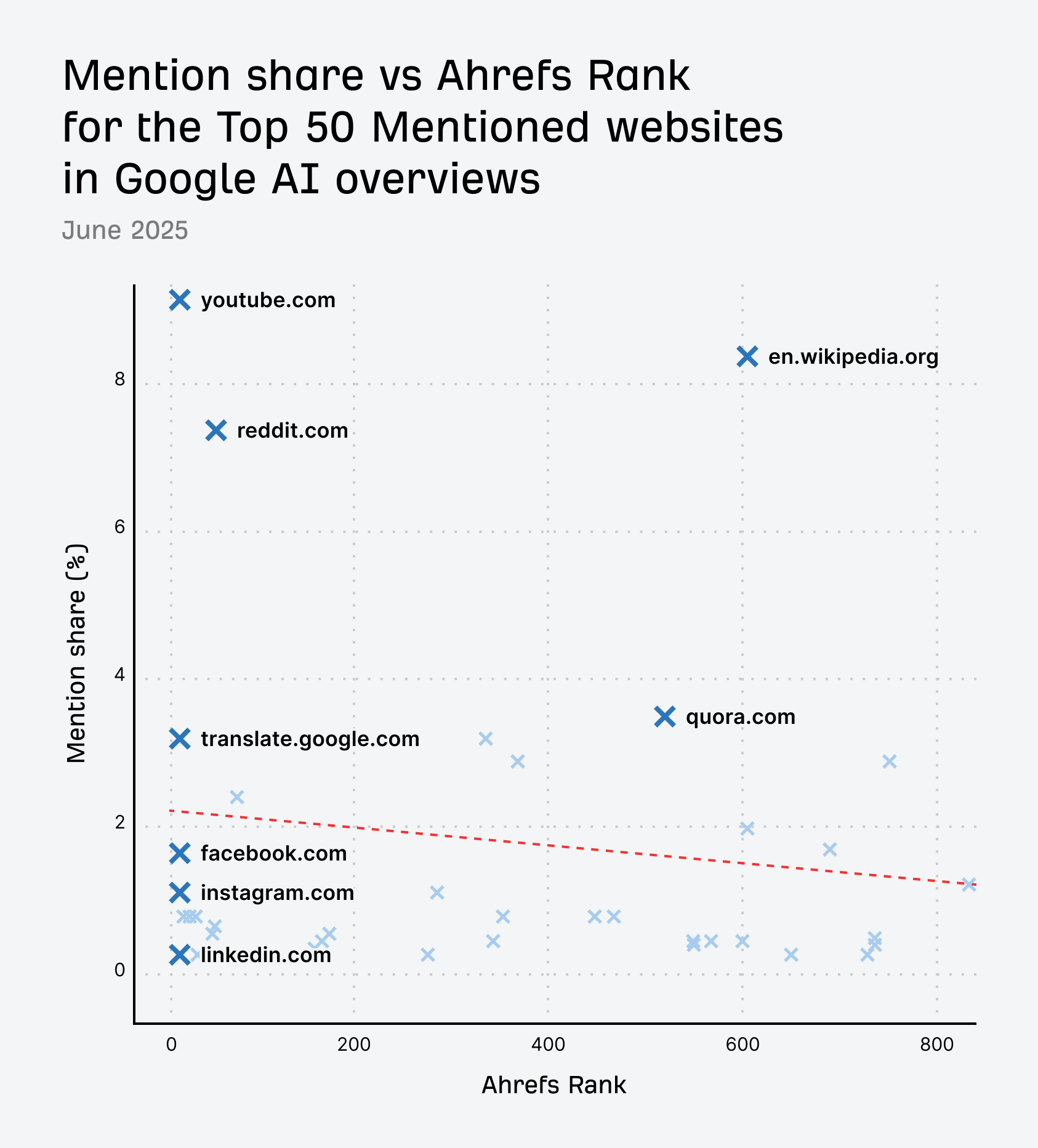
How do domain-level link metrics impact AI search mentions for WooCommerce?
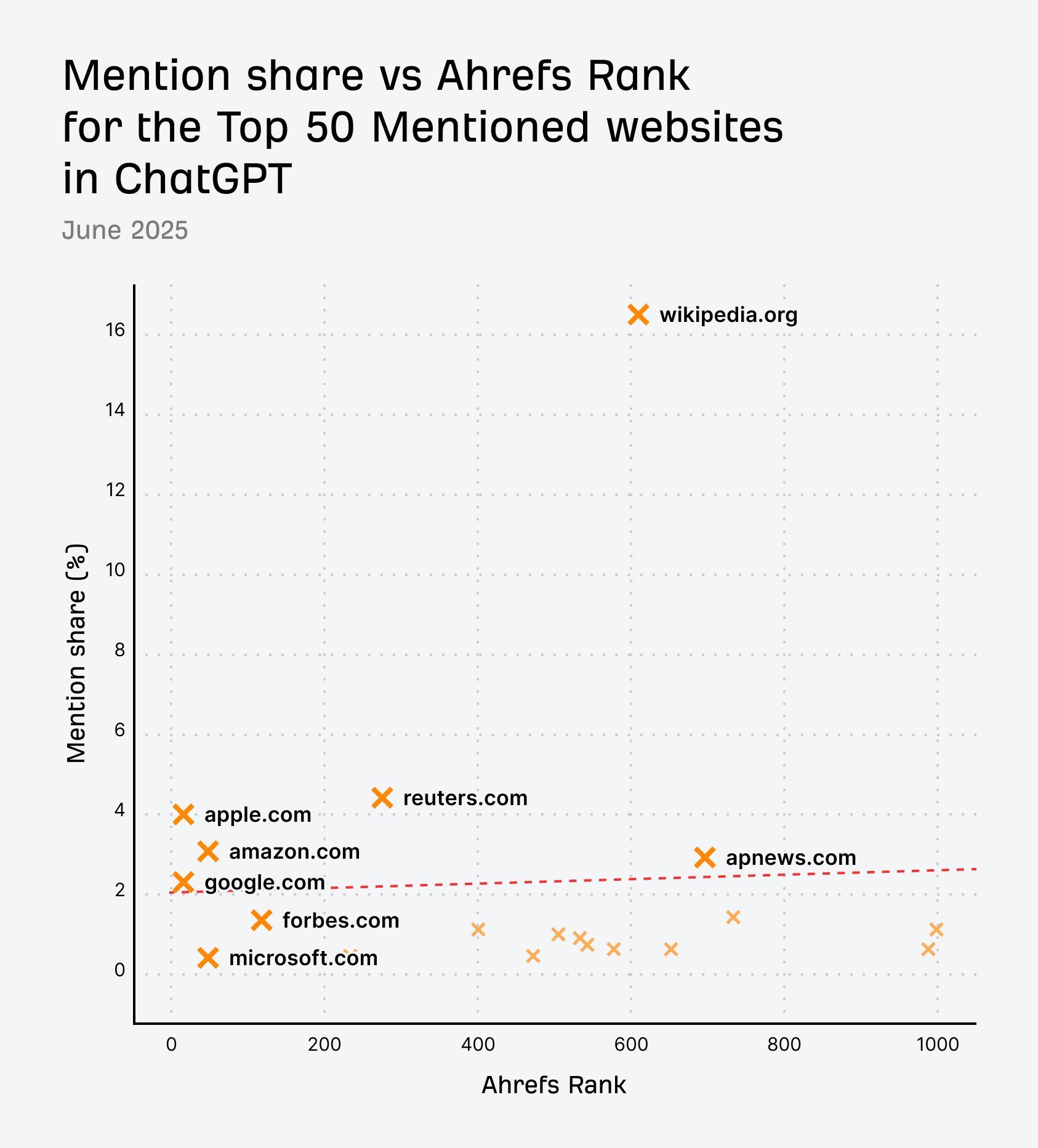
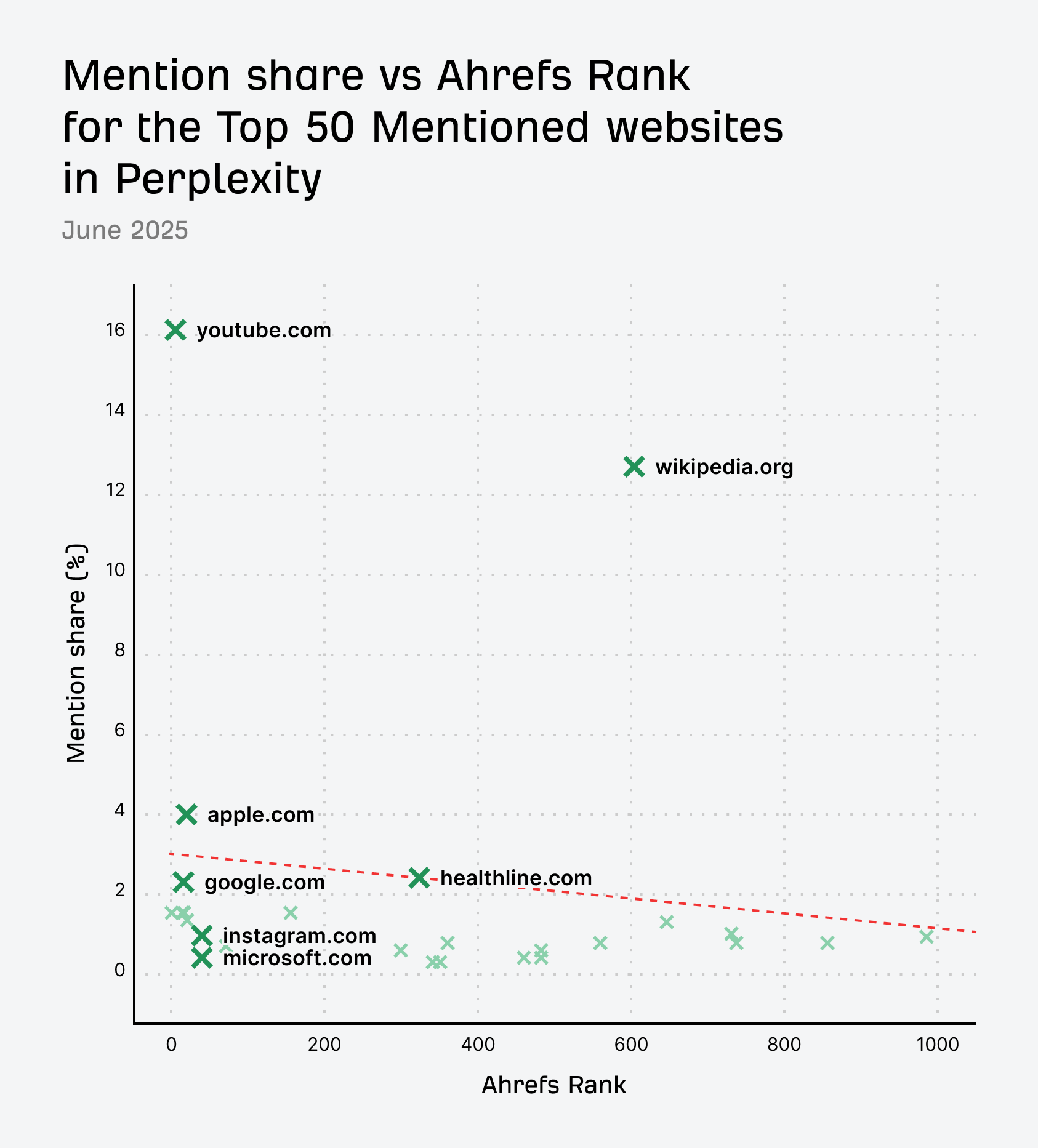
For high-growth WooCommerce stores, the traditional reliance on domain-level authority as the primary driver for visibility is rapidly being disrupted by AI-driven search models. Recent data indicates that domain-level link metrics, such as Ahrefs Rank, are not strong predictors for mentions in platforms like ChatGPT and Perplexity. While Google AI Overviews may still incorporate some legacy signals, the shift toward agentic commerce means that AI systems prioritize the relevance and technical clarity of specific product pages over the aggregate strength of the entire domain.
- Page-Level Precision: AI agents and Large Language Models (LLMs) focus on specific data points within a URL rather than broad domain authority, making deep, page-specific optimization critical for capturing high-intent traffic.
- Model-Specific Correlations: While legacy search engines rely on backlinks, systems like Perplexity and ChatGPT prioritize semantic relevance and structured content that helps the model verify product details directly.
- Diminishing Returns of Legacy Rank: High-ranking domains on traditional SERPs do not automatically secure mentions in AI summaries, suggesting that even smaller WooCommerce brands can compete by optimizing for AI readability.
Transitioning your WooCommerce strategy from broad domain building to granular, intent-driven content is a technical necessity for maintaining visibility in 2026. As AI shopping assistants increasingly fulfill transactions at the gateway, merchants must ensure their product data is accessible and trustworthy to these automated systems. Failing to adapt to this shift risks leaving massive revenue on the table as traditional click-through rates decline in favor of direct AI-generated answers.
Why is page-level intent more important than domain authority for revenue growth?
For high-growth WooCommerce stores, the traditional obsession with Domain Authority (DA) as a shield against competition is being dismantled by the rise of AI search engines. While a high DA might suggest a site is “in the room,” AI systems prioritize semantic similarity and page-level intent when selecting which sources to cite in a response. Data indicates that 80% of links cited in AI boxes do not even rank organically for the same query, proving that visibility is shifting from site-wide power to specific, relevant answers that solve customer problems rather than just selling products.
- Intent Alignment: AI models prefer content that matches the user’s specific query intent over surface-level promotional text. A product page that explains “how this fits your need” is more likely to be cited than one that simply says “buy now”.
- Precision Over Power: Page-level metrics and content specificity often outweigh traditional domain-level link metrics when AI engines determine which brand provides the most verifiable answer.
- Revenue Capture: By focusing on page-level intent, merchants can capture high-intent traffic at the moment of peak interest, whereas relying on DA often leads to a “silent ceiling” on revenue if individual product pages lack clarity.
Transitioning your strategy toward page-level optimization ensures that your store remains visible in the evolving digital landscape where AI search dominates the screen real estate. For WooCommerce merchants, this means moving beyond broad link-building campaigns to focus on product clarity and consistency across all off-site and on-site mentions. Success in AI search is dictated by who the algorithm deems most relevant to the specific user problem, making page-level intent the most critical driver of sustainable revenue growth.
How to optimize WooCommerce product pages for ChatGPT and Google AI?
Optimizing WooCommerce product pages for AI search engines like ChatGPT and Google AI Overviews requires a departure from traditional domain-centric SEO strategies. Since research indicates that domain-level link metrics are poor predictors for AI mentions, store owners must prioritize page-level extractability and semantic clarity. AI systems process content by extracting facts and comparing product attributes rather than just matching keywords, meaning your pages must be highly structured to be cited.
- Structured Data Implementation: Use comprehensive Product schema and aggregate reviews to make specifications, pricing, and availability machine-readable for AI crawlers.
- Answer-First Content Blocks: Replace marketing copy with clear, text-based descriptions and conversational FAQs that provide direct answers to potential buyer queries.
- Verifiable Statistics: Include authoritative data or technical specifications, as adding verifiable facts can significantly increase the probability of an AI citation.
- Technical Accessibility: Ensure product data is not hidden within JavaScript-rendered tabs or shortcodes, which frequently prevent AI engines from parsing critical information.
Ultimately, the goal is to transform static product pages into high-intent data sources that satisfy the synthesis requirements of generative engines. By focusing on these page-level optimizations, WooCommerce brands can bypass the limitations of traditional domain authority and capture visibility in synthesized AI search results where over 80% of citations often come from outside the organic top 10.
What metrics should eCommerce brands track to measure AI search performance?
As the search landscape shifts from traditional link-based rankings to AI-mediated decision layers, WooCommerce brands must pivot their measurement frameworks away from legacy domain-level metrics. Relying on broad authority scores is no longer a reliable predictor for visibility, as AI engines like ChatGPT and Perplexity prioritize page-level intent and factual accuracy over traditional backlink profiles. To capture revenue in this new environment, eCommerce leaders must track how effectively their product data and expert insights are being synthesized into AI-generated answers.
To accurately measure your performance in AI search and identify growth opportunities, focus on the following key metrics:
- AI Mention Share: Track your brand’s share of voice within synthesized answers compared to competitors for high-intent category queries.
- Citation Depth and Source Accuracy: Measure how frequently and accurately your specific product pages or documentation are cited as primary sources by LLMs.
- Prompt Coverage and Intent Alignment: Analyze how well your content covers the variety of conversational prompts and natural language queries users use throughout the buyer journey.
- Sentiment and Persistence: Monitor the tone of AI-generated responses and the consistency of your brand’s presence in answers over time.
By monitoring these synthesized metrics, WooCommerce stores can move beyond vanity metrics and ensure their technical infrastructure supports machine digestion. Transitioning to these AI-centric signals allows for more precise optimization of product pages, ensuring your brand remains visible when AI models act as the primary filter for consumer decisions.
Ready to take your e-commerce to the next level?
If your organic acquisition efforts feel like they are stalling despite high domain authority scores, or if you suspect that your reliance on legacy link metrics is causing you to leave massive amounts of money on the table in the AI era, you are likely facing a structural gap in your data strategy. As AI Overviews and LLMs shift the focus from domain-level strength to page-level intent and entity signals, high-growth WooCommerce brands must move beyond vanity SEO metrics and focus on the technical precision required to secure mentions where it actually moves the needle on revenue. Relying on outdated benchmarks is no longer just a technical oversight; it is a strategic bottleneck that limits your brand’s visibility in the most critical decision-making moments of the customer journey.
To navigate this shift and build a high-performance eCommerce engine, you need a partner that treats visibility as a direct driver of Profit, Retention, and LTV. We act as a strategic extension of your team, building data-driven systems where advanced tracking, CRM, and performance marketing work in perfect concert to maximize your ROAS. Our methodology is built on a “no guesswork” foundation, starting with rigorous, conversion-focused audits that identify exactly where your technical infrastructure is leaking revenue. If you are ready to transition from chasing legacy rankings to building a scalable, AI-ready system that fuels long-term growth, book a free marketing automation audit today.