


Selecting the right technical architecture for a scaling eCommerce store often feels like navigating a minefield of conflicting advice, particularly when it comes to the subdomain versus subdirectory debate. While many growth teams are pressured into rigid folder structures based on outdated SEO dogmas, the reality of modern search algorithms is far more pragmatic. For a brand managing complex tech stacks across multiple regions or distinct business units, the choice should be driven by operational agility and resource efficiency rather than fear of a perceived ranking penalty that Google has confirmed doesn’t exist.
A misinformed site structure doesn’t just complicate your URL strings; it creates significant friction for your development team and limits your ability to deploy new customer experiences rapidly. When you prioritize technical ease and CMS compatibility over legacy myths, you unlock the ability to scale your infrastructure without the constant overhead of workaround configurations. This guide cuts through the industry noise to clarify why the most effective site structure is the one that allows your team to move fastest while maintaining a cohesive brand presence.
What is the difference between a subdomain and a subdirectory for SEO?
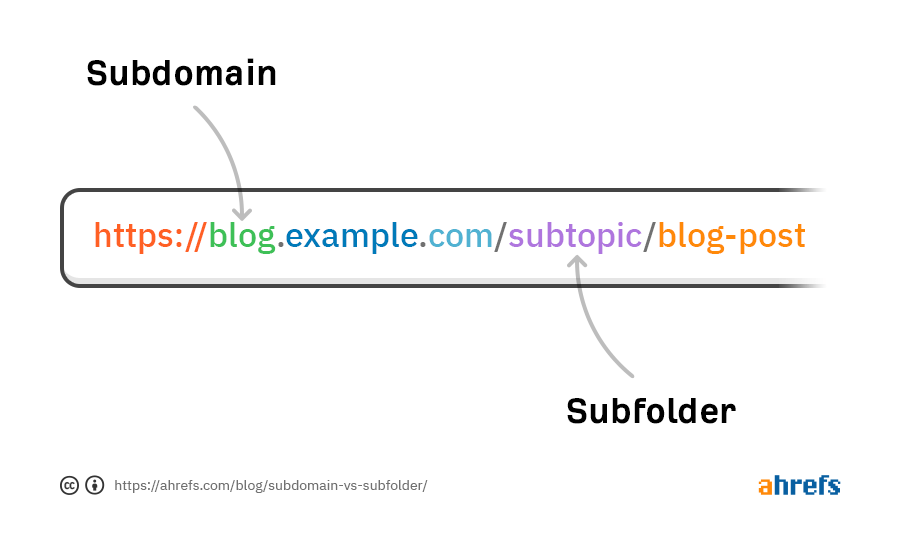
Understanding the structural difference between a subdomain and a subdirectory is fundamental for any WooCommerce merchant planning for long-term growth. From a technical perspective, a subdomain is a prefix added to your root domain (e.g., store.website.com), effectively acting as a standalone entity with its own independent file system. Conversely, a subdirectory—often called a subfolder—is a directory nested within the root domain (e.g., website.com/store), serving as a taxonomic part of the primary site hierarchy.
- Subdomain: Google’s algorithm treats these as separate, distinct partitions of a primary domain, which often requires individual verification in Search Console.
- Subdirectory: These are viewed as an integral extension of the main domain, allowing new content to immediately “cash in” on the existing root domain authority and link equity.
While SEO specialists historically debated which format Google prefers, the consensus from Google representatives is that their systems are capable of crawling and indexing both equally well. The strategic choice for your store should rely on operational needs rather than a perceived ranking advantage; subdomains offer technical flexibility for different platforms or international localized hosting, while subdirectories simplify management and consolidate keywords onto a single domain for maximum authority.
Why should I use a subdirectory for WooCommerce product categories?
While Google’s official stance is that subdomains and subdirectories are treated equally for search rankings, the practical reality for high-growth WooCommerce stores favors a consolidated subfolder structure. Using subdirectories for your product categories ensures that all link equity—the ranking power earned through backlinks and high-quality content—stays concentrated on your primary domain rather than being diluted across multiple hostnames. For an eCommerce brand, category pages are critical revenue drivers; keeping them within the main domain structure allows them to benefit directly from the established authority of your entire site.
- Consolidated Link Equity: Backlinks earned for specific products or blog posts pass their authority directly to your root domain, boosting the ranking potential of your most important commercial category pages.
- Simplified Technical Management: Managing a single WooCommerce XML sitemap and a unified robots.txt file reduces the risk of crawling and indexing errors compared to tracking multiple distinct hostnames.
- Cleaner Analytics Data: Tracking user journeys and conversion attribution in GA4 is significantly more accurate when users remain on a single domain, avoiding the technical hurdles of cross-domain tracking.
Ultimately, choosing a subdirectory structure provides the robust technical foundation necessary for scaling your organic traffic without the fragmentation that often plagues subdomain setups. By keeping your product categories under one “digital roof,” you create a unified brand experience that signals authority to both users and search engine crawlers. This approach minimizes the technical debt associated with managing multiple WordPress installations and ensures that every piece of optimized content contributes to your store’s overall search visibility.
How to choose between subdomains and subfolders for international eCommerce growth?
When scaling a WooCommerce store internationally, the choice between subdomains and subdirectories is a strategic decision that impacts how quickly you can capture market share. While Google treats both structures as roughly equivalent for general ranking, subdirectories (e.g., example.com/es/) are often the superior choice for high-growth brands because they consolidate link equity. By keeping all localized content under a single root domain, you leverage your existing domain authority to help new regional pages rank faster, rather than forcing search engines to treat each language version as a semi-independent entity with its own authority requirements.
- SEO Authority Consolidation: Subdirectories inherit the main domain’s backlink profile and trust, allowing localized product categories to gain visibility with less individual effort than a standalone subdomain.
- Technical Management: A subdirectory structure simplifies global analytics tracking in GA4 and allows for easier management of hreflang tags within a single WooCommerce installation.
- Brand Consistency: Keeping all markets on one domain ensures a unified brand experience and reduces the overhead of managing multiple SSL certificates or server configurations required for subdomains.
However, subdomains (e.g., fr.example.com) remain a viable alternative if your international expansion involves fundamentally different technical stacks, distinct branding for specific regions, or highly autonomous business units. For most WooCommerce merchants, I recommend prioritizing subdirectories to keep your SEO profile robust and your technical debt low. If you eventually require the total independence a subdomain provides—such as different shipping logic or currencies that your current CMS cannot handle in a single instance—ensure a meticulous 301 redirect strategy is in place to protect your revenue during the transition.

Why does Google treat subdomains and subdirectories as equivalent for search rankings?
Google’s long-standing position is that their algorithms are sophisticated enough to recognize that both subdomains and subdirectories are part of the same overall web property. For a high-growth WooCommerce store, this means that the technical choice of URL structure is less about a “ranking hack” and more about how easily Google’s crawlers can associate your content with your brand’s authority. Modern search engines focus on the intent and quality of the content rather than the specific placement of a string of text within a URL.
- Algorithmic Consolidation: Google’s systems are designed to group subdomains together with the root domain to understand a site’s comprehensive topical authority, ensuring that value is shared across the entire ecosystem.
- Crawl Efficiency: Whether you use a subdirectory or a subdomain, Googlebot prioritizes the discovery of helpful, high-quality content that satisfies user search intent over the technical folder structure.
- Configuration Over Protocol: As emphasized by Google’s leadership, the choice should be dictated by what is easier for your specific CMS and server configuration, as the ranking impact is effectively equivalent.
For WooCommerce merchants, the business reality is that site structure should follow your operational needs and user experience rather than outdated SEO myths. If your current setup allows for seamless content management and a cohesive customer journey, there is no technical reason to undergo a risky migration based on the assumption that one folder type inherently outranks the other. Focus instead on building deep topical authority and optimizing for technical performance, as these are the true drivers of sustainable revenue growth.
How to structure a WooCommerce site for maximum revenue and SEO authority?
For high-growth WooCommerce brands, the debate between subdomains and subdirectories is often a distraction from the fundamental goal of building a logical, hierarchical site structure that search engines can easily crawl. While Google treats both as roughly equivalent for ranking purposes, the strategic advantage for a cohesive eCommerce brand often lies in using subdirectories to consolidate link equity and domain authority under a single root. This centralized approach ensures that the authority gained from your primary marketing efforts and product pages flows seamlessly across the entire site, rather than requiring separate SEO management for independent subdomains.
To maximize both revenue and SEO authority, your WooCommerce architecture should prioritize a flat structure that reduces the number of clicks from the homepage to your most profitable products. Consider these core structural components:
- Thematic Categorization: Organize products into broad parent categories and specific subdirectories to create a clear roadmap for crawlers and a predictable navigation path for users.
- Internal Juice Distribution: Use a strategic internal linking structure to guide link equity from high-authority pages to new or critical product listings, fixing orphan pages and boosting visibility.
- Functional Separation: Reserve subdomains only for technical or operational needs that require total independence, such as a separate support desk or a staging environment, rather than splitting your core shopping experience.
Ultimately, an optimized site structure facilitates easier navigation and better user experience, which directly correlates to higher conversion rates and stable search engine performance. By focusing on a clean subdirectory model for your international growth and content hubs, you ensure that every part of your WooCommerce store contributes to the overall authority and revenue potential of your brand.

Ready to take your e-commerce to the next level?
While mastering the technical nuances of subdomains and subdirectories is a vital component of a sound SEO strategy, the broader business reality for high-growth WooCommerce brands is that infrastructure without integrated data is a recipe for missed revenue. If your organic growth feels like it is stalling despite structural optimizations, or if you suspect that technical silos are preventing a unified view of your customer journey, you are likely facing a strategic bottleneck rather than a simple configuration error. Relying on legacy SEO myths or disjointed site architectures often acts as a silent ceiling on your scaling efforts, eroding the potential for long-term customer lifetime value by failing to connect search intent with personalized retention flows.
To move beyond basic site structure and build a high-performance eCommerce ecosystem, you need a partner that synchronizes your technical backend with your broader profitability goals. We act as a strategic extension of your team, helping DTC brands maximize Profit, Retention, and LTV through data-driven systems where tracking, CRM, and automation operate in perfect concert. Our methodology eliminates guesswork through rigorous, conversion-focused audits that identify exactly where your funnel is leaking. If you are ready to transform your technical architecture into a scalable engine for ROAS, book a free consultation today.


Comments