


Google’s search landscape has shifted toward answering questions directly on the results page, with People Also Ask boxes now appearing in nearly half of all search queries. For eCommerce brands, this presents a significant strategic crossroads: do you fight for a click that might never happen, or do you leverage these boxes to establish authority at the exact moment a customer is evaluating their needs? The prevalence of these features means your audience is no longer just looking for products; they are looking for validation and clarity before they ever reach your site.
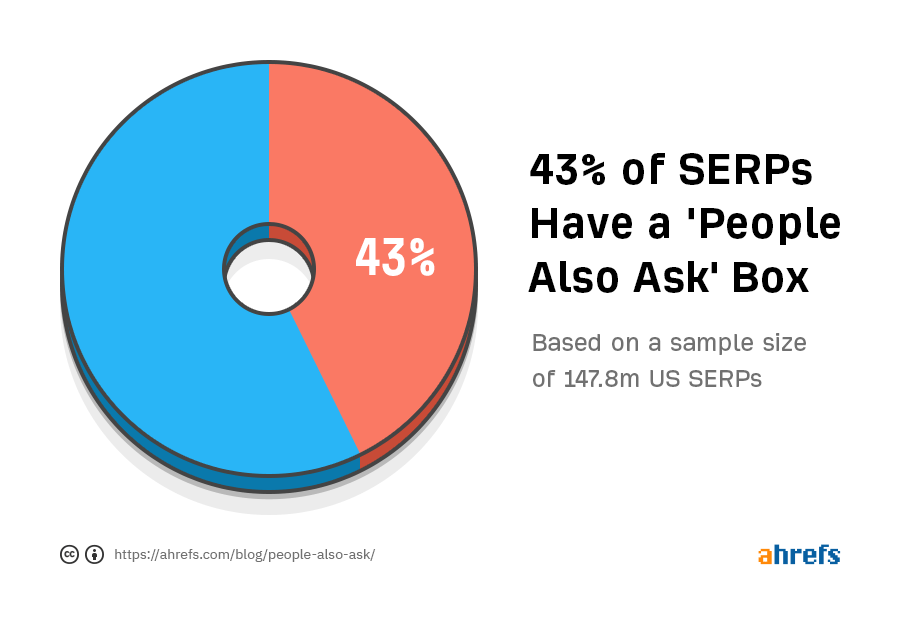
Ignoring the mechanics of these SERP features is increasingly a recipe for invisibility in a market where 43% of searches offer an immediate, automated answer. High-growth brands must look beyond traditional organic rankings and understand how to position their content to capture these high-intent touchpoints. This guide breaks down the commercial logic of ranking in PAA boxes and provides a framework for deciding when to prioritize them to fuel your broader retention and acquisition goals.
What are Google People Also Ask boxes?
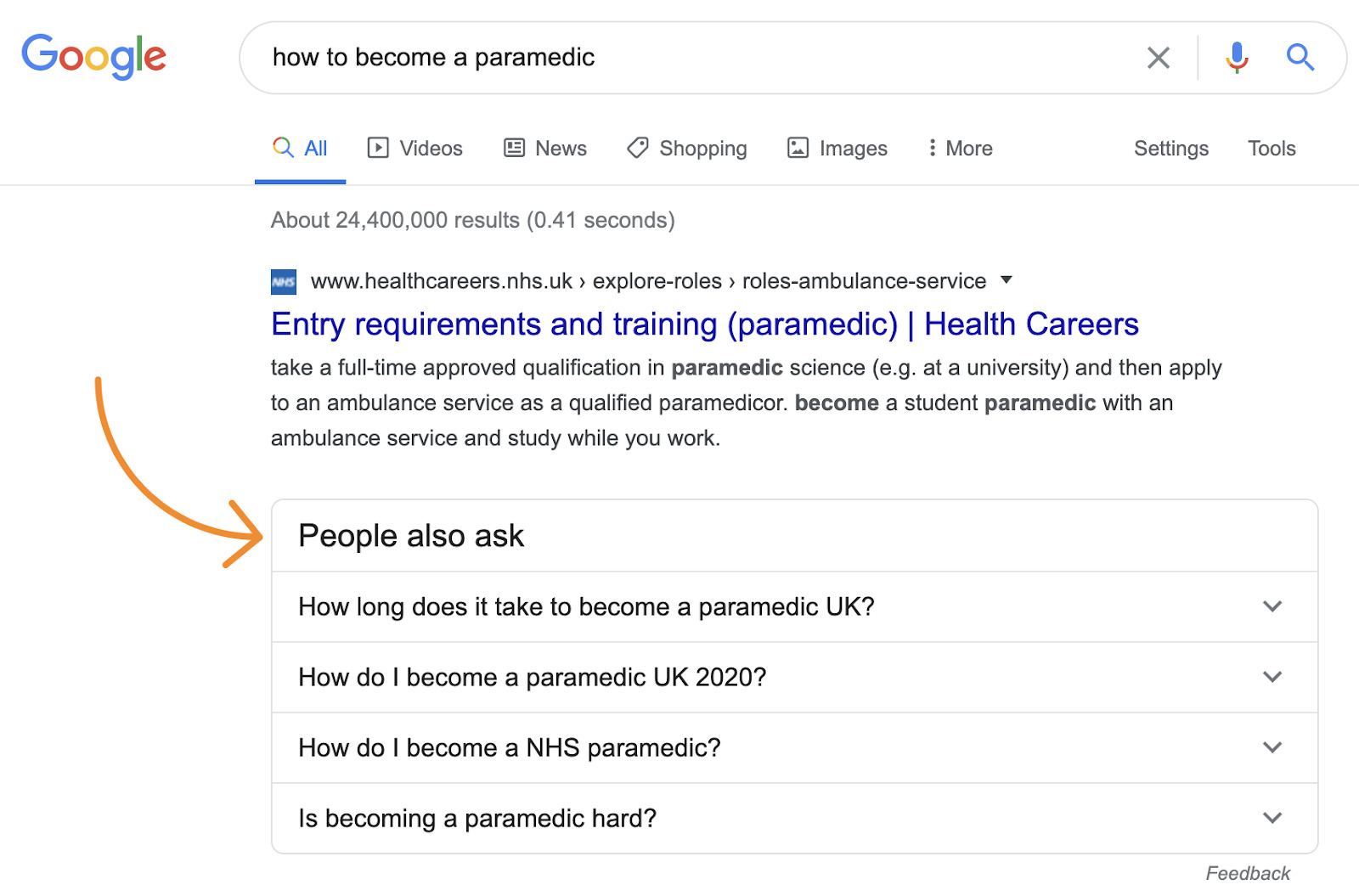
The People Also Ask (PAA) box is a dynamic, interactive Google SERP feature that presents a set of questions related to a user’s original search query. Typically appearing as a collapsed accordion of four initial questions, these boxes are powered by machine learning algorithms that analyze real-world search patterns to identify common knowledge gaps and follow-up intent. When a user clicks a question, the box expands to provide a concise answer excerpted from a high-ranking webpage, along with a direct link to the source.
- Dynamic Expansion: Every time a user expands a question, Google automatically appends two or three additional related questions to the bottom of the list, making the PAA box virtually infinite.
- Source Attribution: Each answer snippet is accompanied by the source page’s URL and title, providing a significant opportunity for websites to gain visibility and traffic even if they do not hold the absolute top organic position.
- Prevalence: PAA boxes have become a staple of modern search, appearing in approximately 43% to 51.85% of all search queries, reflecting Google’s shift toward becoming an answer engine.
For WooCommerce store owners, understanding this feature is critical because it reveals the exact language and specific concerns customers have during their buying journey. Unlike static search results, PAA boxes are self-generating components that allow users to drill down into a chain of related inquiries without ever leaving the search results page, effectively mapping out the topical authority required to rank for high-intent eCommerce keywords.
Why is PAA important for WooCommerce SEO growth?
For high-growth WooCommerce stores, the People Also Ask (PAA) feature represents a critical shift from traditional keyword targeting to search intent dominance. As PAA boxes now appear in over 60% of Google searches, they provide a unique opportunity to capture top-of-funnel traffic and establish brand authority without the brutal competition of traditional organic rankings. By securing these positions, your store can occupy prime SERP real estate that bypasses the standard ten-blue-link constraints, allowing your products or guides to appear as trusted answers directly where customers are asking them.
- Maximized SERP Real Estate: PAA boxes allow your brand to appear multiple times on a single results page, often sourcing answers from websites that do not even rank in the top ten organic results.
- High-Intent Traffic: Users engaging with PAA questions are actively seeking solutions; appearing here signals to searchers that Google trusts your content, which significantly reinforces brand authority and builds trust.
- Strategic Keyword Insight: Analyzing PAA questions provides a direct window into customer pain points and search intent, allowing you to refine your WooCommerce content strategy to answer the exact questions your audience cares about.
Leveraging PAA is not just about visibility; it is a tactical necessity for scaling revenue in a crowded eCommerce landscape. Because these boxes are dynamic and ever-expanding, they offer a scalable way to drive consistent, relevant traffic to your product or category pages. For WooCommerce merchants, this means that even if you are not yet ranking at position #1 for a competitive high-intent keyword, a well-optimized FAQ section or blog post can still place your brand at the very top of the customer’s discovery journey.
How to rank in People Also Ask boxes for eCommerce?
To secure a position in the People Also Ask (PAA) boxes for your WooCommerce store, you must transition from broad keyword targeting to specific, intent-driven question answering. Google prioritizes content that provides immediate, high-value solutions to real user queries, often bypassing higher-ranking pages if a lower-ranking one offers a more concise and better-formatted answer. For eCommerce, this means identifying the conversational long-tail queries your customers use during the research phase and embedding direct responses within your product descriptions or category pages.
- Identify Intent-Matched Questions: Use tools like AlsoAsked.com or SEMrush to find questions that trigger PAA boxes for your target keywords, focusing on “who, what, where, why, and how” patterns.
- Structure with Question-Based Headers: Incorporate the exact PAA question as an H2 or H3 subheading to signal relevance to Google’s crawlers.
- Deliver Concise, Direct Answers: Place a 40–60 word direct answer immediately below the header, front-loading the most critical information in a format—such as a paragraph, list, or table—that matches the current PAA winner.
- Implement Technical Schema: Add FAQ schema to your WooCommerce pages to provide structured data that helps search engines parse and extract your Q&A content more efficiently.
Building topical authority through interconnected content clusters is essential for maintaining these positions over time. By interlinking detailed guides with your PAA-optimized product pages, you demonstrate expertise that Google trusts. Regularly auditing your content to refresh answers and target evolving user questions ensures that your store continues to capture this high-visibility SERP real estate, driving qualified traffic and reinforcing brand authority.

How do PAA boxes impact revenue growth?
For high-growth WooCommerce brands, the impact of People Also Ask (PAA) boxes on revenue growth is rooted in their ability to capture high-intent traffic at the precise moment a customer is seeking a solution. By appearing in these dynamic SERP features, your store bypasses traditional ranking bottlenecks, securing prime real-time visibility that reinforces brand authority and trust. This visibility is critical as PAA prevalence has surged by over 34% recently, indicating that Google increasingly uses these boxes to handle keyword ambiguity and guide user discovery.
- Direct Traffic and Qualified Leads: Every PAA dropdown includes a clickable link to the source, providing a direct pipeline for potential customers to enter your conversion funnel from queries they are already engaged with.
- Enhanced Brand Authority: Ranking in a PAA box signals to searchers that Google views your content as a definitive answer, which builds the institutional trust necessary to convert hesitant shoppers into loyal customers.
- Insight for Content Strategy: PAA data serves as a goldmine for understanding customer pain points, allowing you to optimize product pages and category descriptions to meet actual search demand.
Ultimately, integrating PAA optimization into your WooCommerce SEO strategy transforms your store from a passive participant in search results into an active authority that captures revenue throughout the entire customer journey. While direct traffic gains may sometimes be modest if users find their answers on the SERP, the cumulative effect of increased brand impressions and visibility for key transactional queries creates a resilient foundation for long-term revenue expansion.
What are the best tools to find PAA questions for my store?
To dominate the People Also Ask (PAA) landscape, WooCommerce merchants must move beyond manual SERP scraping and leverage specialized tools that map the full spectrum of customer intent. Identifying these high-intent questions allows you to structure your product pages and blog content specifically for AI extraction and Google’s snippet algorithms, effectively capturing traffic at critical stages of the buyer journey. For high-growth stores, the goal is to transform broad search queries into a granular list of transactional and informational questions that your brand can answer authoritatively.
- Ahrefs Keywords Explorer: This comprehensive platform provides deep SERP analytics, identifying which target keywords currently trigger PAA boxes for 43% of searches. It allows research teams to inspect search volume and keyword difficulty while uncovering the “Parent Topic” to ensure content clusters are strategically aligned.
- AlsoAsked and Answer the Public: These tools specialize in generating visual maps of related questions and sub-questions. They are essential for understanding the hierarchical nature of PAA loops, helping you identify the secondary and tertiary questions that users frequently click on after their initial search.
- Semrush: Utilizing advanced keyword intent categorization, this tool helps marketers prioritize questions based on whether they are informational or commercial. Its SERP features report can specifically filter for keywords where PAA boxes are present, allowing for precise targeting of competitive gaps.
Integrating these tools into your SEO workflow ensures that your content planning is driven by real-world data rather than assumptions. By identifying these questions early, you can implement a direct question-answer format and use headers to signal relevance to both traditional search algorithms and emerging AI-driven search modes. This technical approach not only improves visibility in PAA boxes but also strengthens your overall store authority by directly resolving the specific goals behind a user’s search.
Ready to take your e-commerce to the next level?
While mastering the technical nuances of ranking within People Also Ask boxes is a vital component of modern search visibility, the business reality for high-growth WooCommerce brands is that visibility without conversion is merely a vanity exercise. If your organic growth efforts feel like they are stalling revenue expansion, or if you suspect that high-volume search impressions are failing to translate into meaningful Customer Lifetime Value (LTV), you are likely facing a structural gap between discovery and profitability. Relying on superficial SERP presence without a unified backend strategy is a missed opportunity to capture high-intent traffic at the exact moment it is ready to transition into a loyal customer base.
To move beyond basic rankings and build a high-performance eCommerce engine, you need a partner that synchronizes your technical SEO with your broader objectives for profit and retention. We act as a strategic extension of your in-house team, building data-driven systems where advanced tracking, CRM automation, and performance marketing operate in perfect concert to maximize ROAS. Our methodology eliminates guesswork through rigorous, conversion-focused audits that identify the precise bottlenecks in your customer journey. If you are ready to transform your search presence into a scalable revenue driver, book a free consultation today.


Comments