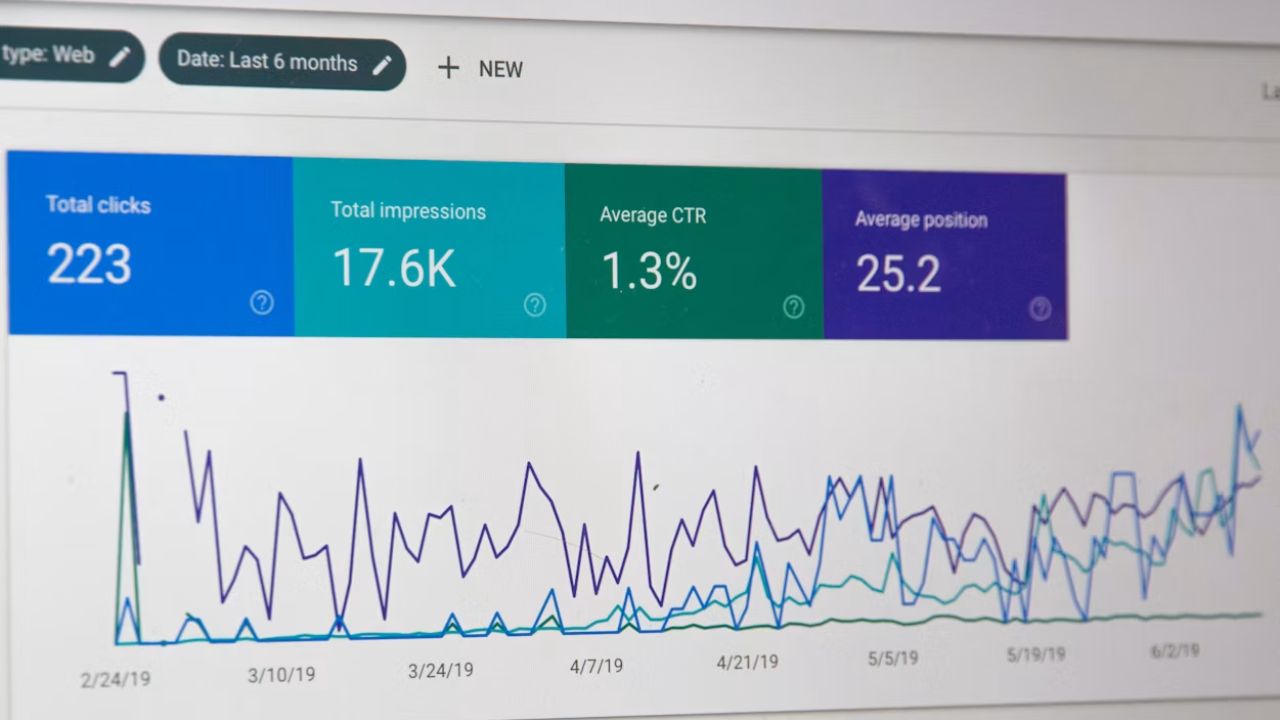






Digital shelf space is becoming increasingly expensive, yet many eCommerce brands overlook a high-margin asset they already own: their existing content. While aggressive customer acquisition often dominates the budget, the strategic distribution of authority within your own domain remains one of the most effective levers for improving search visibility. An optimized internal linking structure does more than just help bots crawl your site; it signals to search engines which pages deserve to win, turning a sprawling catalog into a focused revenue engine.
The challenge for high-growth stores has always been the sheer scale of identifying these connection points without drowning in manual audits. As search algorithms prioritize relevance and topical depth, the cost of fragmented page authority becomes a significant barrier to scaling. Leveraging data-driven suggestions to bridge these gaps allows you to programmatically strengthen your rankings by capitalizing on keywords you already rank for. This guide examines how the latest advancements in site auditing can transform your internal link strategy from a maintenance task into a precise tool for competitive growth.
What are internal link opportunities for WooCommerce?
Internal link opportunities are strategic assets on your WooCommerce site where you can embed hyperlinks to connect relevant pages, facilitating better navigation for both users and search engine crawlers. For high-growth eCommerce brands, these opportunities represent unutilized potential to distribute ranking authority—or “link juice”—from high-performing pages to critical product or category pages that need a boost in search engine results. By identifying these gaps, you ensure that search engines like Google can efficiently discover and index your content while understanding the topical relationships across your entire storefront.
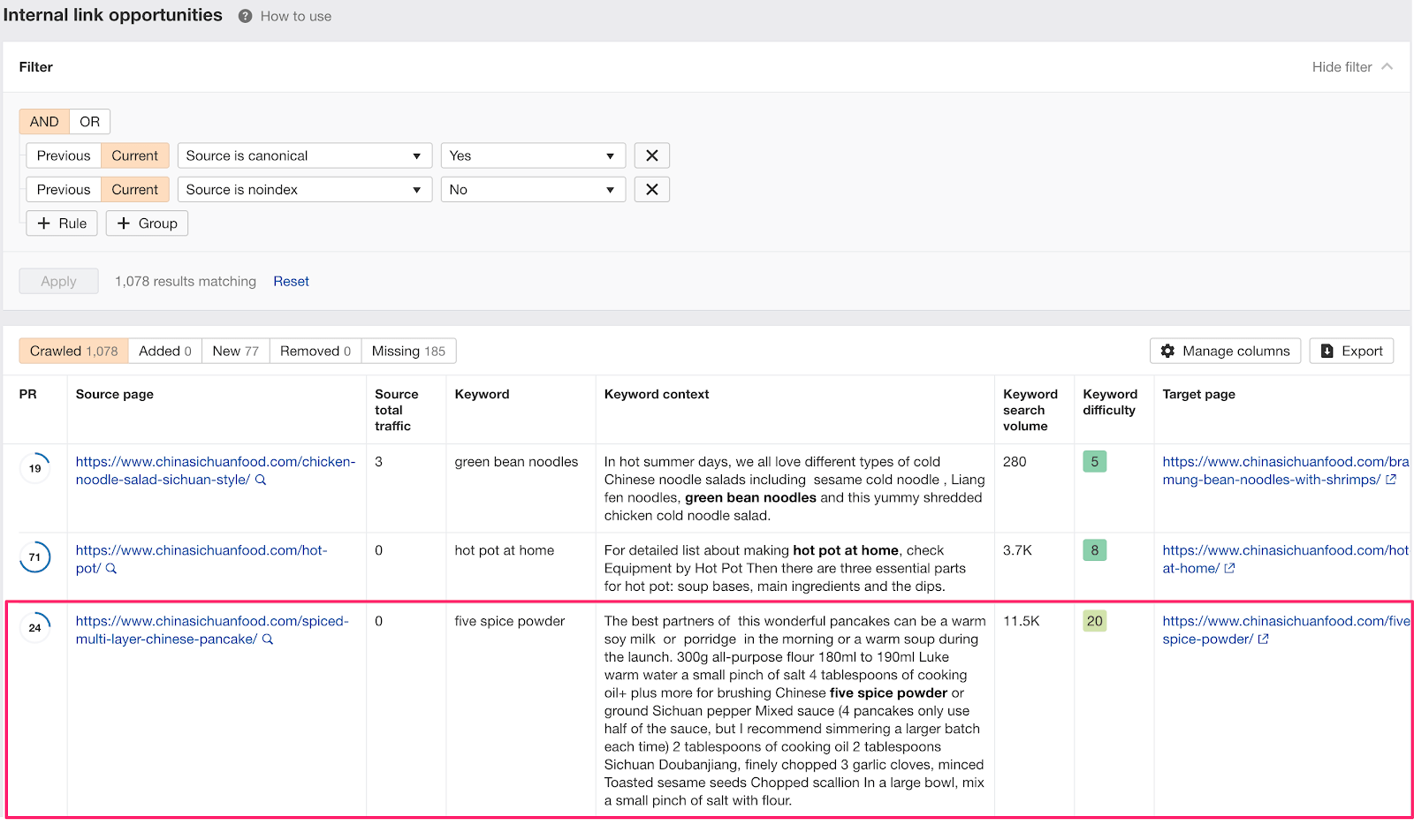
- Contextual Link Opportunities: These occur when a specific keyword or phrase mentioned in a blog post or product description is already a primary target for another page on your site.
- Orphan Page Resolution: Identifying pages with no incoming internal links allows you to integrate them into your site’s architecture, preventing them from remaining undiscovered by search engines.
- Authority Distribution: This involves linking from your highest-authority pages, such as cornerstone blog posts or top-level categories, to lower-authority sub-categories to lift their overall rankings.
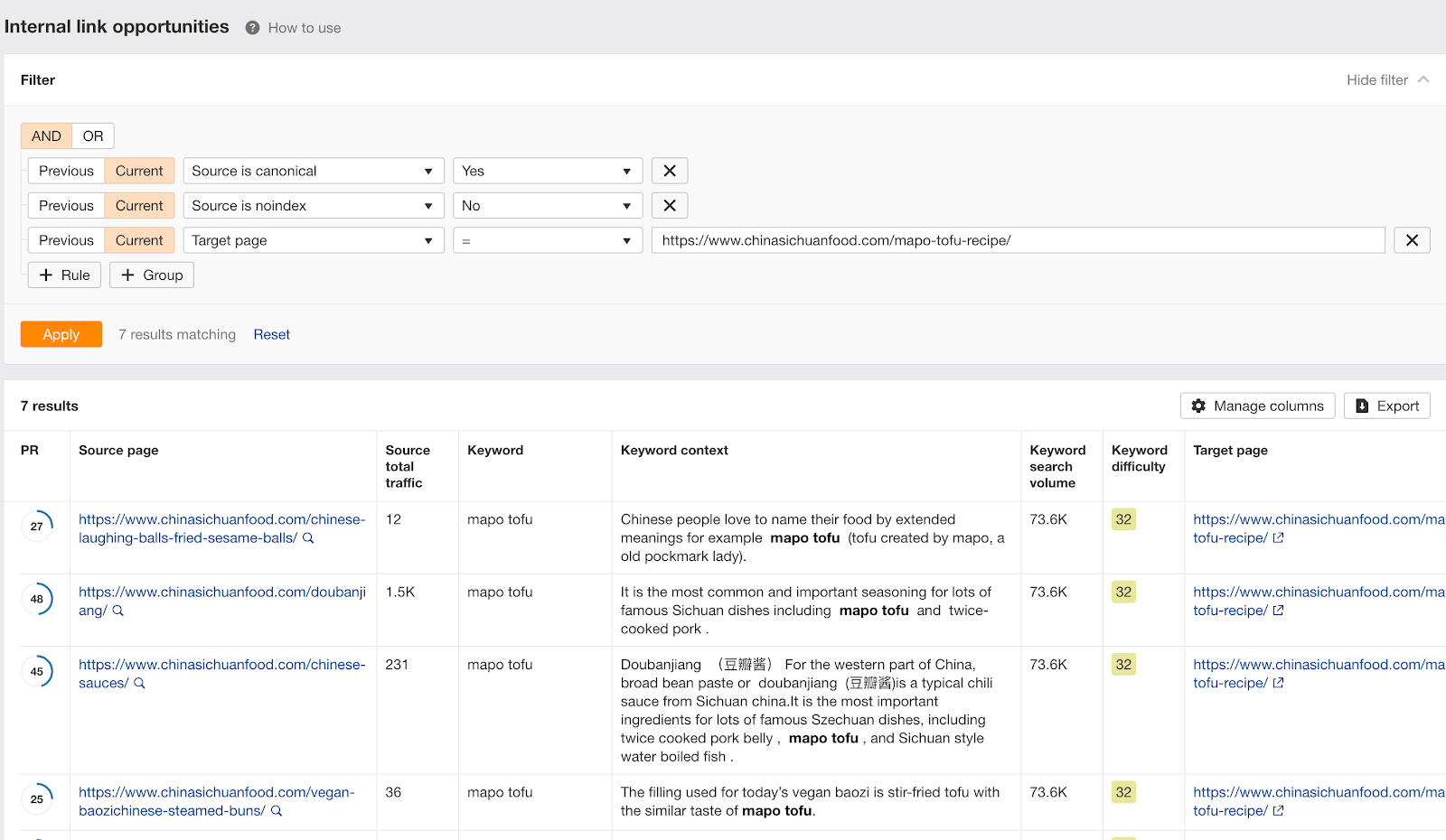
Leveraging tools like Ahrefs’ Site Audit automates the discovery of these opportunities by scanning your pages for keyword mentions that match the top-ranking terms of other pages on your domain. For a WooCommerce application, this technical approach moves beyond manual site audits, allowing you to systematically build a robust internal architecture that mirrors Google’s semantic understanding of your product categories. This structure not only improves SEO performance but also guides customers deeper into your sales funnel by providing a logical path to relevant information.
Why is internal linking important for eCommerce revenue growth?
For high-growth WooCommerce stores, internal linking is a critical driver of revenue because it directly influences the flow of link equity and user intent throughout the site. By strategically connecting high-authority blog content to specific product or category pages, you can effectively distribute “link juice” to boost the rankings of pages that directly contribute to sales, even if they lack external backlinks. This technical distribution of authority ensures that your most profitable pages are visible to search engines and potential customers at the exact moment of peak interest.
- Authority Distribution: Internal links allow you to funnel page authority from high-performing content to newer or product-heavy pages, improving their search engine visibility and ranking power.
- Enhanced Conversion Paths: Strategic links guide users through a logical journey—from educational blog posts to transactional product pages—prolonging site engagement and increasing the likelihood of a purchase.
- Topical Relevance: Creating a network of related links signals to search engines the depth of your expertise in specific niches, strengthening your site’s overall topical authority and crawlability.
Beyond SEO, internal linking serves as a functional map that reduces friction in the customer experience by answering the “what next” question for every visitor. By using data-driven tools like Link Opportunities to identify keywords your pages already rank for and linking them to relevant internal content, you transition from guesswork to a scientific growth strategy that maximizes the lifetime value of your existing traffic. This systematic approach ensures that no high-intent content becomes a “dead end,” ultimately protecting your domain reputation and accelerating revenue expansion.
How to find internal linking suggestions for your store?
Finding high-impact internal linking suggestions for your WooCommerce store requires moving beyond manual audits to a data-driven approach that leverages existing search performance. By analyzing the top 10 keywords for which your pages already rank, you can identify “semantic bridges” across your site. This method involves scanning your crawled pages for unlinked mentions of these high-performing terms, allowing you to transform static text into powerful navigational signals that boost relevance and page-level authority.
- Keyword Mapping: Identify the primary keywords each product or category page ranks for to establish them as topical authorities.
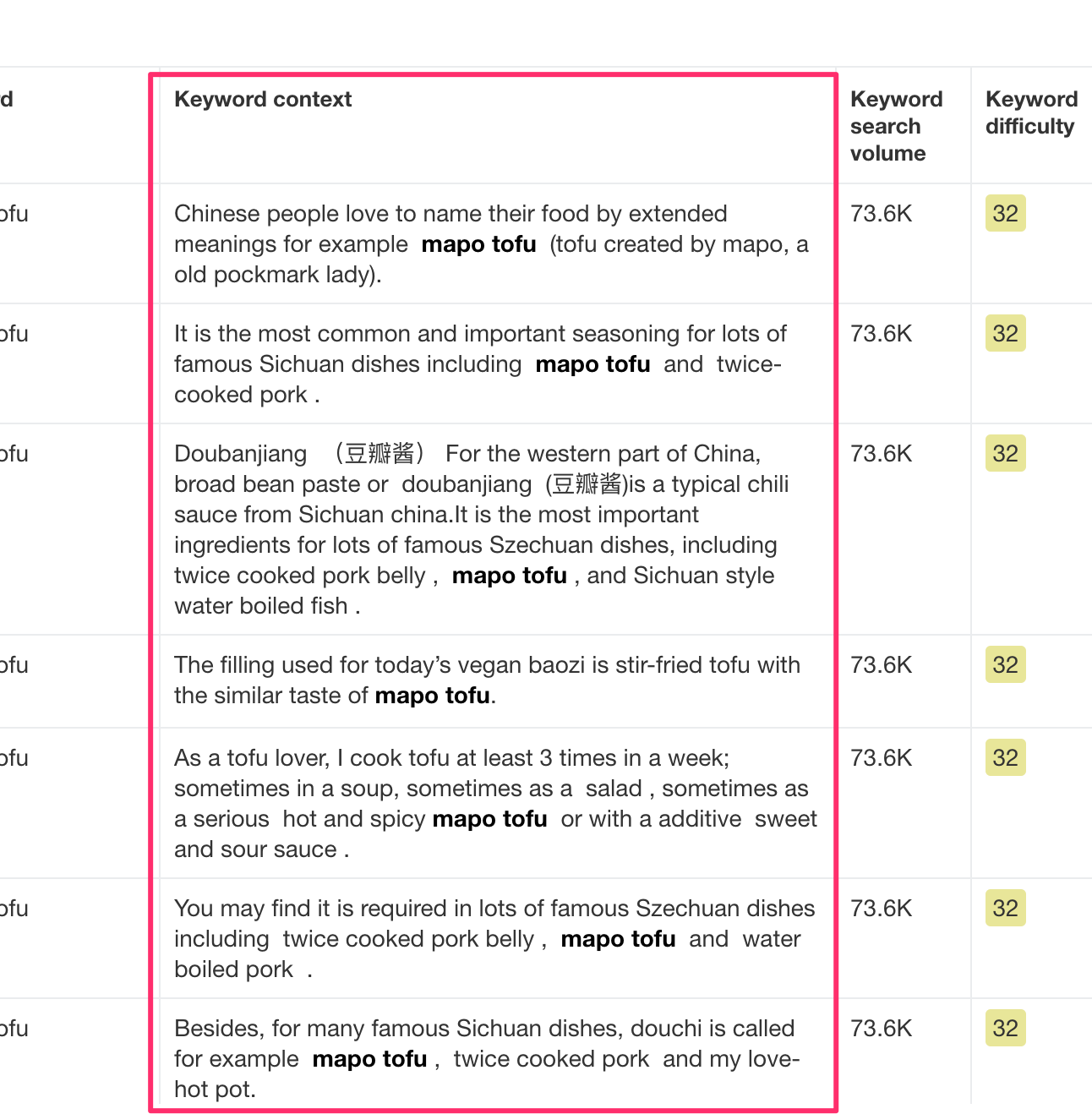
- Automated Mentions Scanning: Use site audit tools to find every instance where these target keywords appear as plain text on other pages, creating immediate link opportunities.
- Contextual Anchor Optimization: Replace generic text with descriptive, keyword-rich anchors that help search engines understand the destination page’s context.
For high-growth stores, executing this at scale ensures that link equity is distributed effectively to priority pages that may be buried deep within your catalog. By systematically connecting these related entities, you reduce click depth and prevent important pages from becoming isolated, directly contributing to improved search visibility and revenue expansion.
How does automated internal linking boost SEO rankings?
Automated internal linking transforms your WooCommerce store from a collection of isolated pages into a high-performance SEO engine by systematically distributing link equity to your most valuable commercial assets. For high-growth brands, manual linking is a structural bottleneck that leads to “orphaned” content and wasted crawl budget; automation removes this ceiling by identifying semantically relevant opportunities that human editors often miss. By leveraging data-driven signals like search demand and keyword rankings, automated tools ensure that every internal link serves a strategic purpose in boosting page-level authority and validating topical relevance for search engines.
- Strategic Authority Distribution: Automation ensures that high-traffic pages or those with strong external backlinks pass “link juice” to deeper product categories or new articles, boosting their rankings by 10-30%.
- Enhanced Crawl Efficiency: Well-structured automated links help bots navigate your site hierarchy more effectively, ensuring that Google prioritizes your mission-critical pages instead of wasting resources on low-value URLs.
- Contextual Relevance Validation: Modern AI tools move beyond simple keyword matching to establish connections based on shared intent, helping search engines and AI models better interpret your content’s hierarchy and topical clusters.
Transitioning to an automated framework is a critical move for WooCommerce merchants aiming to scale revenue without increasing manual overhead. This technical shift not only improves product discoverability for customers but also creates a resilient infrastructure that adapts as your catalog expands, protecting your brand authority and maximizing Customer Lifetime Value.
When should I use internal link automation for my application?
For high-growth WooCommerce stores, the transition from manual internal linking to automation is often driven by the sheer scale of the product catalog. When managing thousands of SKUs and supporting blog content, manual link management becomes a structural bottleneck that causes you to leave revenue on the table due to inefficient distribution of link equity. Automation becomes necessary when the complexity of your site structure begins to obscure priority pages, leading to “orphan pages” that search engines cannot effectively crawl or index.
To maximize the ROI of your automation strategy, focus on these critical operational triggers:
- Catalog Dynamism: Implement automation when frequent product launches or category renames create a high risk of broken internal links, ensuring link equity flow remains uninterrupted as your catalog evolves.
- Authority Imbabidding: Use automated tools to bridge the gap between high-authority blog content and underperforming product pages that show high impressions but low click-through rates.
- Thematic Relevance: Deploy automation to programmatically identify mentions of high-ranking keywords across your site and convert them into contextual internal links that reinforce your site’s topical hierarchy.
Ultimately, automation should be viewed as a technical necessity for maintaining a user-centric site structure that guides both customers and search engine bots through the customer journey without the latency of manual updates. By shifting the burden of link management to a specialized infrastructure, you protect your brand authority and ensure mission-critical pages receive the visibility required for sustained revenue expansion.
Ready to take your e-commerce to the next level?
While identifying internal link opportunities is a sophisticated technical exercise for improving crawlability and authority distribution, the business reality for high-growth WooCommerce brands is that SEO metrics without a direct correlation to revenue are merely vanity indicators. If your organic traffic is increasing but your bottom-line profitability feels like it is stalling, or if you suspect that your site architecture is failing to guide high-intent users toward conversion, you are facing a structural gap that technical tools alone cannot bridge. An effective internal linking strategy must do more than satisfy search engine bots; it must serve as a precision-engineered pathway that maximizes the value of every visitor by aligning content relevance with commercial objectives.
To move beyond basic suggestions and transform your store into a high-performance ecosystem, you need a partner that integrates technical SEO with a comprehensive growth strategy focused on Profit, Retention, and LTV. We act as a strategic extension of your in-house team, building data-driven systems where advanced tracking, CRM, and performance marketing work in perfect concert to maximize your ROAS. Our process begins with rigorous, conversion-focused audits to eliminate guesswork and identify the exact technical and strategic bottlenecks holding your brand back. If you are ready to stop chasing rankings and start scaling a scalable, data-driven engine that drives long-term growth, book a free consultation today.