


The cost of inaction in the realm of user behavioral analytics has shifted from a missed optimization opportunity to a significant regulatory liability. For high-growth eCommerce brands, the silent trail of scrolls and hovers captured by tools like Microsoft Clarity is the fuel for conversion rate optimization, yet this data collection now operates under the strict gaze of evolving privacy mandates. As the window for voluntary compliance closes, the ability to decode customer intent without compromising legal standing has become a defining characteristic of a resilient digital strategy.
Ignoring the upcoming enforcement deadlines for cookie consent in the EEA, UK, and Switzerland effectively places a hard ceiling on your store’s analytical intelligence. Transitioning your tracking infrastructure to a GDPR-compliant framework is no longer just a technical checkbox for the development team; it is a strategic necessity to protect your domain reputation and ensure uninterrupted access to the insights that drive long-term retention. This guide examines the mechanics of Microsoft Clarity cookies and provides the specific technical roadmap required to maintain deep behavioral visibility while operating with absolute transparency.
What are Microsoft Clarity cookies and how do they work?
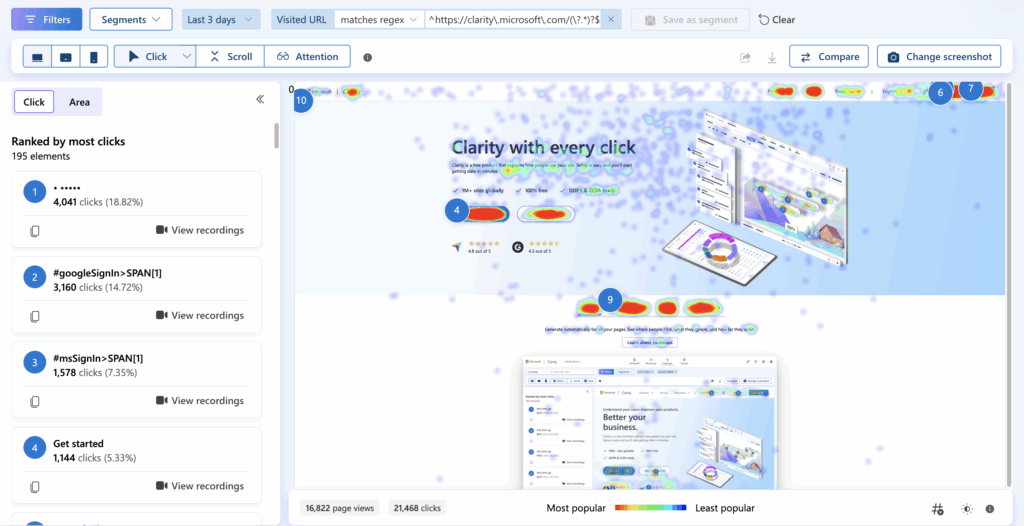
Microsoft Clarity cookies are small text files stored on a visitor’s browser that allow website owners to track and analyze user interactions in real time. Rather than capturing a standard video stream, Clarity records the HTML DOM elements and stitches user behavior patterns together to generate granular behavioral insights. For a growing online storefront, these cookies serve as a critical mechanism to translate silent user sessions into visual data, detailing how far a customer scrolls, where they hover, and exactly where they drop off in the checkout funnel.
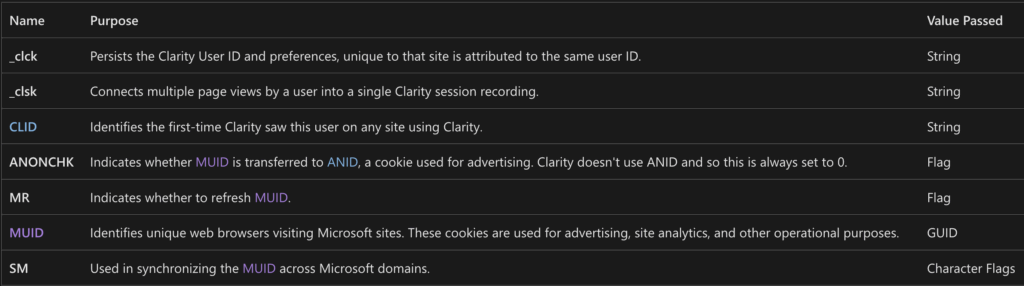
- _clck: This cookie stores a unique, pseudonymous user ID to recognize returning visitors across separate sessions and keep their settings consistent.
- _clsk: This cookie groups multiple pageviews during a single visit into a cohesive session recording, preventing fragmented analytics data.
- CLID: This tracking file identifies the first time a unique user is seen by Clarity across any website utilizing the script.
- ANONCHK: A specialized utility cookie that verifies whether a browser ID is successfully passed to Microsoft’s advertising networks, defaults to zero for Clarity.
By default, these tracking scripts automatically activate and drop cookies onto your user’s device the moment they land on your site. Because these performance cookies capture behavioral data that can indirectly identify or single out a user, they are explicitly classified as non-essential under strict global data privacy regulations like the GDPR. Consequently, navigating modern analytics requires balancing these background technical behaviors with automated consent signals, ensuring that tracking mechanisms only fire after explicit user confirmation.
Why should I use Microsoft Clarity for WooCommerce analytics?
For high-growth WooCommerce stores, standard quantitative data from platforms like Google Analytics only tells part of the story. You might know your cart abandonment rate, but traditional metrics fail to explain why users are leaving right before purchase. Microsoft Clarity fills this critical gap by translating anonymous user behavior into visual, qualitative data that exposes layout friction, broken checkout fields, and unclicked call-to-actions. By recording how far users scroll and where they pause, you gain the clarity needed to optimize your store for maximum conversion.
- Visual Behavioral Insights: High-fidelity session recordings and dynamic heatmaps aggregate click and scroll data to show exactly where users get confused or encounter friction on complex WooCommerce product and checkout pages.
- Friction and Error Detection: Clarity automatically flags rage clicks, dead clicks, and JavaScript errors, pointing directly to hidden technical bugs or poor UX choices that sabotage checkouts and leak revenue.
- Privacy-Conscious Integration: When paired with an authorized consent management provider, Clarity allows you to analyze critical shopping behaviors without violating strict modern data privacy laws like GDPR.
Implementing Microsoft Clarity on your WooCommerce store turns silent consumer behavior into clear optimization signals. By bridging the gap between numbers and actual human intent, you can confidently iterate on your site design, streamline the checkout flow, and safeguard your store’s customer lifetime value.
How to make Microsoft Clarity GDPR compliant on your website?
Achieving GDPR compliance while utilizing Microsoft Clarity on your WooCommerce store requires shifting from automated tracking to an explicit, consent-first architecture. Because Clarity cookies track granular user behavior such as mouse movements, scrolls, and session replays, they are classified as non-essential analytics cookies under European privacy laws. To avoid severe regulatory penalties, you must ensure that no behavioral data is captured and no tracking scripts are executed before a visitor explicitly grants permission.
- Consent Management Integration: Deploy a verified Consent Management Platform (CMP) like CookieYes to act as the gatekeeper for your tracking scripts. The CMP must support diretrizry consent signaling, effectively delaying the initialization of the Clarity script until the visitor toggles and accepts the analytics or performance cookie category.
- Consent API Implementation: Utilize Microsoft Clarity’s native Consent API to explicitly manage data collection states programmatically. By configuring your wrapper scripts or CMP settings to pass a explicit “granted” signal only upon user confirmation, you prevent unauthorized tracking and ensure that visitors who decline cookies remain completely cookieless or anonymous.
- Data Masking and Redaction: Configure strict data masking protocols within your Microsoft Clarity dashboard settings. Ensure that sensitive input fields on critical WooCommerce pages—such as checkout forms, customer account logins, and payment gateways—are completely masked to prevent the accidental capture of personally identifiable information (PII) during session recordings.
By structuring your analytics framework around these technical boundaries, you safeguard your brand from compliance risks without completely breaking your store’s optimization workflows. Operating with a compliant setup ensures your behavioral data streams remain accurate, fully authenticated, and respectful of global consumer privacy standards.
When is the deadline for Microsoft Clarity cookie consent?
For high-growth WooCommerce stores, the final deadline to comply with Microsoft Clarity’s updated privacy enforcement was October 31, 2025. After this date, Microsoft Clarity requires explicit cookie consent signals for all web traffic originating from the European Economic Area (EEA), the United Kingdom, and Switzerland. Operating an analytics stack without a valid consent mechanism in place introduces immediate data gaps and compliance risks.
Failing to communicate a proper consent signal to Clarity leads to severe limitations in your backend tracking capabilities. Without an active user opt-in, your platform will experience the following technical disruptions:
- Loss of Advanced Behavior Data: Microsoft Clarity completely disables key analytical features, including session recordings, heatmaps, and full user journey funnels for unconsented traffic.
- Degraded Data Accuracy: The tracking engine falls back to a limited, cookieless state where consecutive page views are split into fragmented, separate sessions, making conversion optimization workflows highly unreliable.
To safeguard your store’s analytics accuracy and maintain regulatory alignment, you must integrate your site tracking script with a verified Consent Management Platform (CMP). Ensuring your system dynamically fires the correct permission tags prevents structural deliverability gaps from distorting your customer retention metrics and lifetime value reporting.
How to integrate a cookie consent banner with Microsoft Clarity?
Integrating a cookie consent banner with Microsoft Clarity is no longer optional for WooCommerce stores aiming to capture critical behavioral insights legally. Since Clarity instituted its strict consent mandate for traffic originating from the EEA, UK, and Switzerland, standard asynchronous script loading will cause data gaps or compliance violations. To maintain analytics continuity without breaking your site’s conversion funnels, your integration must programmatically sync user choices directly with Clarity’s backend framework.
For a resilient and privacy-compliant architecture, implement the following deployment framework:
- CMP Selection: Deploy a certified Consent Management Platform (CMP) like CookieYes that features built-in, native integration for Clarity Consent Mode to seamlessly forward authorization statuses.
- API Signaling: Ensure your setup triggers the Microsoft Clarity Consent API to explicitly pass state permissions (granted or denied) immediately upon a user finalized choice.
- Validation Testing: Use browser developer tools to verify that tracking scripts remain blocked until positive consent is logged, checking both returning user scenarios and real-time permission updates.
By shifting from a basic cosmetic banner to a deeply integrated, infrastructure-level consent loop, your WooCommerce store preserves trust while shielding your operational workflows from costly regulatory friction. This strategic setup ensures that high-intent user data is gathered safely, giving you the clean insights required to optimize your post-purchase experience.
Ready to take your e-commerce to the next level?
While understanding how Microsoft Clarity cookies function and maintaining strict GDPR compliance is a critical technical requirement, the broader business reality for high-growth WooCommerce brands is that fragmented user tracking and unoptimized consent mechanisms act as a silent ceiling on your revenue. If your analytics data feels inconsistent, or if you suspect that aggressive privacy mandates are causing you to leave critical customer behavior insights on the table, you are facing a structural deliverability and attribution crisis. Failing to integrate advanced, privacy-first tracking systems directly into your marketing channels doesn’t just threaten compliance; it actively compromises your ability to capture revenue at the exact moment of peak customer intent and directly diminishes your long-term ROAS.
To move beyond basic banner setups and transform your data pipeline into a secure, high-performance optimization engine, you need an extension of your team that aligns technical compliance with true profitability. We build robust, data-driven systems where advanced analytics, consent management, paid media, and CRM automation operate in perfect concert to maximize bottom-line profit, customer retention, and LTV. Our process bypasses all guesswork by starting with rigorous, conversion-focused audits that reveal exactly where your conversion paths are broken and how your attribution is leaking. If you are ready to stop relying on vanity metrics and establish a highly accurate, compliant tracking infrastructure that securely scales your growth, book a free consultation today.



Comments