






The obsession with hitting a specific word count for AI search visibility has led to a wave of misguided advice that forces eCommerce brands into rigid, inefficient content production. Some strategists insist on 10,000-word manifestos while others advocate for extreme brevity, yet both extremes miss the fundamental shift in how AI engines actually source and cite information. For brands focused on retention and revenue, following these arbitrary rules creates technical debt and content that serves a metric rather than a customer journey.
Successful content in the era of AI Overviews is dictated by utility and availability rather than a fixed length. When search systems synthesize answers, they prioritize fresh, comprehensive resources that fill existing information gaps in the digital landscape. This guide examines the data behind content length and provides a commercial framework for building high-authority assets that earn AI citations by focusing on the actual requirements of the model and the end user.
What is the ideal word count for AI Overview citations?
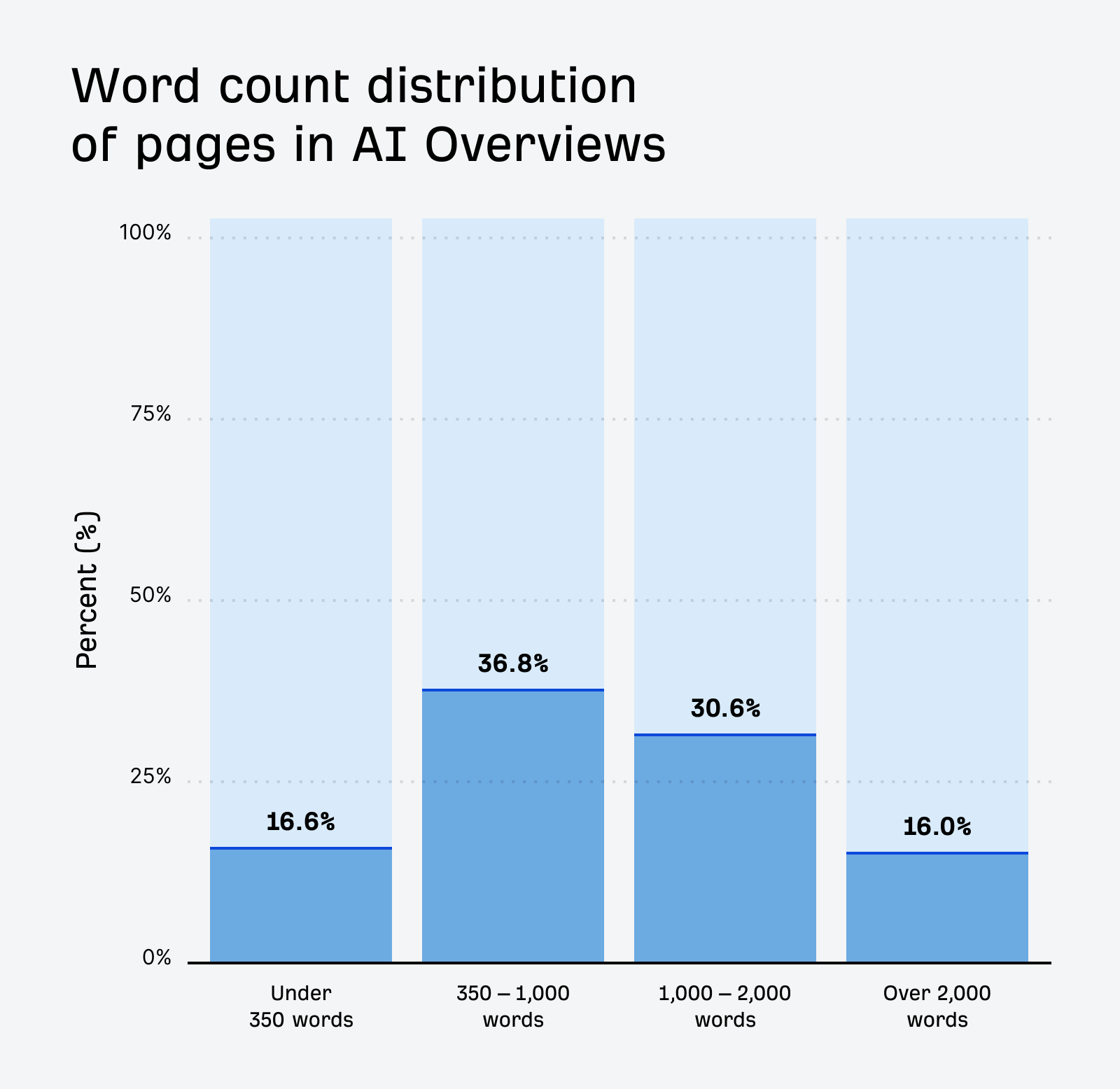
Determining the ideal word count for AI Overview (AIO) citations is less about hitting a specific numerical threshold and more about meeting the information density requirements of the user’s intent. While some data suggests that the most common AIO length is approximately 150–200 words, this refers to the output generated by the AI, not necessarily the length of the source content. For WooCommerce brands, the reality is that both short, concise answers and exhaustive 10,000-word guides are frequently cited, debunking the myth that one format holds a monopoly on visibility.
- Information Utility: AI models prioritize content that provides a direct, extractable answer to a query, regardless of the surrounding word count.
- Contextual Freshness: As search behaviors evolve, AI engines often cite longer guides simply because they represent the most current and comprehensive data available on a topic, not because of length alone.
- Structure Over Volume: High-growth stores should focus on modular content structures that allow AI to easily identify and parse key facts, whether in a 500-word product description or a deep-dive industry report.
Ultimately, chasing an arbitrary word count based on narrow sample sizes is a strategic distraction. To maximize revenue and search authority, your content strategy should be dictated by the complexity of the customer’s problem rather than a perceived context window limitation of AI models. By delivering high-intent, “fresh” content that is available when the AI crawls, you increase the likelihood of being the primary source for automated summaries.
How does content length affect WooCommerce SEO and revenue growth?
For high-growth WooCommerce stores, the relationship between content length and SEO performance is often misunderstood as a binary choice between brevity and depth. In reality, the efficacy of your content in driving revenue expansion and AI visibility depends on its ability to satisfy specific user intent rather than hitting an arbitrary word count. While long-form content exceeding 1,000 words typically performs best for ranking and thoroughness, short-form updates are equally critical for capturing high-intent traffic during fast-moving sales cycles.
- Contextual Utility: Content length should be dictated by the complexity of the customer’s query, as AI search models prioritize the most accurate and comprehensive answer available regardless of its total word count.
- Revenue Impact: Strategic long-form guides help build authority and provide the structured data necessary for AI extractability, which in turn reduces customer friction and drives higher conversion rates.
- Resource Optimization: Focusing on “freshness” and availability rather than forced length ensures your store remains competitive in AI-driven discovery environments.
Transitioning from a volume-based strategy to an intent-based architecture is essential for safeguarding your long-term Customer Lifetime Value (LTV). By ensuring your content is “AI-readable” and provides immediate value, you shift from being a passive storefront to a data-driven authority, allowing your brand to capture revenue at the exact moment of peak customer intent.
Why are short articles often cited in AI search results?
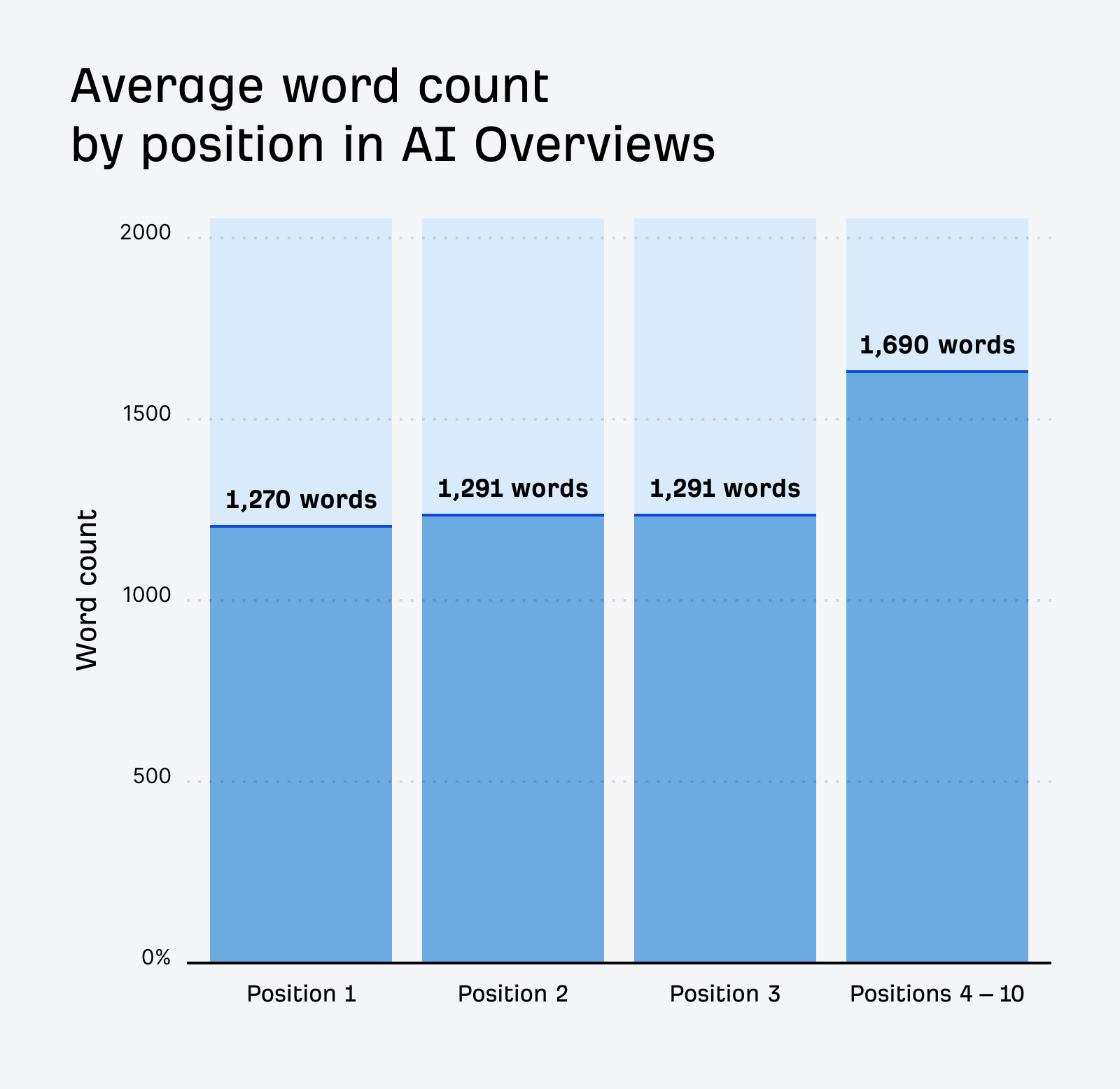
For WooCommerce brands, the frequent citation of short-form content in AI Overviews is not a result of AI models having a inherent preference for brevity, but rather a reflection of technical efficiency and precise intent matching. AI engines prioritize content that can be easily parsed by Retrieval-Augmented Generation (RAG) systems, which often favor concise segments that provide direct answers to specific user queries without excessive server-side overhead. While some argue that models have limited context windows, the reality is that short articles often rank highly because they eliminate the “noise” found in bloated guides, making them ideal candidates for extraction into featured snippets and AI-generated summaries.
- High Information Density: Short articles often bypass introductory filler and deep-dive technical nuances, providing the direct, high-accuracy signals that AI models prioritize for immediate user satisfaction.
- Structured Extractability: Concise content that utilizes clear formatting, such as FAQPage or Article schema, allows RAG databases to ingest and retrieve data with minimal processing latency.
- Intent Alignment: Many eCommerce-related searches are transactional or informational in nature; shorter posts that focus on a single product attribute or a quick troubleshooting fix often match these specific micro-intents better than exhaustive pillar pages.
Transitioning your content strategy toward high-impact, focused articles ensures your store remains visible as AI search shifts from indexing raw HTML to indexing structured data. By prioritizing clarity and technical structure over arbitrary word counts, you reduce the risk of your high-intent promotional messages being overlooked by training datasets or filtered out during real-time search retrieval. Ultimately, the goal for a growing brand is to provide the “fresh” and accessible content that AI engines are actively seeking to satisfy increasingly complex user prompts.
How to structure WooCommerce content for AI extractability?
For high-growth WooCommerce stores, optimizing for AI Overviews requires a shift from word count obsession to technical clarity and information density. AI models do not prioritize content based on arbitrary length; instead, they seek structured data that can be easily parsed and summarized to answer specific user intents. To maximize extractability, your WooCommerce pages must move beyond traditional essay formats toward a highly organized, modular architecture that signals semantic relevance.
- Hierarchical Headings: Use a logical nested structure (H2 through H4) to categorize product features and benefits, allowing AI to quickly identify the topical footprint of your page.
- Direct Answer Blocks: Incorporate concise question-and-answer sections or summary paragraphs at the top of sections to provide the clear, scannable data points that AI models prefer for generating summaries.
- Semantic Markup: Implement robust schema markup, such as ItemList and FAQPage, to reinforce the relationship between your data points and improve accessibility for automated crawlers.
Transitioning to an AI-ready content structure is a critical move for future-proofing your SEO strategy. By organizing your data into scannable blocks and avoiding dense, buried text, you ensure that your WooCommerce store provides the technical foundation necessary for AI systems to accurately retrieve and display your information. This structured approach not only satisfies machine extraction but also improves the overall user experience for human shoppers by making mission-critical details easy to find.
When should I use long-form content for eCommerce marketing automation?
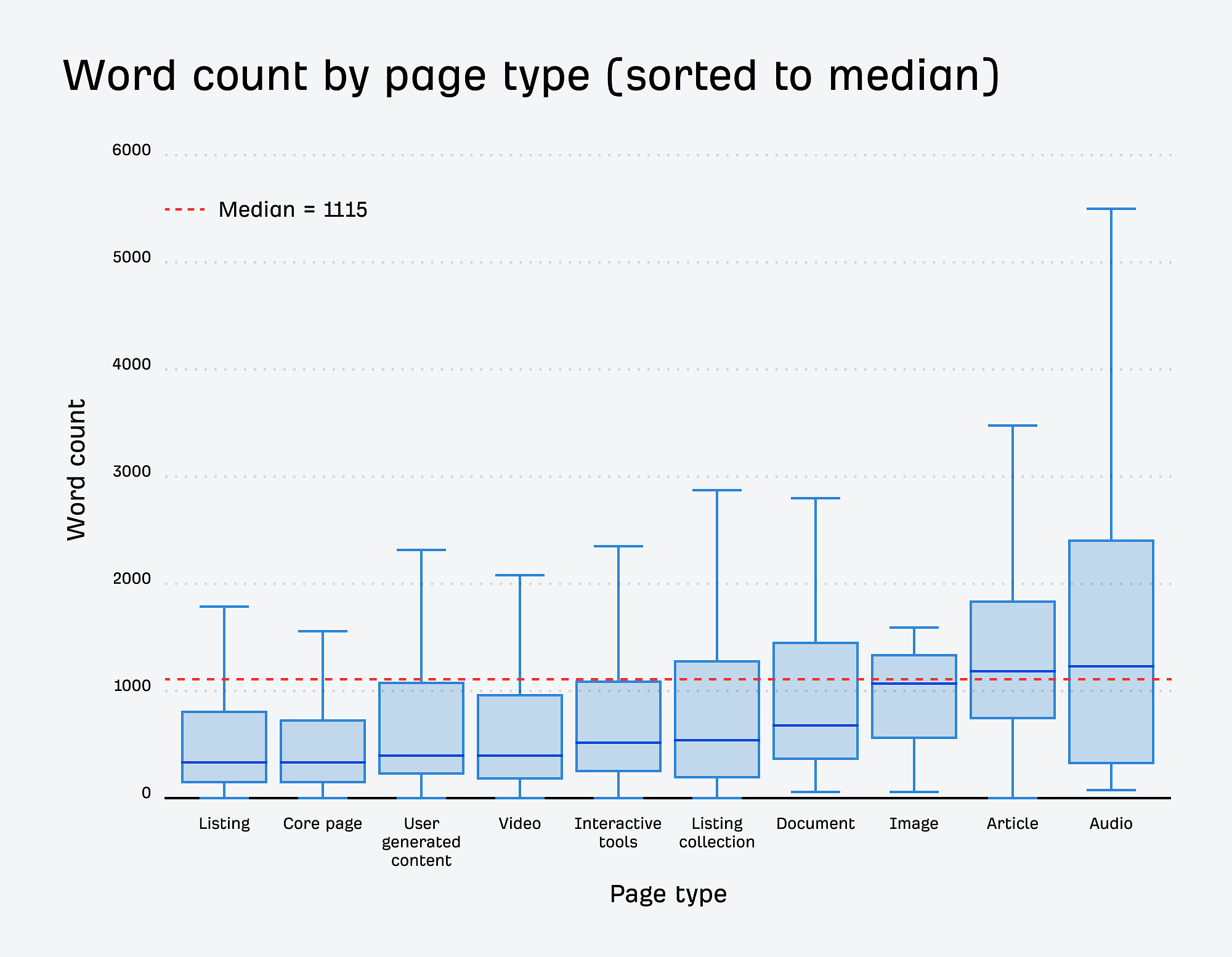
For high-growth WooCommerce brands, the transition from short-form to long-form content should be driven by the complexity of the customer’s decision-making process rather than an arbitrary word count. While data shows that AI Overviews do not strictly favor length, long-form content remains a critical asset for marketing automation when the goal is to provide specific, irreplaceable information that moves a lead through a high-consideration funnel. In these scenarios, the depth of your content serves as the “moat” that prevents generic AI models from simply answering the query from their own memory, forcing them instead to cite your unique data and technical insights.
To maximize the ROI of your long-form assets within an automated eCommerce strategy, focus on deploying them in the following high-intent contexts:
- Technical Solution Blueprints: Use comprehensive guides for products that require complex integration or architectural design, ensuring your brand is cited for its technical specificity.
- First-Party Data Reports: Publish long-form original research or case studies, as retrieval engines prioritize unique datasets that cannot be hallucinated or genericized by AI.
- High-Stakes Compliance Content: For industries like financial services or healthcare, long-form content allows for the authoritative, nuanced explanations required to satisfy both AI reliability filters and human trust.
Ultimately, long-form content should be used to eliminate the “reconstruction without comprehension” risk that occurs when AI tries to summarize thin topics. By investing in insight-driven pieces over multiple surface-level articles, you reduce the risk of keyword cannibalization and build a stronger foundation for long-term brand authority.
Ready to take your e-commerce to the next level?
While understanding the nuances of content length for AI Overviews is a critical first step, the business reality for high-growth WooCommerce brands is that optimizing for word count without a broader data strategy is a recipe for stagnant ROI. If your organic visibility efforts feel like they are stalling revenue expansion or if you suspect that chasing arbitrary content benchmarks is eroding your team’s efficiency, you are facing a structural barrier to scale. In an era where AI engines reward specificity over volume, relying on generic long-form guides or overly brief snippets is not just a technical choice; it is a direct compromise of your ability to capture high-intent traffic at the exact moment of search synthesis.
To move beyond chasing algorithm trends and build a high-performance growth engine, you need a partner that synchronizes your content strategy with a robust technical backend. We act as a strategic extension of your team, helping DTC brands maximize Profit, Retention, and LTV through data-driven systems where CRM, performance marketing, and advanced tracking operate in perfect concert. Our process begins with rigorous, conversion-focused audits to eliminate guesswork and identify the exact technical and strategic bottlenecks in your customer journey. If you are ready to move from speculative publishing to a scalable, data-validated system that maximizes ROAS, book a free consultation today.